Rubin Observatory launches unprecedented sky survey
science
innovative

Rubin Observatory launches unprecedented sky survey

11
(Update: )
astronomical observatory under construction in Chile
  • The Vera C. Rubin Observatory in Chile has launched the LSST, the largest survey of the night sky.
  • This survey will capture millions of images and is expected to discover billions of galaxies and stars.
  • The project aims to uncover unexpected cosmic phenomena, enhancing our understanding of the universe.
Share opinion
1

Story

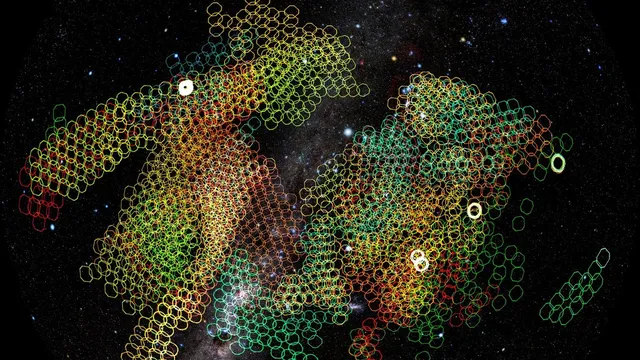
In Chile, the Vera C. Rubin Observatory has initiated the most extensive and ambitious survey of the night sky ever undertaken. This monumental project, known as the Legacy Survey of Space and Time (LSST), aims to capture a comprehensive view of cosmic events, particularly focusing on transients—objects that change in brightness or position over time. The observatory features an impressive 8.4-meter mirror and the largest digital camera ever built, equipped with 3.2 billion pixels, allowing it to gather vast amounts of data over its ten-year mission. The LSST is designed to revisit each area of the sky more than 800 times, resulting in millions of images that will document a staggering array of astronomical phenomena. Among the anticipated discoveries are 20 billion galaxies, 17 billion stars, 10 million supernovae, and six million solar system objects. The ability to detect supernovae is particularly significant, as each new observation contributes to our understanding of the universe and its expansion. Additionally, the observatory is expected to identify over 100,000 near-Earth objects (NEOs), including asteroids and comets that come within 50 million kilometers of Earth. This capability will enhance our knowledge of these celestial bodies and their potential impact on our planet. The search for Planet Nine, a hypothesized large planet in the outer solar system, may also be bolstered by the LSST's findings, as it will help refine the orbits of trans-Neptunian objects (TNOs). One of the most exciting aspects of the LSST is the potential for unexpected discoveries. As astronomers analyze the data collected, they anticipate encountering phenomena that challenge current understanding and prompt new questions about the universe. This survey represents a significant leap forward in astronomical research, promising to unveil the mysteries of the cosmos and reshape our comprehension of the night sky.

Context

The Large Synoptic Survey Telescope (LSST) is poised to revolutionize the field of astronomy through its unprecedented capabilities in surveying the night sky. With its wide field of view and rapid imaging capabilities, LSST will capture vast amounts of data, enabling astronomers to observe transient events and monitor celestial objects with a level of detail and frequency previously unattainable. The LSST's ability to produce a comprehensive, multi-dimensional map of the universe will facilitate groundbreaking discoveries in various areas of astrophysics, including the study of dark matter, dark energy, and the formation and evolution of galaxies. By generating a catalog of billions of astronomical objects, LSST will provide a rich resource for both current and future research endeavors, fostering collaboration across the global scientific community. One of the most significant impacts of LSST will be its contribution to time-domain astronomy. The telescope's rapid survey capabilities will allow it to detect and monitor transient phenomena such as supernovae, gamma-ray bursts, and variable stars in real-time. This will not only enhance our understanding of these events but also enable astronomers to coordinate follow-up observations with other telescopes, leading to a more comprehensive understanding of their nature and origins. The LSST will also play a crucial role in the search for near-Earth objects (NEOs), providing vital data for planetary defense initiatives and enhancing our knowledge of the solar system's dynamics. Moreover, LSST's data will be invaluable for the study of the Milky Way galaxy. By mapping the distribution and motion of stars, the telescope will help unravel the complex structure of our galaxy and shed light on its formation history. The LSST will also contribute to the search for exoplanets, particularly through the detection of transits and the monitoring of stellar variability. This wealth of information will not only advance our understanding of our own galaxy but also provide insights into the potential for life beyond Earth. In conclusion, the impact of LSST on astronomy will be profound and far-reaching. By providing a comprehensive and dynamic view of the universe, LSST will enable astronomers to tackle some of the most pressing questions in astrophysics. The data generated by this groundbreaking telescope will serve as a cornerstone for future research, fostering new discoveries and enhancing our understanding of the cosmos. As we stand on the brink of this new era in astronomy, the LSST represents a monumental leap forward in our quest to explore and comprehend the universe.