

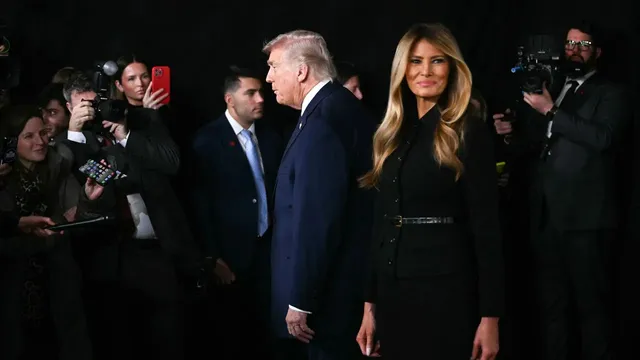
Trump names Kevin Warsh as his pick for Fed chair amid turmoil
Trump names Kevin Warsh as his pick for Fed chair amid turmoil
- President Donald Trump has been critical of current Fed Chairman Jerome Powell, advocating for lower interest rates.
- Kevin Warsh, a former Fed governor, has emerged as Trump’s nominee to lead the Federal Reserve.
- Trump's choice indicates a possible shift in Fed policy, aligning more closely with his economic agenda.
Story
In the United States, on January 30, 2026, President Donald Trump formally announced his selection of Kevin Warsh as the next Federal Reserve chairman. This decision comes after a year of stark criticism directed at Jerome Powell, the incumbent chair, whose term is set to expire in May. Trump has continuously pressured Powell for lower interest rates to stimulate economic growth, while Powell has taken a more cautious approach, aiming to address concerns over inflation. Trump's choice of Warsh, a former governor of the Federal Reserve, signifies a potential shift in the central bank's policy direction, aligning more closely with Trump's economic views. Kevin Warsh served on the Federal Reserve's Board of Governors from 2006 to 2011, during which time he played a critical role in managing the central bank's response to the financial crisis of 2007-2009. Throughout recent months, Warsh has positioned himself as an advocate for reducing interest rates, a departure from his earlier reputation as an inflation hawk, which has likely positioned him well with Trump. The announcement of his nomination has stirred market reactions, indicated by fluctuations in U.S. dollar strength and precious metals prices as investors assess the implications of Warsh’s potential leadership. Prior to this announcement, Trump hinted at his choice during a public appearance, describing it as a respected figure known in the financial world, thus intensifying speculations regarding Warsh's nomination. The mounting tension between Trump and Powell has reached a peak, with Trump implying that the current Fed policies are costly and outdated, asserting that lower interest rates are needed to foster quicker economic advancements. In response to this situation, Powell confirmed lingering investigations concerning the Fed, highlighting the uneasy dynamics affecting the organization's independence amidst growing political pressure. In the wake of the announcement, Warsh is expected to navigate a delicate relationship with both the financial markets and the other Federal Reserve governors. Given that Powell's term ends soon, this transition in leadership raises critical questions regarding the future monetary policy direction, particularly as the U.S. economy sits at a crossroads marked by inflation concerns and varying perspectives on the appropriate interest rate strategy. Warsh's views and the policies he would implement could significantly influence the U.S. economic landscape in the coming years.
Context
The Federal Reserve System, established in 1913, serves as the central bank of the United States. Over the years, it has been led by a series of chairs who have played pivotal roles in shaping the nation's monetary policy and financial stability. Each chair has faced unique challenges and has implemented various strategies in response to shifting economic conditions. The first chairman, Charles Sumner Hamlin, served from 1914 to 1916 and set the foundation for the institution. The role of the chair has evolved significantly, particularly through notable periods of economic upheaval such as the Great Depression, the stagflation of the 1970s, and the 2008 financial crisis, each underscoring the importance of effective monetary policy in times of distress. One of the most influential chairs in the history of the Federal Reserve was Alan Greenspan, who served from 1987 to 2006. Greenspan became known for his response to the economic boom of the late 1990s and his ability to navigate the dot-com bubble and subsequent interest rate adjustments. His tenure was marked by a focus on deregulation and an emphasis on free-market principles, which significantly impacted monetary policy decisions. Following him, Ben Bernanke took the helm during the financial crisis of 2008, implementing unprecedented measures such as quantitative easing to stabilize the economy. Bernanke's actions during this tumultuous period are often regarded as instrumental in preventing a deeper recession, demonstrating the Federal Reserve's ability to adapt to new challenges. In the aftermath of the financial crisis, Janet Yellen became the first woman to serve as the Federal Reserve chair from 2014 to 2018. Her leadership emphasized the need for a strong labor market and was marked by gradual interest rate hikes as the economy recovered. Yellen's dual focus on employment and inflation guided the Fed through a time of uncertainty, showing the importance of balancing various economic factors in decision-making. Her successor, Jerome Powell, took over in 2018 and has continued to navigate the Federal Reserve through the complexities of the modern economy, including responding to issues such as the COVID-19 pandemic and resulting economic disruptions. Powell has taken a more accommodative stance, emphasizing support for businesses and workers during challenging times while contending with rising inflation concerns. As of January 30, 2026, the legacy of the Federal Reserve chairs continues to shape monetary policy in the United States. The decisions made by these leaders not only affect the domestic economy but have far-reaching implications for global financial markets. Each chair has contributed to the evolving mission of the Federal Reserve, which aims to promote maximum employment, stable prices, and moderate long-term interest rates. As economic landscapes shift and new challenges arise, the role of the Federal Reserve chair remains critical in navigating the complexities of both national and global economies.


