

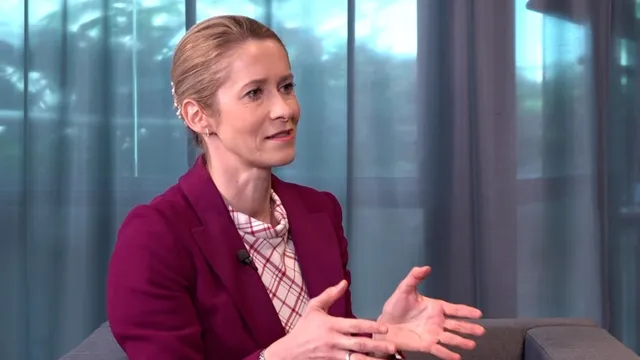
Kaja Kallas challenges Russia on maximalist demands in Ukraine conflict
Kaja Kallas challenges Russia on maximalist demands in Ukraine conflict
- Kaja Kallas discussed potential direct talks with Moscow to address the conflict in Ukraine.
- While prisoner exchanges have occurred, there is doubt about a quick settlement due to potential territorial concessions.
- Kallas asserted that Russia's exaggerated demands cannot elicit simplistic responses, advocating for substantial negotiation terms.
Story
In Warsaw, Poland, on March 4, 2026, Kaja Kallas, the EU's foreign policy chief, hinted at the possibility of direct talks with Moscow to address the ongoing war in Ukraine. While the EU has struggled to gain a negotiating position, the U.S. has been actively involved in discussions with Kyiv and Moscow. The conversations have yielded prisoner exchanges, but there is skepticism regarding an imminent settlement, especially as it may require Ukraine to concede territory. Kallas emphasized the need for Russia to moderate its demands, criticizing them as unrealistic. She proposed several conditions for future negotiations, including limitations on the Russian military and the withdrawal of troops from post-Soviet states. Kallas maintains that Russia is experiencing significant challenges in sustaining its war efforts, including economic troubles and recruitment difficulties, and believes if pressure continues, Russia might be compelled to negotiate seriously. This scenario highlights the intricate dynamics of international diplomacy and the dire implications as European leaders consider a strategic envoy for negotiations with Moscow, underscoring the urgency of conflict resolution amidst shifting global priorities.
Context
The international response to Russia's demands in Ukraine has evolved significantly since the onset of the conflict in 2014, with various nations and organizations adopting diverse strategies to address the crisis. Initially, sanctions were implemented by the United States, the European Union, and other allies in reaction to Russia's annexation of Crimea and its support for separatist movements in Eastern Ukraine. These sanctions targeted key sectors of the Russian economy, including finance, energy, and military, signaling a strong stance against aggression. The global community has largely united in its condemnation of Russia's actions, asserting Ukraine's sovereignty and territorial integrity. Many countries have also provided military and humanitarian assistance to Ukraine, reinforcing their support amid ongoing hostilities. In recent years, diplomatic efforts have sought to reach a resolution to the conflict, with various peace initiatives and talks taking place. The Normandy Format, which includes Germany, France, Ukraine, and Russia, has aimed to facilitate discussions and find common ground. The Minsk agreements, although frequently violated, served as a framework for ceasefire and withdrawal of heavy weapons, illustrating the complexity of the situation on the ground. Meanwhile, NATO has increased its presence in Eastern Europe and conducted military exercises to deter further Russian advances, demonstrating a commitment to collective defense. The alliance's expansion plans and partnership programs have also attracted both support and criticism from various global actors. As the conflict persists, the responses from international organizations have contributed to shaping the narrative around Russia's demands. The United Nations General Assembly has passed multiple resolutions affirming Ukraine's sovereignty and calling for the respect of international law. Various countries have navigated political and economic pressures while striving to maintain a balanced approach in their dealings with Russia. This has led to a spectrum of reactions, with some nations advocating for stricter measures and others emphasizing dialogue. Human rights organizations have also spotlighted the humanitarian crises resulting from the conflict, urging for access to affected populations and accountability for war crimes. Looking ahead, the potential for escalation remains a pressing concern, hinged on Russia's strategic objectives and the responses of the international community. As tensions continue to mount, the interplay between military preparedness and diplomatic efforts will be crucial in determining the future of Ukraine and its relations with both Western powers and Russia. The involvement of major powers like the United States, the EU, and NATO will dictate the broader geopolitical ramifications, as developments in Ukraine can have far-reaching effects on global security, economic stability, and international norms. Ultimately, the situation underscores the importance of continued vigilance and collaboration among global actors to address the challenges posed by Russia's demands.


