

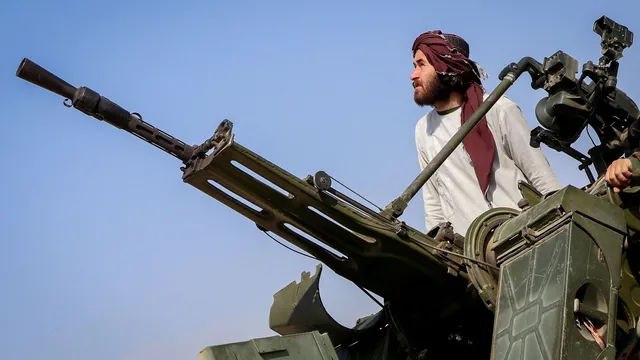
Cross-border fighting escalates as Pakistan claims hundreds of Afghan soldiers killed
Cross-border fighting escalates as Pakistan claims hundreds of Afghan soldiers killed
- Intense fighting has erupted along the Pakistan-Afghanistan border, triggered by attacks from Afghan forces.
- Both sides have claimed significant casualties, with Pakistan asserting that its military has killed hundreds of Afghan soldiers over a series of clashes.
- The conflict highlights ongoing tensions and the urgent need for diplomatic efforts to prevent further escalation.
Story
In early March 2026, intense clashes erupted along the border between Pakistan and Afghanistan, marking a significant escalation in ongoing hostilities. Afghan forces reportedly initiated the attacks on Pakistani military positions, leading to heavy casualties on both sides. Pakistani officials claimed the clashes resulted in the deaths of 464 Afghan security force members and injuries to 665 others over the first five days of fighting. In response, Kabul defended their military actions, asserting they repelled the attacks and inflicted casualties on Pakistani forces, although their numbers differed significantly from Islamabad's reports. The fighting, described as the deadliest yet between the two neighbors, followed a breakdown of a ceasefire that had been negotiated with the involvement of Qatar and Turkey months earlier. Diplomatic efforts had seemingly stalled after talks in Istanbul had failed to yield a lasting agreement. In the aftermath of this renewed violence, Pakistan's government accused the Taliban regime in Afghanistan of harboring militants responsible for attacks within Pakistan's territory, a claim Afghan authorities vehemently denied. The ongoing conflict has complicated Pakistan's security landscape, particularly as it faces challenges from the Pakistani Taliban, who have increased their attacks following the Taliban's return to power in Afghanistan. As the situation intensified, there were broader humanitarian concerns articulated by the United Nations, emphasizing the grave impact on civilians amid the military operations. Reports indicated rising civilian casualties, including women and children, which further exacerbated the humanitarian crisis in an already volatile region. Efforts by international stakeholders, including offers of mediation from Turkish and Malaysian leaders, were met with mixed responses, indicating the difficulty in achieving a sustainable resolution to long-standing grievances. The lack of independent verification of casualty figures and the limited access for media in the border regions complicated the narrative as both sides presented conflicting accounts of the fighting. The ongoing clashes have brought renewed attention to the implications of regional security dynamics, the influence of militant groups operating in and around Afghanistan, and the broader implications for peace and stability in South Asia. This cycle of violence highlights both the historical tensions between the two nations and the urgent need for diplomatic intervention to prevent further escalation.
Context
The conflict along the Pakistan-Afghanistan border has a complex history shaped by colonial legacies, geopolitical dynamics, and local ethnic tensions. The Durand Line, drawn in 1893, demarcated the border between British India and Afghanistan. This line divided ethnic Pashtun tribes, leading to lingering animosities and contestations over territory. After the partition of India in 1947, the establishment of Pakistan and the ensuing complications over the border stoked further conflicts, as Afghanistan did not recognize the Durand Line as an official boundary. This lack of recognition has been a source of tension, influencing relations between the two countries for decades. The situation takes a darker turn with the Soviet invasion of Afghanistan in 1979, which transformed the conflict into a larger geopolitical issue drawing in various global powers. Pakistan, seeking strategic depth against India, supported the Mujahideen, allowing the U.S. and other foreign powers to influence the conflict. After the Soviet withdrawal and the subsequent civil war in Afghanistan, the rise of the Taliban in the 1990s and their relationship with Pakistan complicated the border dynamics further. The Taliban's rise to power and Pakistan's alleged support of them created a rift with the Northern Alliance and later with the U.S., contributing to the September 11 attacks and the subsequent War on Terror. In the post-9/11 era, Pakistan's role in combating terrorism was crucial, as the U.S. sought its cooperation to dismantle Al-Qaeda and other terrorist networks that operated along the border. However, this cooperation was often fraught with contradictions, as Pakistan simultaneously maintained relationships with Taliban factions. The border became a flashpoint for clashes and skirmishes between Pakistani and Afghan security forces, with allegations of cross-border attacks and insurgent movements exacerbating the situation. The porous nature of the border, combined with ethnic affiliations, has allowed militant groups to operate across the Durand Line, complicating efforts to achieve stability in both nations. The recent years have seen attempts at reconciliation and dialogue, yet tensions persist due to issues such as refugee crises, economic challenges, and differing security strategies. Both governments face significant internal pressures to address these issues while managing their historical grievances. As of 2026, the situation remains fluid, with efforts to stabilize the border and foster cooperation being challenged by growing extremism and political instability within Afghanistan and Pakistan. Ultimately, addressing the Pakistan-Afghanistan border conflict requires a nuanced understanding of historical context, regional dynamics, and an inclusive approach that recognizes the rights and identities of the people who inhabit this contested space.


