
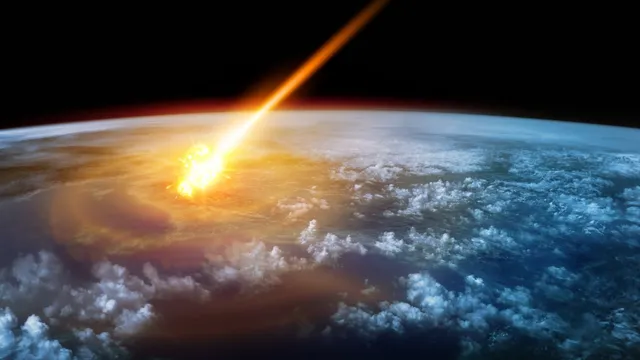
Eyewitnesses report a stunning fireball meteor across five states
- NASA reported numerous sightings of a daytime fireball over five northeastern states on April 7, 2026.
- The meteor was first spotted over the Atlantic Ocean and traveled southwest at high speed before disintegrating above New Jersey.
- This event emphasizes the rarity and significance of observing fireball meteors compared to regular meteors.
Story
On April 7, 2026, a remarkable fireball meteor was observed across several states in the northeastern United States, including Connecticut, Delaware, New Jersey, New York, and Pennsylvania. According to NASA, the event occurred at approximately 2:34 p.m. EDT, with witnesses describing the bright meteor which shone more luminously than Venus. The fireball was first detected at an altitude of roughly 48 miles above the Atlantic Ocean, near the shores of Mastic Beach in New York. It traveled rapidly toward the southwest at a speed of 30,000 miles per hour, covering a distance of 117 miles through the upper atmosphere before disintegrating at an altitude of 27 miles, just north of the town of Galloway, New Jersey, near Atlantic City. Fireballs, characterized by their extreme brightness and rapid movement, are meteors that shine more intensely than the planet Venus. Their formation is generally attributed to larger particles entering Earth's atmosphere, resulting in a brief but spectacular display. The peak of fireball occurrences in the northern hemisphere typically takes place from February through April, a time when sightings can increase due to the Earth's passage through more significant debris from space. NASA explains that during this time, there can be an uptick in fireball sightings, though the precise reason for the increase remains unclear. Some astronomers theorize that the Earth encounters more substantial debris during this period, leading to the greater number of observed meteors. While meteors are common and frequently encountered, fireballs are relatively rare, especially during the day, which makes their observation particularly exceptional. The recent sighting highlights the importance of monitoring the skies for celestial objects by NASA and other organizations committed to planetary defense. These agencies employ specialized telescopes across the United States to track various objects in space. However, primarily larger asteroids, those measuring 140 meters or more in diameter, are the focus due to their potential to cause considerable damage if they were to collide with Earth. Smaller meteoroids, while prevalent, are typically too small to track and do not pose a significant threat to life on the ground. Therefore, the fortunate observers of the fireball meteor can appreciate a rare and beautiful natural occurrence, reminding us of the dynamic and ever-changing nature of our universe.
Context
Fireballs and meteors are fascinating celestial phenomena that capture the interest of both scientists and the general public. At their core, fireballs are exceptionally bright meteors, often producing spectacular visual displays as they travel through the Earth's atmosphere. These phenomena occur when meteoroids, which are small rocky or metallic bodies in space, enter the atmosphere at high speeds, typically ranging from 11 to 74 kilometers per second. The intense friction between the meteoroid and atmospheric gases generates significant heat, causing the meteoroid to glow brightly and sometimes disintegrate. This process is known as ablation, and it accounts for the brilliant light and color variations that can be observed as a fireball streaks across the sky. The composition of meteoroids also plays a crucial role in the appearance of fireballs. Many meteoroids are composed of metal, stone, or a combination of both, and their specific material characteristics influence their melting and combustion processes during atmospheric entry. For instance, metallic meteoroids tend to produce brighter fireballs due to their ability to withstand heat better than stony meteoroids. In addition to their chemical composition, the size of the meteoroid is a determining factor in the intensity and duration of the fireball. Larger meteoroids are capable of producing more pronounced fireballs, potentially leading to phenomena known as bolides, which are extremely bright meteors that can create visible shockwaves and sonic booms. While many fireballs are merely a fleeting spectacle, some can survive their perilous journey through the atmosphere and land on Earth as meteorites. The study of these meteorites provides essential insights into the early solar system's composition, as they often originate from asteroids or other celestial bodies, containing clues about the formation and evolution of planetary bodies. Tracking fireballs and their resultant meteorites has become increasingly systematic, aided by advanced observation techniques and global networks of observatories that monitor night skies for these transient events. Such initiatives not only advance our understanding of cosmic materials but also help assess potential threats posed by near-Earth objects. In conclusion, fireballs and meteors are not only captivating visuals in the night sky but also significant scientific phenomena that serve as gateways to understanding our solar system's history. With advances in technology and observational techniques, researchers can better comprehend the behaviors of these celestial objects, their interactions with Earth's atmosphere, and their implications for both our planet and the broader cosmic environment. As our ability to monitor and study these events improves, so does our capacity to mitigate potential risks associated with meteoroid impacts, underscoring the importance of ongoing research in this intriguing field.
