

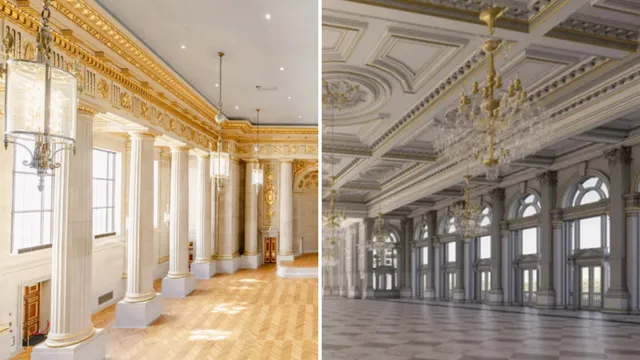
Senate strikes down funding for Trump’s White House ballroom project
Senate strikes down funding for Trump’s White House ballroom project
- The Senate parliamentarian ruled against the inclusion of funding for the proposed White House ballroom in the upcoming budget reconciliation bill.
- Democrats opposed the use of taxpayer funds for the project, arguing it was a misuse of financial resources.
- The ruling represents a significant setback for the Trump administration's infrastructure priorities and underscores the challenges of securing bipartisan support.
Story
In the United States, a significant procedural ruling was made regarding the proposed White House ballroom project, which sought funding as part of a larger budget reconciliation bill. Late on a Saturday in May 2026, the Senate parliamentarian delivered a ruling that blocks funding for the project, asserting that it does not conform to the Byrd Rule requirement that provisions must be appropriate for reconciliation processes. This decision was met with relief by Senate Democrats, who had argued against using taxpayer dollars for what they deemed a luxury related to Trump's personal projects. The ballroom project was estimated to cost around $400 million and was proposed in the wake of a security incident involving the president. The incident in question occurred at a gala event attended by Trump, where a shooting took place, prompting calls for heightened security measures. In response, Republicans pushed for funds from a proposed spending package to be allocated for necessary security upgrades through a portion of $1 billion intended for various security enhancements under the Department of Homeland Security's funding. However, the Democrats opposed the idea, focusing on the need to allocate taxpayer money towards core economic priorities rather than luxury projects. The decision has forced the Trump administration to reconsider how to proceed with their ballroom plans, indicating that they would need to either pursue standalone legislation or attach the funding request to other spending bills, a process which could be more challenging given the current political landscape in the Senate. Meanwhile, Senator Jeff Merkley emphasized the complex nature of the ballroom proposal, noting that it could require coordination across various government agencies and committees, complicating the attempt to pass the funding without bipartisan support. This presents a considerable challenge for future legislative efforts surrounding the project, particularly in a highly polarized political climate. Despite the losses in terms of planning and funding, proponents of the ballroom have argued that it would serve as a necessary venue for presidential events, reducing risks associated with external locations. However, broad opposition from Democrats and preservation groups indicates that any renewed attempts to fund the project are likely to face significant resistance.
Context
data insight trends strategic data policy shift strategic data policy geopolitical analysis strategic economic market shift market analysis shift analysis shift data data trends strategic analysis market market data impact global economic global shift data geopolitical insight strategic geopolitical analysis strategic strategic shift policy geopolitical global policy market analysis data analysis impact global market insight data impact global market impact strategic data market policy impact global economic economic data data analysis shift strategic economic shift strategic analysis impact shift market...


