

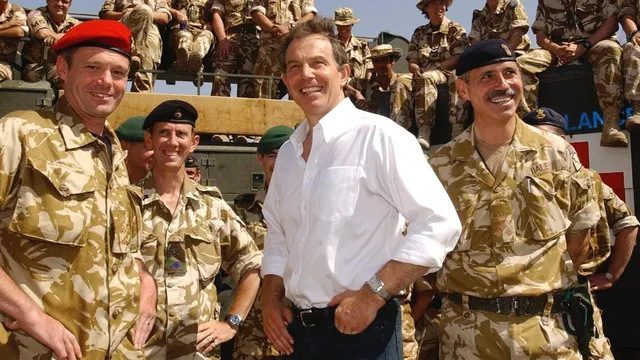
Tony Blair removed from Gaza peace council over Iraq war history
Tony Blair removed from Gaza peace council over Iraq war history
- Tony Blair faced backlash from Arab states over his support of the 2003 Iraq invasion.
- He was initially considered for a leadership role in Gaza’s peace council but has been quietly sidelined.
- This incident highlights the enduring consequences of his past actions in shaping current Middle Eastern geopolitics.
Story
In December 2025, Tony Blair, the former Prime Minister of the United Kingdom, faced backlash regarding his potential role in the Gaza peace council following objections from various Arab states. His contributions in the past, notably his decision to support the US-led invasion of Iraq in 2003 to remove Saddam Hussein, have left a lingering negative perception among regional leaders. Despite Donald Trump's previous endorsement, which highlighted Blair's popularity in the US and Israel, the adverse sentiments from Arab leaders have led to doubts about Blair's acceptability for such a significant position. As a result, he has been quietly removed from consideration for a top role. While it has been suggested that he might serve in a different capacity rather than on the central peace board, specific details regarding this new position remain unclear. This scenario showcases the contentious legacy of Blair's involvement in the Iraq conflict, which continues to affect diplomatic relationships in the Middle East today. Additionally, public sentiment against Blair remains strong in countries like Egypt. For instance, in 2023, Egyptian officials expressed distrust toward Blair, citing his ties to colonial legacies and opposition to foreign intervention in Gaza's governance. This distrust reflects a broader skepticism towards western figures aiming to influence Middle Eastern affairs, driven by past actions that have caused harm and instability in the region. Notably, significant public protests in 2003 against the Iraq War underlined his unpopularity, as the Chilcot Report later revealed that the justifications for the invasion were overstated. Furthermore, the ongoing consequences of the war have only intensified the scrutiny of his leadership, highlighting how the fallout from the Iraq War continues to reverberate through contemporary geopolitical discussions. Meanwhile, in a separate yet related cultural analysis, the film Atropia, released in early 2025, takes a satirical look at the Iraq War and its ongoing implications in modern society. The creators of the film, Alia Shawkat and Hailey Gates, emphasized the importance of revisiting this historical period through the lens of art and media. They aimed to provoke reflection on current events while examining a sense of nostalgia among younger generations who grapple with the complexities of contemporary geopolitics arising from past conflicts. This indicates a growing acknowledgment within cultural industries of the need to address historical grievances and their impact on present-day realities, further complicating the narratives surrounding conflicts like the Iraq War and its ongoing consequences in regions such as Gaza. Ultimately, Tony Blair's potential involvement in Gaza's peace council has been thwarted by the historical resentment stemming from his role in the Iraq invasion, demonstrating how past decisions can significantly influence current diplomatic efforts and perceptions. The situation serves as a poignant reminder of the intricate connections between historical events, public sentiment, and international relations today.
Context
The impact of Tony Blair's leadership during the Iraq War has had far-reaching consequences for the Gaza peace process, influencing the geopolitical landscape of the Middle East significantly. Tony Blair, serving as Prime Minister of the United Kingdom from 1997 to 2007, was a staunch supporter of the United States' decision to invade Iraq in 2003. This military intervention not only altered the dynamics of regional power but also affected relations between Western powers and various Middle Eastern nations, including those involved in the Israeli-Palestinian conflict. Blair's alignment with U.S. foreign policy positioned him as a crucial actor in the search for peace in the Middle East. However, the fallout from the Iraq War generated widespread disillusionment and resentment, particularly among Arab populations, complicating efforts to reach a peaceful resolution in Gaza and beyond. The invasion of Iraq led to a rise in anti-Western sentiment in the Middle East, as it was perceived by many as an act of aggression that disregarded international law and the sovereignty of nations. This sentiment contributed to increased tensions not only in Iraq but also across the region, destabilizing areas that had previously been more stable and leading to a proliferation of militant groups. Such instability created obstacles for any peace initiatives involving Israel and Palestine, as extremist violence undermined the credibility of moderate leaders on both sides. Additionally, the focus on Iraq diverted international attention and resources from ongoing negotiations in the Israeli-Palestinian conflict, allowing issues in Gaza to fester without significant intervention or support from major powers that had previously engaged more actively in peace processes. Blair's role as the Quartet's envoy to the Middle East following his premiership aimed to revitalize the peace process in the region, particularly concerning Gaza. However, the legacy of the Iraq War shadowed these initiatives, as skepticism towards Western intervention grew among Palestinian and Arab communities. Many viewed Blair's efforts as insincere or tainted by the policies of the U.S. and the UK during the Iraq conflict. This skepticism hampered his ability to mediate effectively, as mutual distrust between the involved parties intensified. Furthermore, the geopolitical complexities introduced by the Iraq War meant that new players in the region, such as Iran and non-state actors, became more influential, altering the calculus for peace negotiations. In summary, Tony Blair's support for the Iraq War has had profound implications for the Gaza peace process, permeated by a climate of distrust and geopolitical instability. The consequences of this intervention cast a long shadow over future peace efforts, creating new challenges that subsequent leaders and diplomats have had to navigate. As the landscape of Middle Eastern politics continues to evolve, understanding the interconnectedness of these events remains crucial for any endeavor aimed at achieving lasting peace in Gaza and the broader region.


