
politics
controversial
impactful

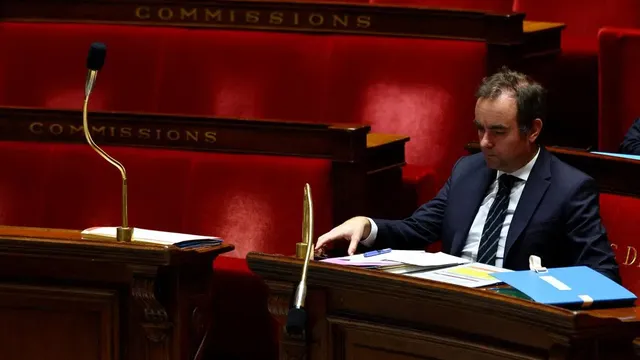
French government forces through budget amid political deadlock

Jan 17, 2026, 12:51 AM20
(Update: Jan 17, 2026, 3:56 AM)
capital of France
English-American playwright and author

French government forces through budget amid political deadlock

  • After months of negotiation failure, the French government plans to pass the 2026 budget bill without parliamentary approval.
  • Prime Minister Sebastien Lecornu announced amendments to the budget to appease the Socialist Party and facilitate negotiations.
  • The government's approach may lead to a no-confidence motion, exposing the fragility of the current French political landscape.
Share your opinion
2

Story

France is facing a significant political crisis as the government, under Prime Minister Sebastien Lecornu, is expected to push through the 2026 budget bill without a parliamentary vote due to months of stalled negotiations with lawmakers. Following failed attempts at compromise, Lecornu is presenting a revised draft of the budget that aims to address the concerns of the Socialist Party by increasing financial support for lower-income workers, students, and pensioners. The government is attempting to keep the country’s fiscal deficit under 5% of GDP while also adhering to stringent financial regulations, raising concerns among investors and ratings agencies. Challenges remain, as invoking constitutional provisions to bypass parliament could trigger a no-confidence vote, further destabilizing the already fragile political landscape. Since President Emmanuel Macron lost his majority in the parliament in 2022, the political environment has become increasingly fragmented, characterized by a hung parliament featuring three ideological blocs: Macron's centre-right alliance, the left, and the far-right National Rally. This fragmentation complicates consensus-building and increases the risk of governmental collapse should Lecornu's measures be rebuffed by opposition lawmakers. The latest budget proposal underscores the government's intention to amend earlier plans, which included cuts to pension tax rebates, and introduces new incentives such as pension benefits and affordable housing schemes. With significant pressure from the Socialist Party and others to maintain budgetary flexibility, the government must navigate the intricacies of parliamentary dynamics amidst looming economic challenges. Economic agents are closely watching these developments as any significant shifts in the fiscal policy could affect the stability of France's economy, particularly when considering the existing high fiscal deficit. Lecornu's government is tasked with the important responsibility of balancing financial prudence with political necessities, especially after the experience of unsuccessful negotiations over the past three months has laid bare the tensions between political factions. As the government prepares to potentially invoke Article 49.3 or consider other constitutional measures, the coming days will be crucial in determining the validity and acceptance of the new budget amid societal and political unrest. In conclusion, Lecornu's commitment to pushing through the budget highlights the urgency of fiscal reform in a politically fragmented system, marking a pivotal moment for the French government as it strives to demonstrate its capacity to govern effectively despite significant opposition.

2026 All rights reserved
