

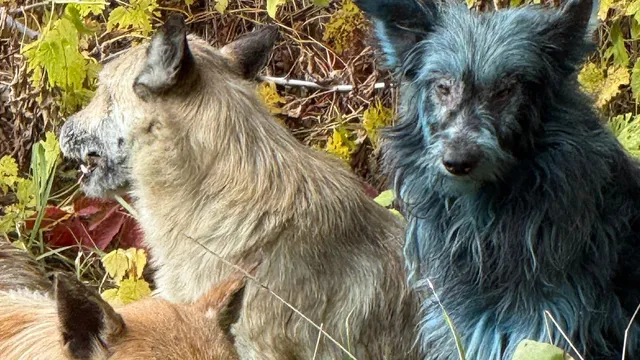
Scientists reveal blue dogs in Chernobyl are just dirty, not mutated
Scientists reveal blue dogs in Chernobyl are just dirty, not mutated
- Photos of stray dogs in the Chernobyl exclusion zone showed them with unusual blue coloring.
- Scientists have identified that the blue hue resulted from the dogs rolling in blue fecal matter from a tipped over portaloo.
- Claims of mutation or evolutionary adaptation due to radiation have been widely debunked.
Story
In Chernobyl, Ukraine, a new phenomenon has caught public attention regarding stray dogs living in the nuclear exclusion zone. Recent photos of these dogs surfacing online showed them with a striking blue color, prompting various conspiracy theories suggesting the animals had mutated due to radiation exposure from the 1986 nuclear disaster. This led to speculation about the impact of radiation as a potential evolutionary adaptation for survival in a contaminated environment. However, scientists, including University of South Carolina's Timothy Mousseau, have conclusively debunked these theories, stating the blue color is not a result of radiation or mutation but rather the consequence of the dogs rolling in blue fecal matter from a tipped over portaloo. This behavior is typical for dogs, noted Mousseau, reaffirming that the blue coloring stems from unsanitary habits rather than any environmental adaptation. He emphasized that the notion of mutated, blue dogs is unfounded and merely an example of social media hype rather than scientific reality. The dogs' plight has been noted by various organizations, bringing awareness to their ongoing struggles in a beleaguered environment. Chernobyl itself was the site of a catastrophic nuclear accident in 1986 that necessitated the establishment of a 30km exclusion zone, leading to mass evacuations. The long-term effects on the health of local residents and the environment continue to be felt, but the stray dogs that remained have received attention from the Clean Futures Fund and other animal welfare advocates. Initiatives to provide care, including spaying and neutering, have also been put in place to ensure the well-being of these animals.
Context
The Chernobyl disaster, which occurred on April 26, 1986, remains one of the most catastrophic nuclear accidents in history. Its immediate effects devastated the surrounding environment and led to the displacement of approximately 350,000 people from the contaminated zones. The nuclear meltdown released large amounts of radioactive particles into the atmosphere, which spread across Europe. While the long-term human health effects are still being studied, it is well-established that radiation exposure increases risks for certain cancers and other illnesses. The Chernobyl Exclusion Zone, established to limit human exposure to radiation, now spans approximately 30 kilometers around the reactor site and continues to serve as a focal point for assessment of the disaster's repercussions on wildlife and ecosystems, illustrating the complex interplay between environmental recovery and radiation impact on living organisms. In the years following the disaster, the wildlife in and around the Chernobyl Exclusion Zone began to show signs of adaptation to the contaminated environment. Researchers have observed a surprising resurgence of various species, including mammals like wolves, bears, and rare birds. Studies conducted in the area indicate that, paradoxically, the absence of human activity has allowed natural habitats to thrive, leading to increased biodiversity. Some animal populations are even reported to exceed pre-disaster levels, although the long-term effects of radiation are still a point of scientific inquiry. Adaptations to radiation or the ability to avoid contaminated areas may play a role in how these species manage to survive in such a harsh environment. The phenomenon provokes critical reflection on biodiversity in human-influenced landscapes and the processes of ecological recovery in the absence of direct human intervention. However, the radiological impacts on wildlife cannot be understated. Research shows that certain species exhibit mutations, reduced reproductive success, or other health issues attributed to accumulated radiation exposure. Species such as the European brown bear and various bird populations have been studied for their adaptation to elevated levels of radiation, yet their health remains a complex intersection of factors including environmental stressors and genetic resilience. In some cases, researchers have identified bioaccumulation of radioactive isotopes in the food chain, which can impact species at multiple trophic levels, contributing to concerns over ecosystem integrity and the potential for long-term ecological damage in the irradiated zones. The Chernobyl disaster illustrates the resilience of nature and the ability of ecosystems to recover, even from catastrophic events. However, it also serves as a stark reminder of the ongoing implications of nuclear technology and the need for stringent safety measures. The intersection of biodiversity conservation and the study of radiation effects offers a unique opportunity for scientists to understand how ecosystems respond to stressors, including human-induced disasters. Continued research in the Chernobyl Exclusion Zone not only provides insight into wildlife recovery and adaptation but also serves as critical knowledge for future environmental management and nuclear disaster preparedness. As we move forward in understanding these influences, the lessons from Chernobyl will continue to reshape both conservation strategies and public policy surrounding nuclear energy.


