

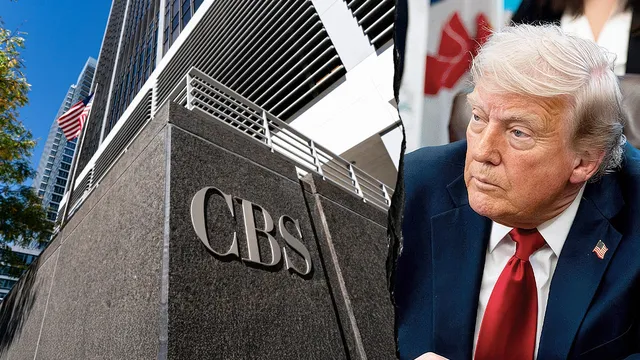
White House lashes out at CBS over hiring ex-Liz Cheney aide
White House lashes out at CBS over hiring ex-Liz Cheney aide
- Jeremy Adler, once an advisor to Liz Cheney, is reportedly joining CBS News.
- The White House reacted negatively, claiming this undermines CBS's credibility due to Adler's association with a critic of Trump.
- The hiring highlights ongoing tensions between media outlets and political figures in the current era.
Story
In the United States, CBS News faced backlash after reportedly hiring Jeremy Adler, a former communications executive for ex-Representative Liz Cheney. Cheney, known for her vocal opposition to former President Donald Trump and served as Vice Chair of the January 6 Select Committee, had built a reputation as a key critic of Trump's actions following the Capitol riot on January 6, 2021. The White House expressed its displeasure, feeling this hiring undermined CBS News's credibility, especially given Adler's close ties to Cheney, who had been a prominent adversary of the former president. The tension highlights the ongoing division within American politics and media regarding Trump's influence, with CBS being described by some as having lost credibility over the decision to hire someone associated with a known Trump critic. The dynamic between various media entities and politicians continues to evolve, especially as CBS has undergone significant changes in its leadership and staff in recent years. Following a controversial year, CBS had previously made a settlement with Trump, which included compensation related to a lawsuit over its interview with Vice President Kamala Harris. This backdrop sets a tense framework for the network's new hires and editorial direction. Bari Weiss, a noted critic of mainstream media, was appointed as CBS's editor in chief, signaling a strategic pivot that has been met with mixed reactions. Bari Weiss's ascension and decisions continue to attract scrutiny as CBS undergoes significant staff changes, including the departure of Anderson Cooper from "60 Minutes". Amidst this shake-up, Weiss's choices reflect her mission to renew CBS’s editorial stance and reputation. However, the hiring of Jeremy Adler specifically seems to infringe upon this goal, drawing criticism from both sides of the political spectrum. While some see it as an attempt to bolster CBS's journalistic integrity, others view it as a risky maneuver that could alienate viewers supportive of Trump. This hiring decision further complicates CBS's relationship with the political landscape, especially in the lead-up to the 2024 elections, where media portrayal will likely play a crucial role. The ongoing conflict within CBS raises questions about its future credibility and alignment with audience expectations as it tries to balance various factions within its viewership. Ultimately, the response to Adler's hiring will shape both public perception of CBS News and the broader discussions surrounding media independence and journalistic integrity in the current socio-political climate.
Context
Liz Cheney has emerged as a significant figure in American politics, particularly within the Republican Party, highlighting the complex dynamics of party loyalty, ideology, and leadership. As a prominent Republican and the daughter of former Vice President Dick Cheney, her stance on various issues, particularly her outspoken criticism of former President Donald Trump and her role in the January 6th Capitol riot investigation, has sparked intense debate among party members and conservative voters. Cheney's willingness to prioritize constitutional integrity over party allegiance has positioned her as both a symbol of traditional conservative values and a polarizing figure within her party. Her fall from grace among many Republicans illustrates the broader ideological schism affecting the party today. Cheney's impact on the Republican Party can be traced through her actions and statements that emphasize accountability and democracy. As one of the few Republican members of Congress who publicly denounced Trump in the wake of the Capitol insurrection, she has faced significant backlash from her party, leading to her removal from leadership positions. This decision, while it temporarily consolidated Trump's grip on the party, also ignited discussions about the future of Republicanism and what it means to be a Republican in the contemporary political landscape. Cheney's forthrightness and commitment to her principles have resonated with a segment of the electorate that seeks a return to more traditional conservative values, distancing themselves from the populism that has characterized the party's recent evolution. Moreover, Cheney's ongoing efforts to challenge the narratives surrounding Trump and January 6th have placed her at the forefront of a faction within the Republican Party that advocates for a restoration of integrity and respect for democratic institutions. Her involvement in the House Select Committee investigating the January 6 attack underscores her belief that the party must confront the realities of its recent past to have a viable future. While this stance has alienated some party loyalists, it has also garnered support from moderates and independence who are concerned about the implications of Trump's influence on American democracy. The long-term effects of this evaluation process within the party could ultimately dictate its electoral prospects and ideological direction moving forward. As the 2026 elections approach, Cheney's role in shaping the Republican Party's narrative will be critical. Her presence signals a potential reevaluation of what it means to be a Republican in a time of division and turmoil. Whether through her own political ambitions or her influence on other party members, Liz Cheney represents a vital counter-narrative to the more extreme elements within the Republican establishment. Her commitment to a balanced and principled approach to governance may pave the way for a future where a moderate wing of the party can coexist with the more populist factions. The ongoing discourse initiated by her actions will likely define the party's identity in the coming years, impacting not only its electoral strategies but also its role in the broader American political landscape.


