

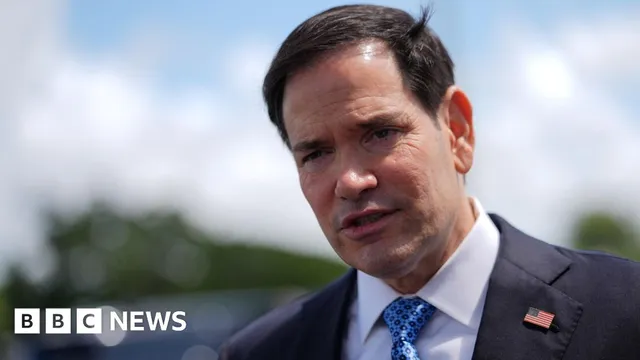
Marco Rubio claims Cuba threatens US national security
Marco Rubio claims Cuba threatens US national security
- US Secretary of State Marco Rubio accused Cuba of being a significant national security threat.
- Cuban Foreign Minister Bruno Rodríguez denied these allegations and criticized US actions against the island.
- The statements highlight ongoing tensions and the potential for military intervention from the US.
Story
The United States has ramped up its rhetoric regarding Cuba, with Secretary of State Marco Rubio labeling the island nation as a significant national security threat. His comments followed the indictment of former Cuban President Raúl Castro for his involvement in the 1996 downing of two American planes, which resulted in the deaths of several US nationals. This indictment has been viewed by some as a reflection of the Trump administration's willingness to resort to military actions in an attempt to effect regime change in Cuba, reminiscent of previous interventions in other countries such as Venezuela. Cuba's Foreign Minister Bruno Rodríguez countered Rubio's statements, defending the nation by asserting that it has never posed a threat to the US and accused Rubio of attempting to stir up military aggression. He positioned the current US policies as furthering humanitarian crises within Cuba, enhancing fuel shortages and extended blackouts faced by Cuban citizens. Furthermore, the Cuban government has accepted a US offer of $100 million in humanitarian aid, indicating a potential path for diplomacy amid escalating tensions. As the Trump administration continues to exert pressure on Cuba, Trump's previous statements have indicated a desire to take action against its communist regime, suggesting that the potential for military intervention remains a serious consideration. The willingness to abandon peaceful negotiations in favor of military options has raised concerns among observers regarding the repercussions and consequences of such a strategy for both nations. Meanwhile, Cuba claims its recent military drone acquisitions are merely defensive The situation continues to evolve, with both sides seemingly entrenched in their positions. Observers note the historical context of US-Cuba relations, which have been strained since the Cuban Revolution of 1959, leading to an ongoing narrative of hostility between the two nations. In light of Rubio's comments, it becomes evident that the current administration's approach towards Cuba is likely to influence the future of US foreign policy in the region.
Context
data economic insight insight policy strategic trends global geopolitical policy analysis policy market trends market economic global geopolitical policy trends impact impact insight economic market market strategic trends impact impact market impact shift trends geopolitical market policy global data trends policy insight insight trends impact data shift impact impact trends economic policy strategic insight global policy policy market impact market data market impact market analysis policy data global market analysis impact market trends insight insight impact geopolitical data strategic shift...


