

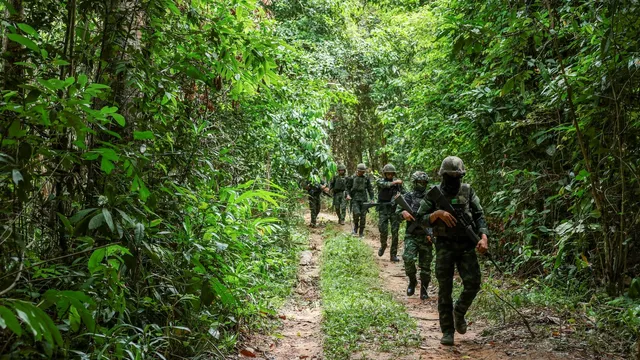
Thailand escalates conflict with airstrikes against Cambodia
Thailand escalates conflict with airstrikes against Cambodia
- Tensions escalated on December 7, 2025, as Thailand conducted airstrikes against Cambodian military targets.
- Thailand accused Cambodia of firing first, while Cambodia claimed it did not retaliate to initial attacks.
- The situation has led to the evacuation of over 385,000 civilians in Thailand and calls for restraint from neighboring leaders.
Story
On December 7, 2025, tensions escalated between Thailand and Cambodia as Thailand launched airstrikes on military targets along their shared border. The Thai military reported that one soldier was killed and four were wounded in the conflict, asserting that Cambodian forces fired first into Thai territory, prompting the airstrikes. Major General Winthai Suvaree confirmed that military aircraft were utilized to suppress continued fire from Cambodian troops. In response, the Cambodian defense ministry accused Thailand of initiating the attacks, urging for an immediate halt to hostilities that jeopardize regional peace. As a result of the violence, over 385,000 civilians in four border districts of Thailand have begun evacuating, with more than 35,000 already moved to temporary shelters. Additionally, schools in the affected areas have been closed. Malaysian Prime Minister Anwar Ibrahim has called for maximum restraint from both nations, pressing for open communication channels to mitigate tensions. The relationship between Thailand and Cambodia has historically been strained due to territorial disputes, which previously resulted in a five-day conflict in July that caused numerous casualties. Recently signed ceasefire agreements, brokered by US President Donald Trump, have failed to maintain peace, suggesting that deeper political resolutions are necessary to prevent further military confrontations between the two countries.
Context
The history of the Thailand-Cambodia border conflict is a complex narrative shaped by historical grievances, territorial disputes, and nationalist sentiments. One of the most prominent flashpoints of this conflict has been the area surrounding the Preah Vihear Temple, a 12th-century Hindu temple located on a mountaintop in the Dângrêk Mountains. This site has been a focal point of territorial contention due to its cultural significance and strategic location. The temple, originally dedicated to the Hindu god Shiva, has long been a symbol of national pride for both Thailand and Cambodia, leading to heightened tensions over its ownership. The issue gained international attention in 1962 when the International Court of Justice ruled that Preah Vihear Temple was situated in Cambodia, a decision that was not universally accepted by Thailand and incited further disputes in subsequent decades. The historical claims over the boundary have their roots in colonial history, particularly during the French colonial period. As the French sought to solidify their influence in Indochina, they established arbitrary borders that did not necessarily reflect the cultural or ethnic realities on the ground. The delineation of the borders set by colonial powers has led to ongoing disputes that have remained unresolved after independence for both countries. As a result, national identity has become intertwined with territorial claims, and both nations have utilized the historical significance of the temple and surrounding areas to bolster their respective claims. This nationalist sentiment has often been manipulated by political leaders to rally support, exacerbating hostilities at various times. In recent years, several military skirmishes have occurred as a result of these territorial disputes, notably in 2008 and 2011 when both nations engaged in armed confrontations near the temple complex. The clashes reflected not only the unresolved issues surrounding the border but also the lack of effective diplomatic communication between Thailand and Cambodia. Despite international calls for peace and dialogue, deep-seated suspicions and national pride have hindered constructive negotiations aimed at resolving the conflict. Regional organizations such as ASEAN have attempted to mediate the disagreements, but the effectiveness of such efforts has been limited by national interests and the complexity of the issues involved. In light of the ongoing conflict, both Thailand and Cambodia have engaged in various attempts to resolve border disputes through diplomatic channels. The establishment of joint committees to oversee heritage sites and promote tourism has emerged as a potential avenue for reconciliation. However, the path forward remains fraught with challenges, including entrenched political positions and fluctuating public sentiments that reflect historical grievances. The Thailand-Cambodia border conflict underscores the importance of addressing historical narratives alongside contemporary diplomatic efforts to foster a peaceful coexistence between the two nations. Acknowledging the shared heritage while finding mutually acceptable solutions to territorial disputes will be essential in moving forward.


