

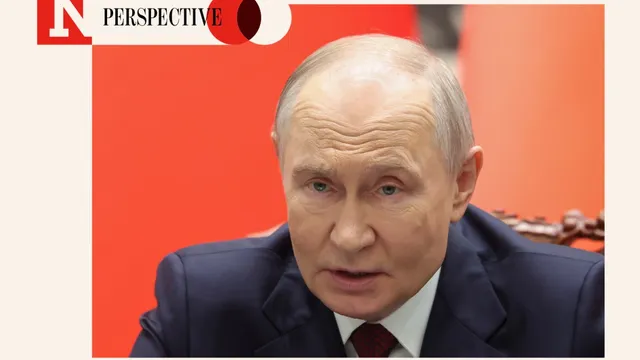
NATO may act decisively against Russian aggression without U.S. leadership
NATO may act decisively against Russian aggression without U.S. leadership
- Poland has reported multiple breaches of its airspace by Russian drones, raising alarms about security.
- European nations are considering stronger defensive measures and a no-fly zone over Ukraine.
- The changing dynamics in NATO could lead to a more aggressive stance against Russia due to U.S. uncertainty.
Story
In recent months, the tensions in Eastern Europe have escalated significantly following Russia's aggression, which has included drone incursions into Polish airspace. In response, Foreign Minister Radosław Sikorski of Poland remarked that it is implausible to consider these breaches as accidental, indicating a growing frustration with Russia’s gray zone strategy that operates beneath the traditional threshold of direct conflict. As a reaction to Russia's activities and in light of perceived U.S. indecision, there has been an increasing push among NATO's front-line states to enhance their defense capabilities and consider stronger measures, such as the proposed no-fly zone over Ukraine. With continued reports of GPS jamming and spoofing affecting military operations across Europe, the reliance on American leadership has become a double-edged sword. While the U.S. has historically provided a backbone to NATO’s operations, its uncertain stance might prompt European nations to take the initiative in confronting Russian threats more assertively, without waiting for consensus from Washington. This need for a more unified and proactive response reflects a significant shift in NATO's dynamics, suggesting that the alliance may be evolving into a more unpredictable and self-reliant entity in the face of challenges posed by Russia.
Context
Radosław Sikorski, a prominent Polish politician and former Minister of Foreign Affairs, has made several key statements regarding the NATO and EU defense policy in recent years, emphasizing the importance of collective security and military cooperation among member states. As a vocal proponent of strong transatlantic ties, Sikorski has underscored the necessity for European nations to enhance their defense capabilities in light of evolving security challenges, particularly from Russia. His perspective highlights a growing consensus within the European Union about the need for a more integrated and autonomous defense policy that complements NATO's efforts while also ensuring that Europe can respond effectively to regional threats. Sikorski's statements often reflect the concern that the reliance on the United States for defense may not be sustainable in the long term, advocating for European countries to play a larger role in their own security. This call for increased European defense spending and coordination echoes broader discussions about the future of NATO, particularly as European nations grapple with varying levels of commitment and investment in defense. By fostering a robust European defense policy, Sikorski believes that EU nations will not only strengthen their own security but also contribute to the overall effectiveness of the NATO alliance. A notable aspect of Sikorski's discourse is his emphasis on the importance of a united European front in the face of potential threats from outside powers. He argues that a more coherent and coordinated EU defense agenda would signal to adversaries that Europe is serious about its security. Sikorski's advocacy for increased military cooperation, joint exercises, and the development of a common military strategy is aimed at enhancing the collective defense posture of EU member states, ensuring that they are prepared to confront both conventional and hybrid threats. Moreover, Sikorski's observations resonate with the ongoing debates surrounding the strategic autonomy of the EU in defense matters. As global dynamics shift and new geopolitical challenges emerge, he encourages policymakers to consider innovative solutions that ensure the EU can act independently while still maintaining strong ties with NATO. Ultimately, Radosław Sikorski’s statements reflect a deep understanding of both the historical context of European security and the current geopolitical landscape, pushing for a partnership between NATO and the EU that prioritizes resilience, adaptability, and shared responsibility among member states.


