
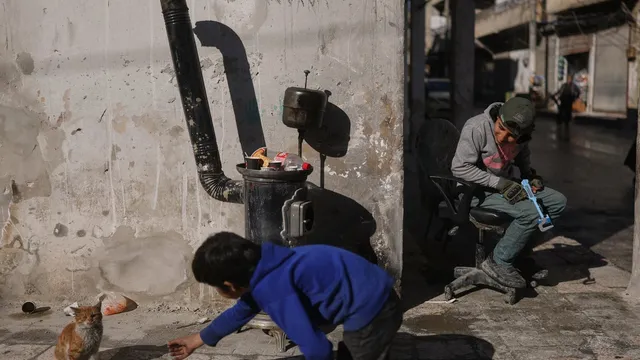
Resilience shines as residents return to Aleppo after intense fighting
- A month after violent clashes in Aleppo, most residents have returned to their homes.
- The fighting led to significant displacement and casualties, while the government has taken action to improve security.
- Despite reassurance from authorities, economic conditions have worsened for local businesses and residents.
Story
In Syria's Aleppo, a Kurdish-majority neighborhood experienced significant turmoil recently as clashes erupted between government forces and the Kurdish-led Syrian Democratic Forces. The violence led to the temporary displacement of more than 140,000 residents, with at least 23 people losing their lives. Just one month after the fighting, a remarkable recovery began, with tens of thousands of displaced individuals returning to their homes, marking one of the quickest returns post-conflict in the region. Significant factors contributing to this rapid return included the new government's efforts to avoid civilian harm and a ceasefire agreement that has permitted a calming of hostilities between the involved factions. Despite the improved security situation, residents expressed concerns about the economic outlook, as many had previously depended on jobs related to the Kurdish authorities. Now that these local governance structures are no longer active, the economic burden has notably worsened for households within the neighborhood. Additionally, local businesses have struggled to regain momentum after the clashes disrupted trade and services. Individuals voiced growing fears about the future economic challenges, alongside an overarching anxiety about customer loss and diminishing employment opportunities. Nevertheless, the renewal in community activity has been marked by the reopening of shops and resumed daily interactions among residents. The changes reflect a fragile transition in a country still grappling with the ramifications of a prolonged civil conflict. The new Syrian government's attempts to establish control over such diverse demographics garner mixed reactions, as minority groups like the Kurds remain apprehensive yet hopeful about their security and citizenship rights. While extending promises of equality to the Kurdish populace, the outcomes of these efforts are yet to be fully realized, as citizens remain vigilant about the government's credibility. This neighborhood, once plagued by uncertainty, provides a microcosm of Syria's broader, painful journey toward recovery and coexistence after years of upheaval. As tensions eased, the emergence of daily lives resuming normality serves as a reminder of the enduring human spirit in the face of adversity. Conversations between residents of different ethnic backgrounds resumed in the streets of Aleppo, illustrating a desire for community cohesion amid uncertain futures. For many, the return home marks not just a geographical shift but a longing to reclaim norms disrupted by conflict, though challenges persist amidst an evolving political landscape.
