

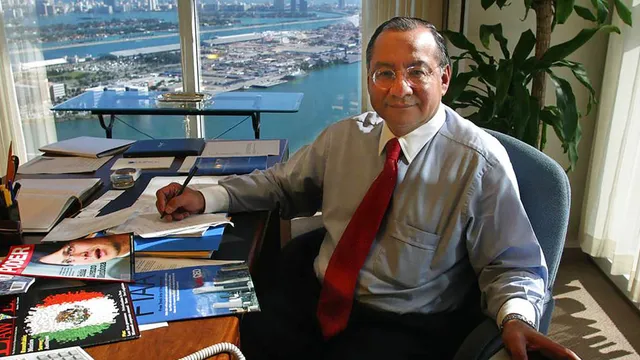
Federal prosecutors aim to revoke citizenship from diplomat turned Cuban spy
Federal prosecutors aim to revoke citizenship from diplomat turned Cuban spy
- Victor Manuel Rocha is accused of lying during his naturalization process while covertly serving as a Cuban agent.
- Federal prosecutors argue that individuals working against U.S. interests should not keep American citizenship.
- The case highlights the challenges in citizenship vetting processes and the seriousness of foreign ties.
Story
In December 2023, federal prosecutors filed a civil complaint in Miami against Victor Manuel Rocha, a former U.S. diplomat, seeking to revoke his citizenship. Rocha, who was born in Colombia, is accused of having lied during his naturalization process in the 1970s, denying any association with the Communist Party and committing felonies while also claiming allegiance to the United States. This effort follows his admission that he acted as a covert agent for Cuba, starting in 1973, five years before he became a U.S. citizen. His activities reportedly included spying for Cuban intelligence and efforts to undermine U.S. policies. Rocha’s case has drawn significant media attention given his long-standing connections with the Cuban regime, which is classified as a state sponsor of terrorism. His actions reportedly include working with spies against American interests and relaying information to the Cuban government for decades while holding positions such as U.S. Ambassador to Bolivia and serving on the National Security Council. These revelations have caused outrage, particularly among Cuban-American communities who feel betrayed by Rocha's dual life. Recent evidence gathered by the FBI indicated that Rocha engaged in conversations with an undercover agent, during which he acknowledged his decades-long role as a Cuban intelligence operative. This information was pivotal in consolidating the prosecution's argument for denaturalization, which includes not only Rocha’s fraudulent naturalization claims but also highlights a conflict of allegiance owing to his prior commitments to a foreign government. U.S. attorneys have stated that a person serving as an agent for a country recognized for its human rights violations and terrorism should not retain U.S. citizenship. The implications of this case extend beyond Rocha himself, as it raises questions about the vetting process for those achieving U.S. citizenship and the complexities involved with individuals who may have ties to foreign adversaries. Such situations demand stringent scrutiny, especially when dealing with those who openly admit to working against U.S. interests. This case illustrates the broader challenge of ensuring that individuals who pose potential threats to national security do not misuse the privileges of American citizenship.
Context
U.S. citizenship through naturalization is a structured process governed by specific eligibility requirements established by U.S. immigration law. To qualify for naturalization, applicants must be at least 18 years of age and must have been a lawful permanent resident (green card holder) of the United States for at least five years, or three years if they are married to a U.S. citizen. Additionally, applicants must demonstrate continuous residency in the U.S. during this period, meaning they should not have taken any trips abroad lasting six months or longer that could show an intention to abandon their residency. This residency requirement ensures that applicants have a substantial connection to the United States and are familiar with its culture and governance. In addition to the residency and age requirements, applicants must also demonstrate good moral character. This means that during the statutory period of residency, they should not have committed crimes that could disqualify them from obtaining citizenship, such as felonies, immigration fraud, or certain misdemeanors. Furthermore, applicants are required to exhibit a basic understanding of U.S. history and government, as well as the English language, including the ability to read, write, and speak basic English. There are certain exemptions to the language requirement for older individuals or those with disabilities, reflecting the U.S. government’s recognition of diverse circumstances. Part of the naturalization process involves an application submitted to the U.S. Citizenship and Immigration Services (USCIS) using Form N-400, the Application for Naturalization. After submitting the application, applicants will be scheduled for an interview where they will be asked questions related to their application, and their knowledge of U.S. history and government will be tested. Additionally, applicants must take an oath of allegiance to the United States, which further emphasizes their commitment to upholding the values and responsibilities required of a U.S. citizen, such as loyalty to the Constitution and willingness to serve in the armed forces if required. It is critical for applicants to prepare thoroughly for the naturalization process, as each step is meticulously reviewed by immigration officials. Misrepresentations or omissions in the application may lead to denial or even criminal penalties. By adhering to the outlined requirements and properly preparing for the interview and civics tests, candidates can successfully navigate the naturalization process, ultimately achieving their aspiration of becoming a U.S. citizen. The pathways to citizenship reflect the principles that define the American democratic system – inclusivity, responsibility, and engagement with the community.


