

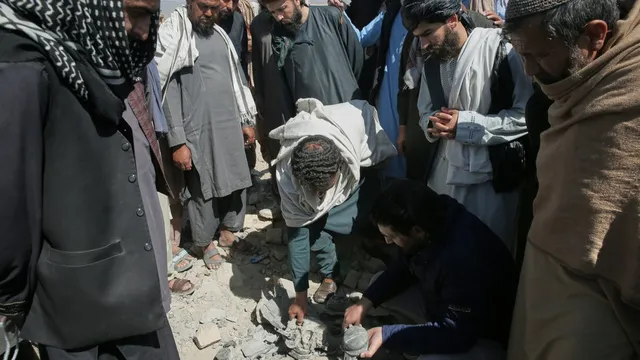
Pakistan airstrikes kill civilians in Afghanistan amidst escalating conflict
Pakistan airstrikes kill civilians in Afghanistan amidst escalating conflict
- Afghanistan's Taliban government accused Pakistan's military of airstrikes that struck densely populated areas.
- Initial reports indicate at least four civilian casualties, including children, resulting from these attacks.
- Continued aggressions signal the escalated military conflicts could further destabilize the region.
Story
On March 13, 2026, Afghanistan's Taliban government accused Pakistan's military of launching airstrikes targeting residential areas in Kabul and Kandahar, resulting in the deaths of at least four civilians, including children. The attacks are part of an ongoing conflict that began in late February when tensions escalated over border incidents. Pakistan has asserted that its military operations aim to target the Tehrik-e-Taliban Pakistan (TTP), which it claims operates from Afghan territory, a charge that Afghanistan denies. The Afghan government warned that it would respond to the aggressive airstrikes, emphasizing that these actions have increased hostilities that could lead to further instability. In a series of escalated confrontations over the past weeks, both countries have exchanged fire, leading to numerous casualties on both sides. Over the same period, reports indicated that Pakistani operations have resulted in the deaths of over 56 civilians within Afghanistan, including many children, raising humanitarian concerns. The situation is further complicated by regional diplomatic efforts from China, which has sought to mediate a resolution amidst growing violence that threatens to spiral into a larger conflict. Taliban spokesperson Zabihullah Mujahid highlighted that the airstrikes also targeted fuel depots that are critical for civilian and UN operations, emphasizing the significant impacts on humanitarian efforts in the region. Following the strikes, Afghanistan's air force retaliated by targeting Pakistani military installations, exacerbating the conflict. The backdrop of this violence includes a failed ceasefire that was previously negotiated through Qatari and Turkish mediation, which has left the door open for increased hostilities. As military conflict continues, the Afghan Taliban's refusal to curb the TTP, which Pakistan regards as a serious security threat, has further strained relations. Both nations are caught in a cycle of violence driven by long-standing grievances, particularly around border security and terrorist activity that both sides accuse each other of harboring. The ongoing airstrikes indicate a move towards more aggressive military tactics, raising fears of a broader war that would destabilize not just Pakistan and Afghanistan, but potentially impact neighboring countries as well.
Context
The Afghanistan-Pakistan conflict has been a longstanding regional issue that has attracted the attention of the international community for decades. The complex historical, political, and social dynamics in both countries, particularly following the Soviet invasion of Afghanistan in 1979, have made it imperative for global stakeholders to understand and address the underlying causes of instability. Their involvement has varied over the years, ranging from military interventions to humanitarian aid and diplomatic efforts aimed at fostering peace and stability in the region. The international community, particularly through organizations such as the United Nations, has played a significant role in facilitating dialogue and negotiations between conflicting parties in both Afghanistan and Pakistan, often seeking to establish a collaborative framework for peace. This involvement has not only focused on countering terrorism and securing borders but also on promoting economic development and social cohesion to address the root causes of conflict. However, the effectiveness of the international community's role has been met with challenges. Political dynamics within Pakistan and Afghanistan often complicate external efforts, as local power structures, tribal affiliations, and historical grievances influence the behavior and decisions of key stakeholders. Moreover, the emergence of various militant groups has further entrenched divisions, making it difficult for international actors to achieve sustainable peace. Over the years, the global responses to the conflict have evolved, especially following events like the 9/11 attacks, which necessitated renewed focus on counter-terrorism measures. While results have been mixed, international diplomacy has often shifted between supporting military interventions and promoting more comprehensive approaches that include economic and social strategies. The withdrawal of foreign troops following extensive military engagements in Afghanistan has presented a new set of challenges and opportunities for the international community. As the security landscape changes, ensuring that humanitarian support and development assistance continue remains critical. Countries like the United States, Pakistan, India, and various European nations have a vested interest in the stability of the region, and their involvement will likely shift towards supporting local governance and civil society initiatives. This shift acknowledges the importance of Afghan and Pakistani ownership in the peace-building process, recognizing that long-term stability is best achieved through local solutions tailored to the unique circumstances of both nations. In conclusion, while the international community has a crucial role to play in addressing the Afghanistan-Pakistan conflict, the success of these efforts hinges on understanding local contexts and fostering inclusive dialogue among various stakeholders. Future engagement strategies should prioritize collaboration with local governments and community leaders to lay the groundwork for sustained stability, addressing not only security concerns but also economic and social inequalities that fuel the conflict. Ultimately, a nuanced approach that respects the sovereignty of both Afghanistan and Pakistan while providing support will be essential for achieving lasting peace in the region.


