

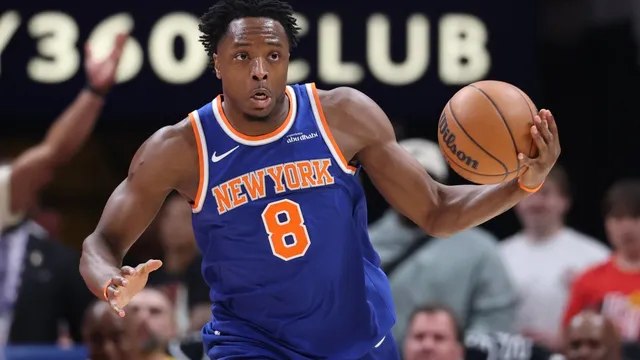
Knicks may lose OG Anunoby due to hamstring injury
Knicks may lose OG Anunoby due to hamstring injury
- The Knicks achieved a key playoff win against the 76ers, leading the series 2-0.
- OG Anunoby exited Game 2 with a right hamstring injury, raising concern about his availability.
- The Knicks cannot afford to lose Anunoby for long if they wish to compete for the championship.
Story
In the 2026 NBA playoffs, the New York Knicks faced off against the Philadelphia 76ers in the Eastern Conference semifinals. The Knicks secured a notable victory in Game 2, taking a 2-0 series lead with a score of 108-102. However, a significant concern arose when OG Anunoby exited the game late due to a potential hamstring injury, which could hinder the team's performance moving forward. Anunoby had been pivotal for the Knicks, showcasing an impressive postseason by averaging over 21 points and contributing defensively with steals and blocks. As fans and teammates waited for an update on Anunoby’s condition, head coach Mike Brown's lack of concrete information stirred anxiety. Jalen Brunson and Mikal Bridges, prominent players on the team, addressed the injury's impact, emphasizing the need for the next player to step up if Anunoby is sidelined. Anunoby's impressive playoffs included elevating his performance from an average of 16 points in the regular season to 21 points against the Atlanta Hawks in the first round. With injuries playing a vital role in this playoff season, Anunoby's potential absence would not only affect the Knicks’ chances against the 76ers but could also be a blow to their aspirations to compete for the championship. Comparisons have been made between Anunoby's contributions and those of historic players in Knicks history, highlighting how critical he has become for the team's postseason success. The Knicks are in a position where complementary scoring from other players will be necessary to fill the void left by Anunoby if he does not recover quickly. The series against Philadelphia marks an important chapter in the Knicks' quest for the Eastern Conference finals, and as the situation unfolds, the organization remains hopeful for Anunoby's return. Meanwhile, the 76ers, facing their own injury issues with Joel Embiid, are also adjusting their strategies and lineup in response to evolving circumstances. The teams will continue their series as they deal with the unpredictability of player health in high-stakes playoff situations.
Context
Injuries significantly impact the performance and dynamics of NBA playoff teams, shaping outcomes and determining the trajectory of championship aspirations. The intensity of the playoffs, combined with the physical demands placed on players, can lead to a higher risk of injuries that may not only sideline key players but also disrupt team chemistry and strategy. Historically, franchises that have navigated the playoffs with a healthy roster tend to outperform those that suffer significant injuries, with continuity in player lineups proving crucial to success during the high-pressure postseason. Players often face unique challenges in recovery times, and even minor injuries can escalate under the competitive strain of playoff games, affecting shooting percentage, defensive capabilities, and overall team cohesion. Consequently, managing player health becomes a central focus for teams looking to advance in the playoffs, with medical staff playing an essential role in monitoring player fitness and providing rehabilitation support. Each season showcases examples where injuries have influenced playoff outcomes dramatically. Teams reliant on superstars are particularly vulnerable; for instance, the absence of a star player due to injury can lead to diminished performance across the board, adjusting the expectations and strategies employed by the coaching staff. Conversely, success stories arise when lesser-known players step up in the absence of injured teammates. The emergence of bench players as key contributors not only alters game dynamics but also reflects the depth and adaptability of a team. These instances highlight the unpredictable nature of playoff basketball, illustrating that while injuries can lead to adverse outcomes, they can also provide opportunities for other team members to shine, altering the competitive landscape. Moreover, the psychological toll on players struggling with injuries must not be underestimated. The pressure to perform at an elite level while coping with physical limitations can lead to added stress and affect decision-making on the court. Teams that successfully navigate the emotional challenges associated with injuries often find a way to rally and maintain competitive spirit, showcasing resilience in the face of adversity. This mental component becomes crucial as series progress, with teams that foster a positive, supportive environment for injured players often faring better, regardless of physical setbacks. Thus, building a strong team culture can be just as vital as the physical attributes and skill sets of individual players. In conclusion, the impact of injuries on NBA playoff teams is multifaceted, influencing not just the immediate performance of a team but also their longer-term objectives. Managing player health, fostering depth, and maintaining a positive team psyche under stress are elements that can define success or failure during the playoffs. As teams continue to evolve in their approach to injury prevention and player wellness, the significance of these factors remains paramount in the quest for an NBA championship. In the competitive arena of the playoffs, the ability to adapt to such challenges can serve as a differentiating factor between a championship run and an early exit.


