

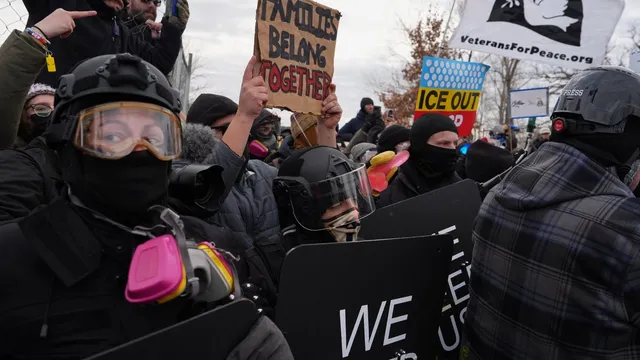
Prosecutors suspend civil rights investigation into Renee Good's fatal shooting
Prosecutors suspend civil rights investigation into Renee Good's fatal shooting
- Renee Good was fatally shot by a federal immigration officer on January 7, 2026, igniting protests in Minneapolis.
- A civil rights investigation into the shooting was abruptly halted, leading to resignations among U.S. prosecutors.
- The incidents surrounding Good's and Pretti's deaths have spurred ongoing community activism against immigration enforcement.
Story
In the United States, specifically in Minneapolis, Renee Good was shot and killed by a federal immigration officer on January 7 while driving away from immigration officials. The incident occurred during a time of heightened tensions regarding immigration enforcement under the Trump administration, sparking outrage and protests across the nation. The killing of Good, a 37-year-old mother of three, has been linked with the anger surrounding the administration's policies. Just weeks later, another local resident, Alex Pretti, was also killed in a confrontation with immigration officers, further igniting protests and discussions on immigration methods and civil rights. Following Good's death and the subsequent backlash, U.S. prosecutors initiated a civil rights investigation to look into whether the actions of the immigration officer were justified. However, the situation escalated when an order was imposed to halt the inquiry, resulting in mass resignations among prosecutors discontented with the decision. This development raised serious questions concerning accountability and transparency in the enforcement of immigration laws, especially given the controversial nature of the policies being implemented at that time. Many community leaders and residents criticized the federal crackdown on immigration, labeling it an abuse of power and a federal occupation of the region. On January 24, another tragic incident occurred involving Alex Pretti, who was killed during an encounter with immigration officers. Reports indicate that Pretti was subdued by multiple officers, and during the struggle, it became known that he was carrying a legally licensed firearm, which led to the officers opening fire. These events have fueled public outcry, with protesters expressing their grievances through demonstrations and calling for greater protection of civil rights. Community organizers and activists have continued to mobilize in response to the deaths of both Good and Pretti, emphasizing the need for reform in immigration policies. Meanwhile, Good's wife, Becca Good, publicly articulated the emotional toll of these events on families affected by immigration enforcement. She pointed out that while society knows the names of her wife and Pretti, countless others remain nameless victims affected by such measures. These incidents have sparked ongoing conversations about community safety, immigration policies, and the treatment of individuals by law enforcement, indicating a growing movement for change in how these issues are approached.
Context
The recent immigration policies under the Trump administration have been marked by a significant departure from previous approaches, focusing on stricter enforcement, reduced numbers of immigrants, and a redefinition of eligibility for asylum seekers. One of the administration's hallmark measures was the implementation of the "Remain in Mexico" policy, officially known as the Migrant Protection Protocols, which required asylum seekers to wait in Mexico while their claims were processed in the United States. This policy aimed to deter illegal border crossings and manage the surge of migrants, particularly from Central America. Critics, however, pointed to the dangers faced by asylum seekers in Mexico and the overwhelming challenges of the U.S. immigration court system to process claims efficiently. The administration also emphasized building a wall along the southern border, ramping up funding and resources for border security measures, including the deployment of military personnel to assist in enforcement efforts. In addition to border enforcement strategies, the Trump administration pursued policies that sought to limit legal immigration. These included changing the criteria for obtaining work visas and green cards, targeting programs that allowed families to sponsor relatives, and narrowing the definition of public charge, which previously considered an immigrant's reliance on public benefits in the context of their admissibility. These efforts resulted in a decrease in the overall number of immigrants entering the United States legally, with the Immigration and Customs Enforcement (ICE) agency becoming more aggressive in deportation procedures. This shift generated heated debates around the impacts on families, communities, and the workforce, particularly in sectors relying on immigrant labor. Another notable aspect of the Trump administration's immigration policy was its impact on international agreements and cooperation with Mexico and Central American countries. The administration leveraged economic aid as a means to encourage these nations to take greater responsibility for managing migration flows. This included financial support conditional on their efforts to stop the flow of migrants heading towards the U.S. Similarly, the administration's relationships with countries involved in human migration had ramifications for deportation practices and the treatment of migrants at the U.S. border. These policies reformulated the diplomatic landscape surrounding immigration issues in the Western Hemisphere and beyond. Though formally many of these policies were presented as successfully curbing unauthorized immigration and securing the country's borders, the social implications contributed to a polarized political environment. Activists, legal experts, and lawmakers voiced concerns regarding human rights abuses and the political rhetoric accompanying the enforcement of these policies. As the Trump presidency concluded, many of these policies faced legal challenges and public backlash, setting the stage for debates on the future of U.S. immigration policy. The implications of these immigration policies continue to affect the socio-political climate as well as the immigrant population's perception of safety and opportunity in the United States.


