

ULA struggles to ramp up Vulcan rocket launches amidst delays
ULA struggles to ramp up Vulcan rocket launches amidst delays
- United Launch Alliance has confirmed that it will complete 2025 with six flights, including one with the Vulcan rocket.
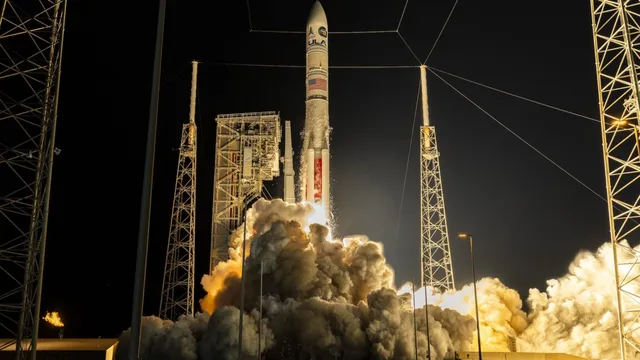
- The Vulcan's only launch this year took place on August 12, focused on a national security mission for the US Space Force.
- Delays in Vulcan launches highlight challenges faced by ULA, preventing a ramp-up in launch frequency.
Story
In 2025, United Launch Alliance, operating in the United States, strived to increase its launch cadence for the Vulcan rocket, originally aimed at hosting multiple flights throughout the year. However, due to various delays, ULA is expected to conclude the year with a mere six total flights — five using the Atlas V rocket and just one with Vulcan. The sole Vulcan mission occurred on August 12 for the US Space Force, marking the rocket's third flight and its first dedicated to a national security mission as ULA has been formally certified as a launch provider by the Space Force. Future military missions on the Vulcan rocket are planned for the next year as ULA continues its work to ramp up operations. Among the upcoming launches, 27 missions have already been booked by the Space Force for Vulcan rockets, which are expected to deliver operational satellites. In contrast, the most recent Vulcan flight in August carried experimental payloads, underlining the shift towards operational missions on upcoming launches. Additionally, ULA has another significant commitment, securing 38 launches on Vulcan and five more on the soon-to-retire Atlas V for Amazon's broadband satellite network, previously known as Project Kuiper. The delayed ramp-up in launches has been attributed to a malfunction with one of the Vulcan rocket’s solid rocket boosters during its second test flight in October 2024. Inspections of the rocket’s solid rocket motors and potential issues with the Space Force's GSSAP satellites have also contributed to the uncertainty around launch schedules. A representative from Space Systems Command indicated that teams are taking appropriate actions to ensure the success of forthcoming missions, emphasizing the thorough analysis of all hardware and data from previous flights. Additionally, ULA is working on enhancing infrastructure, including the outfitting of a new rocket assembly hangar and a second mobile launch platform at Cape Canaveral. Although the movement of the second Vulcan platform to the launch pad has been a positive step towards the ramp-up, it has become evident that noticeable increases in launch frequency will not occur before the end of 2025. Comparatively, it took 28 months for counterparts such as SpaceX's Falcon 9 and Atlas V to achieve their fourth flight, a timeline that the Vulcan rocket is projected to reach in May 2026.


