

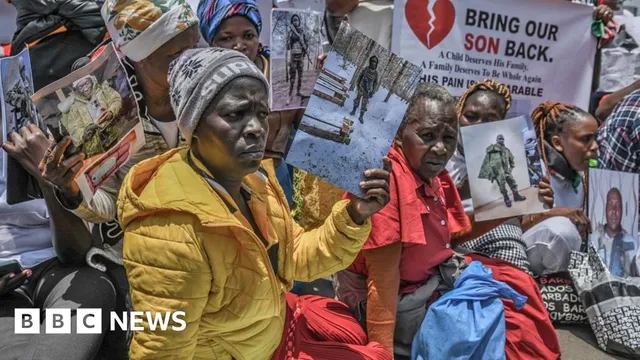
Zimbabwe acknowledges deaths of 15 nationals fighting for Russia in Ukraine
Zimbabwe acknowledges deaths of 15 nationals fighting for Russia in Ukraine
- Kenyans and Zimbabweans have been recruited to fight for Russia in Ukraine, often under false pretenses.
- Kenya's foreign minister announced that those returning will be granted amnesty to avoid prison sentences.
- Governments are negotiating to repatriate their citizens and combat human trafficking linked to military conscription.
Story
Kenya and Zimbabwe have both faced challenges with their citizens being recruited to fight for Russia in the ongoing Ukraine conflict. In Kenya, the foreign minister Musalia Mudavadi announced that Kenyans who have fought for Russia will be granted amnesty upon their return, following discussions held in Moscow. Under Kenyan law, any citizen serving in foreign armies is committing an offense that carries a potential 10-year prison sentence. Approximately 252 Kenyans have been conscripted illegally, many being lured by false job promises. As of now, 44 individuals have been repatriated, while 160 continue to serve in Ukraine under duress. Zimbabwe, on the other hand, has officially reported that 15 nationals lost their lives in the conflict, with over 60 still unaccounted for and believed to be on the front lines. The government is engaging with Russian authorities to repatriate the deceased and any survivors. These recruitments across Africa reflect a broader scheme tied to job placement scams that leverage social media to exploit vulnerable individuals. These illegal enlistments have resulted in significant fatalities and raised concerns regarding human trafficking and illegal military enlistment across several nations, sparking various responses from governments attempting to protect their citizens. The situation highlights not only the individual tragedies but also the need for tighter regulations and measures against such deceptive recruitment practices.
Context
The impact of illegal military enlistment in Africa is a multifaceted issue that poses significant threats to stability, security, and human rights across the continent. Illegal enlistment often occurs in conflict zones where young people, particularly those from impoverished backgrounds, are coerced or lured into joining armed groups. This not only perpetuates cycles of violence but also exacerbates existing political and social unrest. These militias and armed groups often exploit the vulnerabilities of youth, offering monetary compensation or a sense of belonging, which can lead to increased recruitment for such illegal activities and further destabilize regions that are already fragile due to ongoing conflicts or socioeconomic challenges. Additionally, the ramifications of illegal military enlistment extend beyond the individuals involved. Countries affected by such practices often witness a deterioration of civic structures and an increase in lawlessness. The influx of illegal combatants contributes to the proliferation of arms, which in turn fuels further violence, complicating efforts toward peace and reconciliation. Governments struggle to maintain order and provide basic services, as resources are diverted to combat and contain these armed groups. Furthermore, the rise of illegal enlistment can strain international relations, particularly when neighboring countries experience spill-over effects from conflict, leading to regional insecurity and complicating diplomatic efforts. The humanitarian implications of illegal military enlistment are also severe. Many recruits face violations of their rights, including forced labor, sexual exploitation, and psychological trauma. Children and young adults often bear the brunt of this phenomenon, with many being deprived of education and a stable future. Rehabilitation of these individuals, once they seek to disengage from armed groups, is crucial but challenging. It requires comprehensive programs that address the trauma experienced while providing educational and vocational opportunities for reintegration into society. The long-term effects of illegal enlistment on youth can contribute to a cycle of violence that perpetuates conflict for generations. As governments, international organizations, and civil society continue to address the challenges posed by illegal military enlistment, multifaceted approaches are essential. Supporting economic development, promoting education, ensuring access to mental health resources, and strengthening the rule of law are integral to mitigating the push factors for illegal enlistment. Moreover, regional cooperation among African nations can enhance security efforts and address the root causes of conflict, promoting peace and stability across the continent. Only through comprehensive strategies that encompass humanitarian, political, and economic dimensions can we hope to reduce the incidence of illegal military enlistment and its profound negative impact.


