

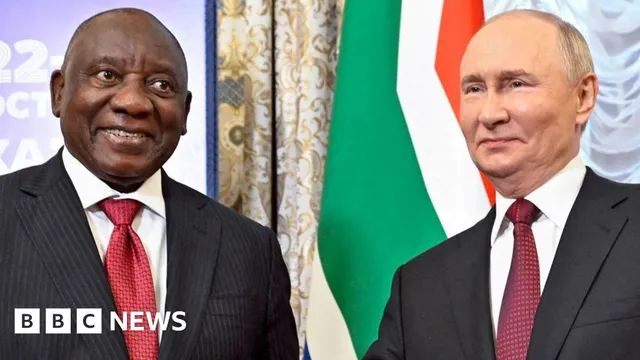
Ramaphosa expresses gratitude to Putin for securing return of South African fighters
Ramaphosa expresses gratitude to Putin for securing return of South African fighters
- A group of South African men was misled into fighting in the Russia-Ukraine war under the guise of security training.
- Efforts from the South African government, led by President Cyril Ramaphosa, facilitated the safe return of these individuals after distress calls.
- The situation has raised significant concerns regarding illegal recruitment practices and the involvement of citizens in foreign conflicts.
Story
In February 2026, the South African government reported the return of 15 nationals who had been lured to participate in the ongoing war in Ukraine. These men had thought they were signing up for bodyguard training in Russia, but instead found themselves on the front lines of the conflict. Their distress calls in late 2025 alerted the South African government, prompting an investigation into the recruitment process that misled them. The situation garnered media attention, highlighting concerns about illegal recruitment and the implications of South Africans participating in foreign conflicts without government authorization. The investigation reveals potential links to individuals who allegedly orchestrated the men's travels to Russia. Some families of the men voiced their fears as reports emerged about African recruits being trapped in war zones or forced into combat roles regardless of their intentions. President Cyril Ramaphosa's diplomatic efforts, particularly his discussions with Vladimir Putin, are crucial in facilitating the men's safe return home. As the South African embassy in Moscow continues to oversee the case of the few remaining South Africans in Russia, the public remains concerned about the legal and ethical dimensions of recruiting nationals for such conflicts, especially when the individuals involved are misled about the nature of their engagements. The gravity of the situation calls for a focused inquiry into the broader implications of foreign recruitment practices and the fate of those lured under false pretenses.
Context
The impact of South African nationals in foreign conflicts is a complex and multifaceted issue, reflecting broader trends in migration, security, and international relations. Over the years, South Africa’s historical context, characterized by a legacy of apartheid and socio-economic challenges, has contributed to the phenomenon of its nationals participating in conflicts outside their homeland. Many South Africans, motivated by various factors, including economic hardship, political beliefs, or a desire for adventure, have engaged in conflicts across different regions of the world, from the Middle East to Africa. Their participation not only showcases their individual motivations but also raises significant questions regarding the ethical implications of foreign involvement, the repercussions on South Africa’s diplomacy, and the safety of those engaged in combat abroad. The involvement of South African nationals in foreign conflicts can be attributed to a combination of personal, political, and societal factors. Some may join organized groups or militias that align with their ideological beliefs, such as fighting against perceived injustices or oppressive regimes, which they feel a moral obligation to combat. Others may be driven by economic incentives, seeking financial stability in environments where resource scarcity is prevalent. Reports have suggested that the recruitment of South Africans, particularly in regions experiencing heightened conflict, often capitalizes on local disenfranchisement and disillusionment. As a result, individuals become susceptible to external influences that lead them to engage in violent conflicts far from their home country, which can have far-reaching implications for regional stability and security. Moreover, the consequences of South African nationals' involvement in foreign conflicts extend beyond mere participation. The return of these individuals can present challenges for South African society, including the potential for radicalization and the reintegration of combatants into civilian life. Families and communities may grapple with the impact of their loved ones' experiences, which can include mental health issues, trauma, and altered worldviews. Additionally, the government faces significant challenges in terms of addressing the reasons behind such foreign participation and implementing effective reintegration policies. Ensuring the safety and security of returning nationals, while also assessing the potential risk they may pose to society, is a delicate balance requiring thoughtful consideration and proactive measures. Conclusively, the impact of South African nationals in foreign conflicts highlights a critical aspect of modern international relations and domestic policy. It emphasizes the need for further academic and policy-oriented discussions surrounding migration, security, and humanitarian intervention. Establishing a comprehensive understanding of the motivations and implications surrounding South African involvement in global conflicts can assist policymakers in addressing root causes, improving diplomatic efforts, and ultimately ensuring that the nation plays a constructive role in addressing global challenges. This approach would not only benefit South African society but also contribute positively to broader international peace and security initiatives.


