

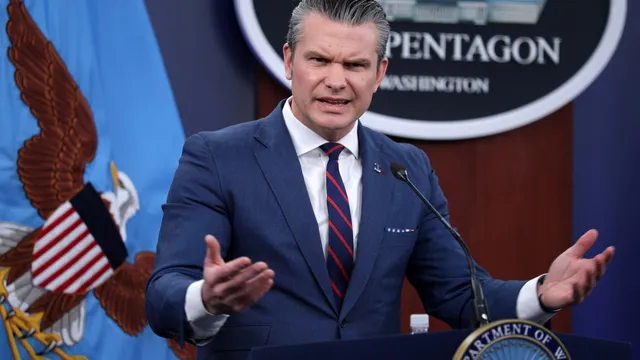
Representative Don Bacon condemns Hegseth for firing Army generals
Representative Don Bacon condemns Hegseth for firing Army generals
- Representative Don Bacon criticized Defense Secretary Pete Hegseth for firing Army Chief of Staff General Randy George and two other generals without clear reasons.
- The dismissals have caused concern among military leaders and lawmakers about the implications for civil-military relations.
- Critics warn that political motivations might undermine honest military advice during the ongoing Iran war.
Story
In early April 2026, during an ongoing conflict involving Iran, Representative Don Bacon, a Nebraska Republican, publicly criticized Defense Secretary Pete Hegseth for dismissing key military leaders, including Army General Randy George, without providing just cause or detailed explanations. Bacon's harsh assessment of the firings underscored fears of a dangerous situation as the U.S. engages in military operations where experienced judgment is crucial. The firings of General George, who had a substantial military career, along with two other generals—General David Hodne and Major General William Green—prompted backlash from both political sides and raised concerns about civil-military relations. The actions reflect a broader pattern of military leadership changes that may affect the operational integrity and morale of the armed forces at a critical time. During this reshuffling, critics like retired Army Major General Randy Manner and former senior military leaders echoed Bacon's sentiment, expressing alarm about the implications of Hegseth's actions for military advice during the Iran war. Without clear reasoning for the dismissals, concerns emerged regarding the risks that political motivations may undermine honest military counsel, essential for the nation’s strategic decisions. Supporters of General George noted his history of integrity and competence, suggesting his ouster signifies troubling trends in military governance. The firings serve not only to shake the confidence of those in the military ranks but may also contribute to politicizing military decision-making. The criticism culminated in an environment where military officers might fear losing their positions for offering straightforward advice, potentially jeopardizing the effectiveness of U.S. military strategies overseas. The situation signals a controversial phase in U.S. defense policy as the military maneuvers through complex international conflicts. Amidst rising concerns of the functioning military undercuts, lawmakers like Bacon asserted that swift removals of highly respected officers risk damaging trust within the ranks, ultimately affecting the operational capabilities of the U.S. Army during critical times. The need for clear communication and respectful treatment of military leadership has become imperative for maintaining the quality of advice the military can provide to U.S. leadership during this tense period.
Context
The impact of military firings on civil-military relations is a critical area of study that sheds light on the balance of power between civilian authorities and military leaders. Military firings, whether due to political disputes, policy disagreements, or other factors, can significantly alter the dynamics within a nation’s governance structure. In democratic societies, the military is expected to act under civilian authority, but frequent firings of military leaders can undermine this principle, leading to perceptions of instability and loss of trust among the armed forces. This erosion of trust can have far-reaching consequences, impacting not only the morale of military personnel but also the public's confidence in the government’s ability to effectively manage national security issues. Moreover, the process of military firings can serve as a double-edged sword. On one hand, if executed transparently and justified within the parameters of national security interests, such actions can reinforce civilian control over the military, demonstrating accountability and responsible governance. However, if these firings are perceived as politically motivated or punitive, they may incite dissent within the armed forces and escalate tensions between military leadership and civilian authorities. This tension can lead to a breakdown in communication and cooperation, which is essential for the maintenance of a cohesive and effective national defense strategy. In various historical contexts, we observe a pattern where mass firings of military leaders have been directly linked to broader political crises. For instance, in some countries, the dismissal of key military personnel has been indicative of a power struggle or a shift in political ideologies. Such actions often serve as a catalyst for unrest, prompting military factions to either align with or oppose the sitting government, thereby complicating civil-military relations further. In turn, this dynamic may prompt civilian leaders to adopt more repressive measures against the military or invoke stringent policies that curtail military influences, ultimately leading to a vicious cycle of distrust and conflict. Ultimately, the relationship between military firings and civil-military relations is complex and multi-dimensional. Researchers and policymakers must approach this subject with a nuanced understanding of how personnel decisions within the military affect broader governance issues. The balance between maintaining civilian control and respecting military influence is fraught with challenges, and the implications of military firings extend beyond immediate personnel changes, affecting the fabric of democratic governance and national security for the long-term.


