

China prepares to launch deep-sea tourism with new submersible technology
China prepares to launch deep-sea tourism with new submersible technology
- China is developing a deep-sea submersible that can dive up to 1,000 meters for tourism.
- This project has been ongoing for nearly four years and is expected to produce a prototype by year's end.
- The deep-sea tourism sector is exclusive and largely unregulated, and this new submersible aims to increase access for wealthy travelers.
Story
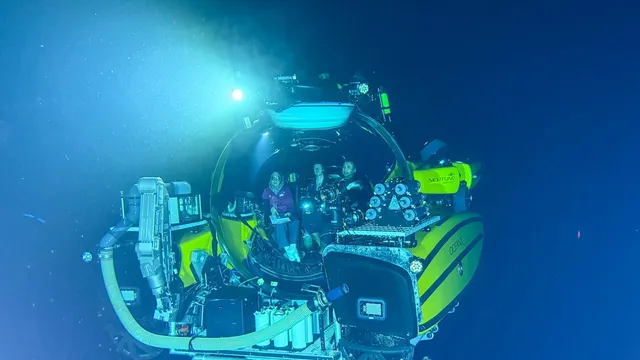
In China, significant advancements are underway in deep-sea tourism. The China Ship Scientific Research Centre, located in Wuxi, Jiangsu, has been engaged in the development of a revolutionary submersible designed to take tourists to depths of up to 1,000 meters. This project, which began nearly four years ago, is set to culminate in the prototype's launch by the end of this year. The submersible, capable of accommodating three passengers and one crew member, is anticipated to compete against existing Western ventures in deep-sea exploration tourism. The technical challenges involved in constructing the vessel are considerable, particularly in the creation of the panoramic viewport, which engineers describe as a complex structural feature. Ye Cong, director of the research centre, indicated that after extensive research, the structural design has now been finalized. Following the prototype's completion, the focus will shift to conducting sea trials to refine the design based on practical performance outcomes. Current options for deep-sea travel are limited, with existing tourism submersibles in China restricted to depths of around 20 meters, with operations confined to lakes, reservoirs, and coastal environments. The new submersible aims to expand these boundaries significantly, targeting affluent travelers eager to explore the mysteries of the ocean beyond immediate shorelines. The deep-sea tourism sector is characterized by its exclusivity and minimal regulation, primarily dominated by Western private ventures. However, this burgeoning industry has faced scrutiny due to safety concerns stemming from various incidents, including a recent tragedy involving Ocean Gate's Titan, which imploded during a dive to near the wreck of the Titanic in June 2023. The investigation that followed raised alarms about engineering practices and safety oversight in the field. In comparison, India is also pursuing deep-sea tourism, developing the Matsya-6000 submersible, capable of descending to depths of 6,000 meters. This increasing interest in deep-sea exploration might fuel a competitive landscape in the tourism sector while highlighting the need for stringent safety standards to protect adventurers venturing into the abyss.
Context
Deep-sea exploration tourism has emerged as a fascinating frontier within the adventure travel sector, captivating the interests of explorers, researchers, and thrill-seekers alike. This niche of tourism offers participants the opportunity to venture into the mysterious depths of the ocean, often reaching depths that are challenging for even seasoned scientists. The roots of deep-sea exploration can be traced back to the early 20th century with pioneering expeditions, but it is only in recent decades that technological advancements have made deep-sea tourism a viable and exciting option for the general public. From submersible rides to guided underwater excursions, companies have been developed to cater to this growing demand for extraordinary experiences beneath the waves. The technology behind deep-sea tourism has advanced significantly, with innovations in submarine design, underwater habitats, and remotely operated vehicles (ROVs). Early explorers relied on basic submersibles that could only withstand a limited amount of pressure. In contrast, modern deep-sea submersibles are crafted using advanced materials like titanium and synthetic fibers, allowing them to dive to depths exceeding 10,000 meters. Companies like OceanGate and Triton Submarines are at the forefront of this industry, enabling tourists to explore some of the planet's most breathtaking underwater landscapes, including shipwrecks and coral reefs. The experience is not just about viewing; it also raises awareness about marine conservation and the importance of protecting these fragile ecosystems. The environmental implications of deep-sea tourism are critical and must be addressed. While it generates interest and funding for marine conservation efforts, the potential for ecological disruption is a significant concern. Disturbances to marine life from human activity, such as noise pollution and physical impact on the seafloor, can severely affect local habitats. As deep-sea tourism grows, it is essential for operators to adopt sustainable practices that minimize environmental footprints. This includes designing tours that emphasize education, responsible interaction with marine life, and compliance with regulations set forth by marine conservation organizations. Collaboration between tourism operators and scientists can help ensure that deep-sea tourism benefits both travelers and the ecosystems they visit. Looking ahead, the future of deep-sea exploration tourism appears promising as more advancements in technology emerge. With the continued interest in ocean conservation and exploration, the trend is likely to attract more participants, including eco-conscious travelers. The industry has the potential to play a pivotal role in raising awareness about the oceans' health while providing unique experiences that highlight the wonders of the deep. As the industry evolves, striking the right balance between exploration and conservation will be crucial to safeguarding the integrity of the deep-sea environment for generations to come.


