

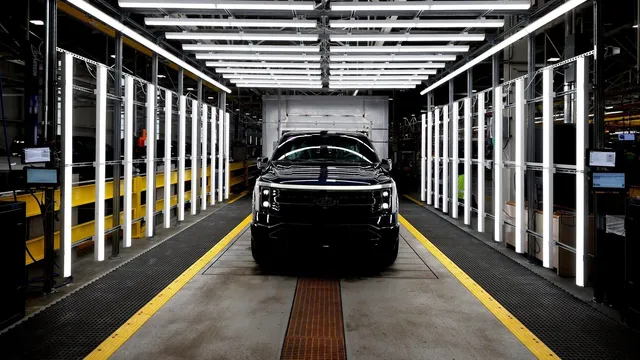
Ford CEO declares end to major EV investments amid declining consumer demand
Ford CEO declares end to major EV investments amid declining consumer demand
- The U.S. government under the Biden administration encouraged manufacturers to prioritize electric vehicle production.
- Despite substantial subsidies and incentives, consumer demand for electric vehicles has significantly declined.
- Ford and Stellantis have reported losses nearing $50 billion due to the shift towards electric vehicles, leading to a reevaluation of their investment strategies.
Story
In recent years, the automotive landscape in the United States has undergone significant changes due to government policies promoting electric vehicles (EVs). Under the administration of former President Joe Biden, manufacturers were incentivized to produce electric cars while moving away from traditional internal combustion engine vehicles. This push was mirrored in several European countries, motivated by concerns over climate change. However, the economic ramifications of such policies became apparent as inflation surged and subsequently affected the sales of EVs. Consumers did not respond favorably to the EV market, leading to substantial financial losses for major automakers. Ford and Stellantis, two prominent U.S. automotive giants, have faced nearly $50 billion in combined losses attributed to their transition towards electric vehicles. To boost sales, the Biden administration extended a federal tax credit of $7,500 for electric car buyers and allocated $7.5 billion for the development of EV charging infrastructure. Despite these efforts, the expiration of the tax credit significantly diminished demand for electric cars, revealing a disconnect between government initiatives and consumer preferences. Executives in the industry, including Ford's CEO Jim Farley, have acknowledged the failures of the electricity push. Farley recently indicated that Ford would pivot away from further investments in EV production, asserting that the market is not supportive of such ventures. His statement emphasized a crucial awareness of the economic reality of the situation: automakers cannot continue investing heavily in product lines that do not yield profitability. Throughout this ordeal, automakers have learned a critical lesson in navigating market demands versus government expectations. The overall experience serves as a cautionary tale about governmental interference in free market dynamics. It shows how misguided policy decisions can lead to substantial financial consequences for private companies. In summary, automakers have encountered a substantial financial setback primarily due to attempts at forcing a transition to electric vehicles without sufficient consumer interest or support.


