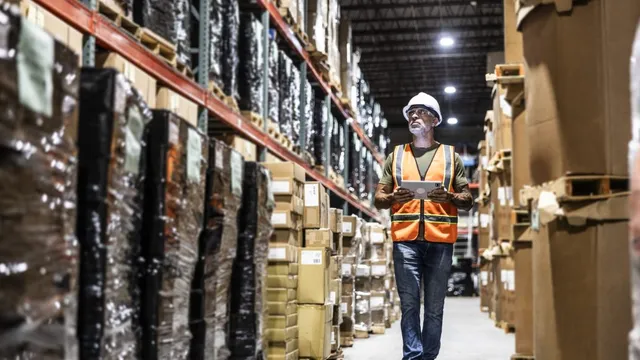
The United States faces significant challenges in its manufacturing sector, with approximately $3 trillion in manufactured goods imported annually. A considerable portion of these imports is linked to products that are vulnerable due to their criticality to national security, concentration among a few suppliers, or sourcing from geopolitically distant partners. Notably, 5% of these imports are at risk from all three factors, primarily involving computers, electronic products, and essential materials like rare-earth magnets. To address these vulnerabilities, a 'ramp-up factor' has been developed to estimate the increase in domestic production needed to replace these imports. However, achieving this goal is particularly daunting for sensitive products such as semiconductors and data center servers, which are crucial for the future economy. For about half of these goods, U.S. production capacity would need to increase fivefold or more. This transformation could require an investment of around $2 trillion to create the necessary capacity. While this figure may seem overwhelming, it is not without precedent, as the U.S. has previously mobilized similar capital for projects like the liquefied natural gas industry and AI-connected initiatives. However, funding alone is insufficient; the country also needs specialized skills, robust infrastructure, adequate energy supply, and ready-to-go projects. The focus should be on redesigning supply chains to enhance resilience and training workers for automation. Emerging technologies, including artificial intelligence and advanced robotics, are essential for this transformation. The ramp-up process necessitates coordinated changes across entire ecosystems and supply networks, with energy infrastructure, workforce development, permitting processes, and supply chain visibility being critical enablers. The U.S. possesses latent strengths in these areas, indicating that rebuilding the industrial base does not mean reverting to past practices. The economic landscape has evolved, and the U.S. must determine how and where it can effectively compete in manufacturing.