

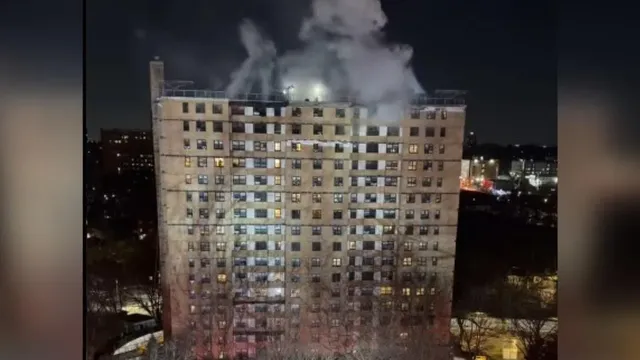
Stove thief charged with murder for deadly Bronx gas explosion
Stove thief charged with murder for deadly Bronx gas explosion
- A deadly gas explosion in a Bronx apartment building occurred last weekend, resulting in one death and multiple injuries.
- Samuel Calderon, the suspect, was arrested shortly after the incident for disconnecting a stove and causing the explosion.
- The tragedy has drawn attention to issues of homelessness and safety in urban settings.
Story
In a tragic incident in the Bronx, New York City, a gas explosion occurred on Saturday, January 28, 2026, resulting in one fatality and multiple injuries. The explosion took place in a 17-story apartment building at 3485 Bivona Street, where firefighters had been investigating reports of a gas odor. The flames erupted shortly after midnight, impacting the upper floors and causing severe structural damage. One resident, 60-year-old Ronald McAllister, was pronounced dead at the scene, while 15 others were transported to hospitals due to various injuries. Following an investigation, Samuel Calderon, a 55-year-old homeless man, was arrested on Wednesday. Authorities indicated that Calderon had unlawfully entered a woman's apartment, where he disconnected a stove with the intent to sell it for crack cocaine. This act resulted in a significant gas leak, which ultimately ignited the explosion that caused extensive fire damage and endangered several residents. Reports suggest that neighbors began to detect the smell of gas earlier that day, prompting calls for help from the building. The New York City Fire Department had crews on-site, already addressing incidents related to the foul odor when the explosion occurred, described as an incredibly dangerous situation by officials. Calderon faces serious charges, including murder, manslaughter, and burglary, and remains held without bail following his arraignment. His motivations for the crime remain vague, highlighting issues related to homelessness and substance abuse in urban environments. Authorities are continuing to assess the aftermath, conducting safety inspections and discussing the timeline for residents to return to their homes. The building, composed of 148 apartments, has been rendered off-limits, showcasing the devastating impact of the explosion both in terms of human life and community safety. As the investigation continues, there remains a call for increased vigilance against similar incidents, particularly in the backdrop of rising crime and the challenges faced by marginalized individuals.
Context
Homelessness in New York City has been an ongoing crisis that intertwines with various social, economic, and legal factors, often leading to increased concern about crime rates within and around homeless communities. As the city grapples with a persistent homeless population, which reached levels of over 75,000 individuals in recent years, it is essential to examine the correlation between homelessness and crime to better understand the complexities involved. The realities of homelessness are often compounded by mental health and substance abuse challenges, which can contribute to criminal behavior. However, it is crucial to avoid stigmatizing the entire homeless population, as many individuals are victims rather than perpetrators of crime, often facing victimization themselves in unsafe conditions on the streets or within shelters. The perception of increased crime associated with the homeless can often be influenced by media narratives that highlight visible instances of disorder or crime, leading to an exaggerated fear among the public. However, research indicates that crime rates in New York City have been declining overall, despite the rising levels of homelessness. Police arrest data reflects that homelessness does not fully account for the city's crime statistics, and in many instances, homeless individuals are more likely to be victims of crime than offenders. The issue lies not only in the data but also in the community's response, which can either perpetuate the cycle of stigma and exclusion or promote inclusion and support through social services and legal frameworks. Efforts to address the intersection of homelessness and crime have led to various city initiatives aimed at providing resources to those in need, including mental health services, housing-first strategies, and support systems aimed at rehabilitation rather than criminalization. For example, outreach programs and dedicated resources for mental health have shown promising results in assisting individuals in finding stability, thereby reducing the likelihood of engaging in activities that might lead to crime. A comprehensive approach that incorporates social services, community engagement, and an understanding of individual circumstances is necessary to effectively mitigate the relationship between homelessness and crime. In conclusion, understanding the complexities of homelessness in New York City requires a nuanced approach that transcends simplistic correlations with crime rates. It is imperative to address the underlying social issues while providing adequate support to vulnerable populations. Policymakers and community leaders should work collaboratively to develop sustainable solutions that not only aim to reduce homelessness but also ensure public safety. By focusing on preventative measures and supportive systems, New York City can work towards a future where homelessness is addressed holistically rather than merely through the lens of crime.


