

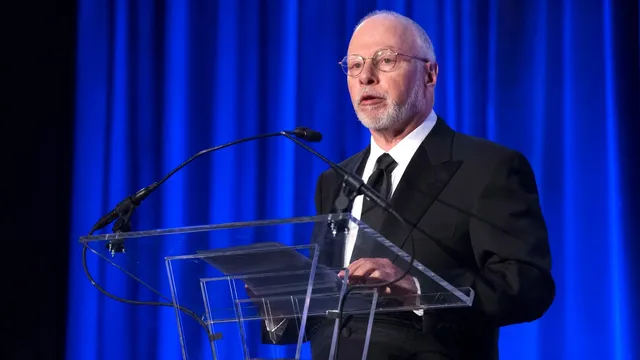
Paul Singer’s hedge fund may gain Petty’s Island amidst Citgo sale
Paul Singer’s hedge fund may gain Petty’s Island amidst Citgo sale
- Elliott Investment Management is backing Amber Energy in its attempt to purchase Citgo.
- The sale includes Petty's Island, which will be converted into a nature preserve.
- If the acquisition proceeds, it may lead to renewed investment in Venezuela's oil industry and the future of U.S. interests in the region.
Story
In Venezuela, significant developments have occurred concerning Citgo, an oil company with substantial international assets. The company is currently in the process of being acquired by Amber Energy, a startup that has emerged with backing from Elliott Investment Management, a hedge fund run by billionaire Paul Singer. A U.S. judge ordered this sale at a discounted price of $5.9 billion, which if finalized, could allow Amber Energy to take control of Citgo and, subsequently, Petty's Island, a 300-acre site in New Jersey. This island has been owned by Citgo for over a century and has served various purposes until now, including oil storage and refining. The site is slated to transform into a nature preserve. The legal approval for the sale is pending, with oversight from the U.S. Treasury Department’s Office of Foreign Assets Control. The backdrop of these transactions includes the recent political climate in Venezuela, where Nicolás Maduro's regime has experienced significant instability, including Maduro's capture, which heralded potential changes for Venezuela’s oil production dynamics. Furthermore, if the acquisition is completed, it is anticipated that more investment could flow from U.S. companies into Venezuela’s oil sector, theoretically revitalizing its struggling infrastructure and export strategies. Notably, the move has garnered mixed reactions, especially regarding the vested interests of political donors and governmental promises from figures like former President Donald Trump, who have expressed intentions to bolster Venezuela's oil production. The implications of this sale and control over Petty's Island may significantly affect environmental and energy landscapes in the region, posing questions about land use and investment in natural resources. The developments are ongoing, and public discourse continues to evolve around the potential benefits and shortcomings stemming from these negotiations.
Context
The impact of U.S. sanctions on Venezuela's oil production has been profound and multifaceted, significantly affecting the country's economy and its ability to operate in the global oil market. Since the introduction of sanctions in 2017, aimed at crippling the government of Nicolás Maduro, Venezuela's oil output has plummeted. The sanctions specifically targeted the government and its oil industry, restricting access to international finance and limiting the sale of Venezuelan oil, which historically has been the backbone of the nation's economic structure. Consequently, oil production, which once peaked at nearly 3 million barrels per day, has seen a drastic decline, averaging below 500,000 barrels per day in recent years. This disruption has led to enormous economic ramifications, exacerbating an already dire humanitarian situation in Venezuela, where the population faces significant shortages of basic goods and services. Sanctions have not only affected operational capabilities but have also led to severe maintenance and investment shortages within the state-owned oil company, Petróleos de Venezuela, S.A. (PDVSA). The inability to secure foreign investment and technology has hindered efforts to boost oil production capacity and modernize aging infrastructure. Furthermore, sanctions have also deterred potential foreign partners from engaging with Venezuelan oil operations, as they risk facing secondary sanctions for doing business with a blacklisted entity. This has created an environment where illegal export routes and deals with less scrupulous allies, such as Russia and China, have become more common, albeit with limited effectiveness for restoring production levels. The international community has been split on the efficacy and morality of sanctions. Proponents argue that sanctions are a necessary measure to pressure the Maduro regime into ceasing human rights violations and to promote democratic governance. Critics, however, contend that sanctions have disproportionately harmed the Venezuelan population, deepening poverty and undermining public health. The deterioration of the health care system and widespread malnutrition are underscored by the economic collapse triggered by the sanctions. As the country continues to grapple with this crisis, it's clear that while the sanctions have aimed at punishing the ruling class, the collateral damage has primarily impacted ordinary citizens, leading to a public outcry and calls for a reconsideration of the approach. Looking forward, Venezuelan oil production faces an uncertain trajectory. The country's capacity to return to previous production levels is doubtful unless a political resolution is achieved, allowing access to international markets and investment. Additionally, the global energy transition towards renewable sources may alter the dynamics of oil dependency, potentially impacting Venezuela's long-term viability as an oil-producing nation. As the geopolitical landscape continues to evolve, the effects of U.S. sanctions will remain a critical issue, shaping not only the future of Venezuela's oil production but also its broader socio-economic landscape.


