

Iran declares it won't participate in the World Cup amid escalating conflict
Iran declares it won't participate in the World Cup amid escalating conflict
- Iranian sports minister confirmed the nation cannot participate in the World Cup due to U.S. military actions and the assassination of its leader.
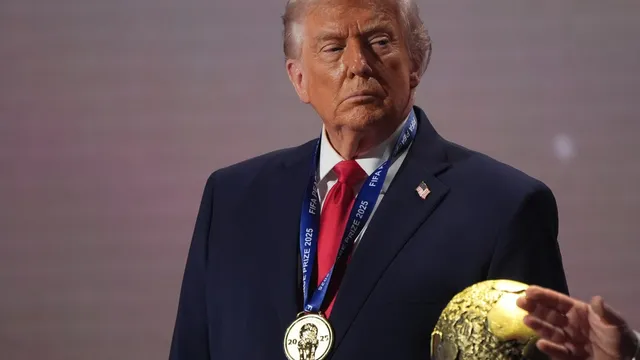
- FIFA President Gianni Infantino received assurances from Donald Trump that Iran would be welcome at the tournament.
- Iran's withdrawal highlights tensions between sports and political conflicts, signaling complex implications for international events.
Story
In light of escalating geopolitical tensions, Iran's national soccer team faces challenges regarding its participation in the upcoming 2026 World Cup co-hosted by the United States, Mexico, and Canada. Following airstrikes ordered by the U.S. and Israel that resulted in the death of Supreme Leader Ayatollah Ali Khamenei, Iran's Sports Minister, Ahmad Donyamali, announced the country would not take part. He emphasized that under the current circumstances, safety is not guaranteed for players, making participation unfeasible. Iran's football federation has echoed concerns regarding the security of their national team amid these conflicts, hinting at the impracticality of sending athletes into a hostile environment. Donyamali's remarks came shortly after FIFA President Gianni Infantino met with U.S. President Donald Trump, who assured him that Iran would be welcome at the tournament. Despite this public assurance aiming to foster unity through football, Iranian officials expressed skepticism, citing the traumatic impact of the attacks on their leadership and civilian population. The conflict, drawing on existing US-Iranian hostilities, complicates the situation further for Qatar 2026 as Iranian officials question the viability of competing under such duress. Adding to the urgency of the matter, the Iranian team is scheduled to face New Zealand, Belgium, and Egypt, with matches occurring across various U.S. locations, including California and Washington. The gruesome nature of the recent airstrikes, which resulted in the deaths of numerous Iranian citizens and the renowned leader, casts a shadow over the normal sporting atmosphere typically expected at the World Cup. Infantino has been vocal about emphasizing the importance of the tournament, asserting that a global event like the World Cup is crucial for unity amid world turmoil. Nevertheless, Iranian officials have diverging views on the implications of participation. Their voice reflects a broader apprehension concerning security and the moral implications of entering a competition that could exacerbate the already fraught political landscape. This announced unwillingness to participate marks a historic moment, as it could be the first time a qualified team withdraws from the World Cup post-confirmation, based on political motives since 1950. The outcome remains highly uncertain, with the next steps left to the Iranian sporting authorities as they navigate a complex geopolitical landscape.
Context
The impact of U.S. Middle East conflict on sports is significant and multifaceted, affecting participation, viewership, and the overall landscape of sports both domestically and internationally. In the context of increasing tensions and conflicts in the Middle East, particularly involving the U.S., sports organizations often find themselves navigating complex political landscapes. Events such as the FIFA World Cup and the Olympics have been sites of political protest and expression of solidarity, with athletes and nations using the global stage to voice opinions on conflicts, thus blending sports with political discourse. Tensions often translate to public sentiment, which can influence viewership and participation, impacting the financial stability of sports leagues and events that may be perceived as politically controversial or divisive. Furthermore, the intersection of U.S. foreign policy and sports diplomacy has led to attempts to foster peace and dialogue through athletic competition. Initiatives such as sporting events hosted in the Middle East or involving U.S. teams have at times been leveraged to promote cooperation and understanding among disparate groups. However, these endeavors are often met with skepticism or backlash from those who view sports as a platform for political maneuvering rather than genuine efforts towards resolution. The complexities of this interaction are nuanced, with the potential for both positive engagement and adverse reactions depending upon the prevailing political climate and public perception. Moreover, athletes from the Middle East, including U.S.-based athletes of Middle Eastern descent, often face unique challenges when competing amidst rising anti-immigrant sentiment and discrimination in the United States. The socio-political climate can affect their experiences, from media representation to fan interaction, and brings to light issues of identity and belonging within the sporting world. The repercussions of these conflicts reach beyond individual athletes and extend to the communities they represent, influencing grassroots participation in sports and inspiring activism to combat discrimination and promote inclusivity in athletics. In conclusion, the interplay between U.S. Middle East conflict and sports underscores the significant role that athletics play in broader social and political dynamics. As conflicts evolve, so too will the influence on sports, creating an ongoing dialogue between competition, identity, and political expression. The sports community, including governing bodies, athletes, and fans, must remain aware of these influences and advocate for a more inclusive and supportive environment that prioritizes peace and unity in a time of division and discord.


