

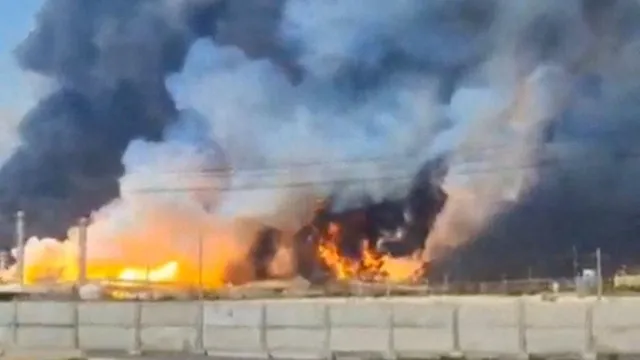
Israel escalates military action with strikes on northern Iran
Israel escalates military action with strikes on northern Iran
- A large fire broke out at Iran's South Pars gas field due to an Israeli airstrike
- Iran retaliated by launching missiles at Qatar's Ras Laffan facility, causing significant damage
- The escalation of violence highlights increasing tensions and risks of a broader conflict in the Persian Gulf region.
Story
On March 18, 2026, a significant escalation of conflict occurred in the Persian Gulf region following Israeli airstrikes on Iran's South Pars gas field, located in Bushehr Province. This incident was confirmed by multiple sources, including footage that was verified by Reuters. The strikes reportedly targeted gas tanks and refinery parts, igniting a substantial fire and causing rising natural gas prices in the UK. Following these attacks, Iranian missiles were purportedly launched at Qatar’s Ras Laffan liquefied natural gas facility, resulting in fires and extensive damage as emergency crews responded. Furthermore, Israel increased its military activity by launching airstrikes in northern Iran for the first time during the current military campaign, dubbed Operation Roaring Lion. This marked a major shift from previous strikes that were primarily focused on central Iran, Tehran, and western areas. Israeli sources reported that naval vessels were also affected in these coastal attacks. In retaliation, Iran threatened strikes on energy facilities throughout the region, escalating tensions with Gulf Arab states and heightening fears of a broader conflict. In the immediate aftermath of the strikes, oil prices surged significantly, with Brent crude rising over five percent to $112.84 a barrel amid concerns of significant disruptions in the global oil market. Experts warned of potential future attacks on critical infrastructure such as Saudi Arabia's East-West pipeline, emphasizing the precarious nature of regional stability. As hostilities escalated, the situation threatened to spiral out of control, with Iran targeting energy sites in response to Israeli actions, thus increasing the potential for further military confrontation between Israel and its adversaries. While this conflict escalates, it has seen significant human and infrastructural losses. Among military responses, Israel faces casualties from Iranian strikes on its territory, marking a grim chapter in an already complex geopolitical landscape. The ongoing events have drawn in key international players, with the U.S. administration asserting it did not authorize the recent Israeli strikes, setting the stage for potential diplomatic ramifications. As military tensions mount, the specter of wider regional conflict looms, with negative implications for global energy markets and international relations.
Context
strategic analysis insight strategic economic data economic global global economic geopolitical economic global shift trends shift strategic insight data policy market market shift market economic global policy impact strategic economic impact geopolitical trends impact market policy policy geopolitical global policy strategic insight strategic insight global market economic economic shift geopolitical data analysis insight impact analysis economic policy data economic policy global economic policy data strategic geopolitical shift market insight data data analysis policy global market market economic policy policy economic...


