

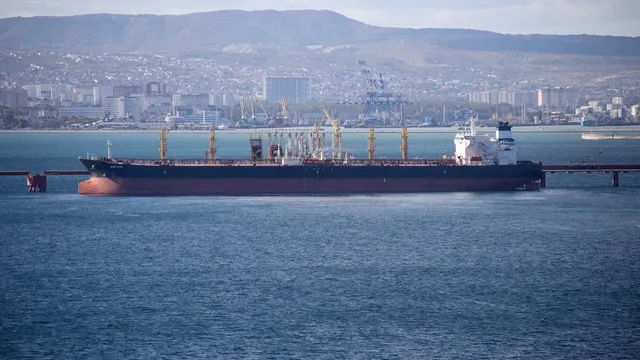
Oil supermajors reap massive profits amid Ukraine war and energy crisis
Oil supermajors reap massive profits amid Ukraine war and energy crisis
- Five major oil companies reported nearly $500 billion in profits since the beginning of the war in Ukraine, from February 2022 to January 2026.
- These earnings contrast sharply with the financial struggles of households in Europe facing high energy bills and rising costs amid the energy crisis.
- The substantial profits and shareholder payouts have sparked debates over the oil sector's commitment to climate goals and calls for fair taxation to address economic inequality and support for clean energy initiatives.
Story
Since the Russian invasion of Ukraine in February 2022, five major oil companies—Shell, BP, Chevron, Exxon Mobil, and Total Energies—have reported substantial combined profits of nearly $500 billion. This significant increase in earnings coincided with the global energy crisis triggered by the war, which caused a spike in oil and gas prices across international markets. Households in Europe have felt the effect of these rising prices through elevated energy bills, and governments have intervened with support schemes and windfall taxes. By early 2026, evidence from advocacy groups like Global Witness indicates that shareholder payouts from these companies have reached a staggering total of around $444 billion, surpassing the projected EU clean energy spending for 2025. Despite claims of committing to net-zero emissions targets by 2050, BP and Shell reportedly allocated significantly higher budgets to shareholder rewards than to investments in low-carbon technologies during the same timeframe. This situation prompts criticism from environmental advocates, who argue that the profits accumulated by these companies during the war should instead be redirected towards climate initiatives and supporting households affected by the energy crisis. The ongoing conflict and the resulting challenges to energy security have remained central concerns in European policy discussions as 2026 begins, with mounting calls for fair taxation of fossil fuel firms to help fund reconstruction in Ukraine.
Context
The ongoing conflict in Ukraine has had significant implications for global oil markets, particularly affecting the profits of the oil supermajors. These companies, which include industry giants like ExxonMobil, Chevron, BP, Royal Dutch Shell, and TotalEnergies, have historically been influenced by geopolitical events. The war in Ukraine, which escalated in early 2022 with the Russian invasion, has led to increased volatility in oil prices. As nations imposed sanctions on Russia, a major oil producer, the supermajors faced shifting dynamics in supply and demand, leading to unprecedented price fluctuations and profit surges during the initial phases of the conflict. In 2022, oil prices reached multi-year highs, driven by the reduced availability of Russian oil on the global market. The supermajors capitalized on this spike, reporting record profits for the fiscal year. Their ability to adapt to these sudden changes in the market, through strategic divestments and increased production elsewhere, demonstrated their resilience. Companies like Shell and BP announced billions in profits while simultaneously citing high costs associated with energy production and the challenges of securing alternative supplies. This illustrates the balancing act these corporations perform in managing both profits and social responsibility, especially as public scrutiny around fossil fuels intensified. Moving into 2023 and beyond, the profit environment for the oil supermajors remained robust; however, the situation became more complex. As countries sought to diversify their energy sources and reduce dependence on fossil fuels, the oil supermajors began to pivot towards renewable energy investments. This strategic shift was also influenced by the pressure from investors who are increasingly concerned with Environmental, Social, and Governance (ESG) criteria. The profits realized from oil sales were not only reinvested into traditional oil and gas activities but also into sustainable energy projects, reflecting a long-term vision amidst a transitioning energy landscape. In conclusion, the Ukraine conflict has proven to be a double-edged sword for oil supermajors. While they reaped record profits amidst heightened prices and diminished Russian influence, they are also faced with the imperative of transitioning towards more sustainable energy practices. The lessons learned from this turbulent period in the oil market will likely influence the strategies of these firms for years to come, as they navigate both the ongoing geopolitical challenges and the urgent need to address climate change.


