

NASA restores ISS crew capacity after medical emergency evacuation
NASA restores ISS crew capacity after medical emergency evacuation
- Four astronauts from the U.S., France, and Russia launched from Cape Canaveral on February 13, 2026.
- Their arrival restores full crew capacity at the ISS, which had faced a medical emergency last month.
- This mission is part of NASA's ongoing efforts to prepare for future explorations beyond Earth.
Story
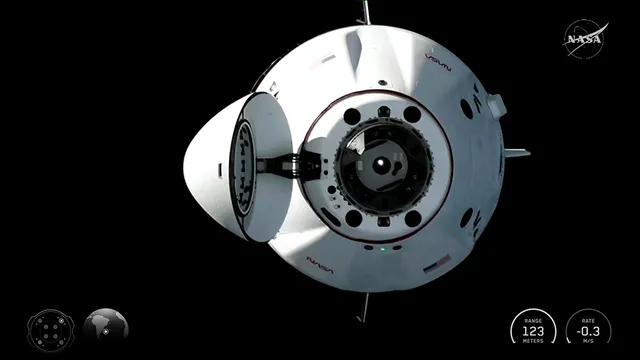
On February 14, 2026, four astronauts, including NASA's Jessica Meir, arrived at the International Space Station (ISS) after launching from Cape Canaveral via SpaceX rocket. This timely journey lasted approximately 34 hours and was crucial in restoring full crew capacity at the ISS which had been impacted by a previous medical emergency. The crew included astronauts from the United States, France, and Russia, enhancing international collaboration in space exploration. Prior to their arrival, the ISS crew had dwindled to just three individuals, highlighting the importance of timely crew rotations to maintain operations. NASA and SpaceX had faced delays prior to the launch due to weather concerns, which made the successful launch all the more significant. The new crew’s upcoming mission will last eight to nine months, during which they aim to carry out scientific research and technology demonstrations to aid in future human exploration missions, particularly those targeting the Moon and Mars. This mission is part of NASA's Commercial Crew Program, which focuses on developing autonomous and reusable spacecraft for human exploration. The previous crew, known as Crew-11, had to return early due to a medical emergency experienced by one of their members. This incident marked a rare occurrence as it was the first medical evacuation in 65 years of ISS operations, which underlined the challenges astronauts face in space, including health-related issues that can arise at unexpected moments. The astronaut's medical condition remains undisclosed, emphasizing the agency's commitment to privacy regarding medical issues of its personnel. The successful arrival of Crew-12 has shown valuable resilience and adaptability on NASA's part, as they adjusted flight schedules and crew rotations in response to unforeseen events. As NASA continues to prepare for its next mission, Artemis 2, which is slated for early March, the focus on maintaining a well-staffed ISS with qualified astronauts remains paramount to the goals of exploring further into outer space and benefiting mankind on Earth through scientific advancements.


