

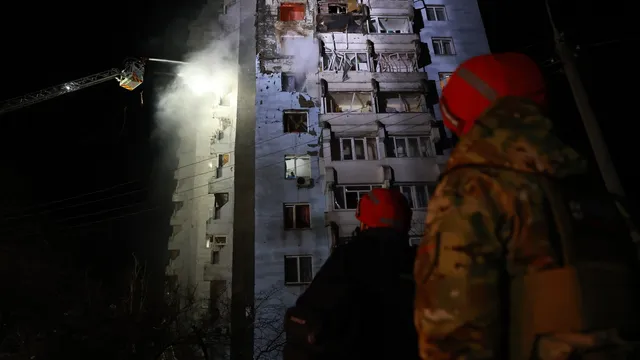
Russian drone attack kills two in Zaporizhzhia ahead of U.S. talks
Russian drone attack kills two in Zaporizhzhia ahead of U.S. talks
- A Russian drone strike in Zaporizhzhia killed a man and a woman, injuring two children.
- Most of the Chernihiv region was left without power due to a separate Russian drone attack on the same day.
- The escalation of violence occurs just before U.S.-Ukraine peace talks, highlighting ongoing tensions.
Story
In Ukraine, a recent Russian drone attack in the city of Zaporizhzhia resulted in the deaths of two individuals and injuries to two children. The strike, which occurred on Saturday morning, completely destroyed a private residence, underlining the ongoing threats posed to civilians amidst the ongoing conflict. Local authorities reported that Ivan Fedorov, the head of the Zaporizhzhia region, confirmed the casualties and described the site of the attack where the residences suffered extensive damage. Simultaneously, a separate drone strike led to a widespread power outage across most of the Chernihiv region, affecting thousands. This additional assault on energy infrastructure highlights not only the physical destruction inflicted upon Ukraine but also the psychological impact these strikes bear on the local population. Efforts to restore electricity were reported by local officials, yet the ramifications of such attacks continue as civilian infrastructure remains a target. The timing of these attacks coincides with a significant moment as a Ukrainian delegation was scheduled to meet with U.S. officials in Miami for discussions aimed at reviving stalled peace negotiations. The ongoing drone strikes serve to complicate the geopolitical landscape further, raising concerns over the implications of these negotiations on ongoing sanctions and military support from Western nations. Ukrainian President Volodymyr Zelenskyy has been vocal about the need for clarity regarding future peace talks and the importance of U.S. involvement. There is growing apprehension among Ukrainian leadership regarding the potential easing of sanctions on Russia by the U.S., particularly in light of last week's announcements concerning oil sanctions. As the situation evolves, the need for sustained international attention on Ukraine's plight and the necessity for a robust defensive response remains paramount.
Context
The impact of drone warfare on civilian populations has been a topic of significant concern and debate, particularly given the growing reliance on unmanned aerial vehicles (UAVs) by militaries around the world. Drones are often perceived as a precise method of conducting warfare, aimed at minimizing risks to personnel while achieving operational goals. However, this perception is challenged by the reality that drone strikes frequently result in civilian casualties, leading to profound humanitarian consequences. The technology's proliferation has led to an increase in the number of conflicts where drones are deployed, raising questions about accountability, legality, and the ethical implications of such warfare. Civilian populations in conflict zones face dire repercussions from drone warfare, as strikes may occur without adequate intelligence or oversight. Reports indicate that drones cause not only immediate physical harm but also long-term psychological effects among survivors and affected communities. The fear of surveillance and potential strikes contributes to a pervasive sense of insecurity, eroding trust between local populations and governments while fostering anti-government sentiment or extremist recruitment. Thus, the social fabric of communities in conflict-affected areas deteriorates, leading to an escalation in violence rather than a reduction. Moreover, the legal frameworks governing the use of drones in warfare often lack clarity and fail to adequately protect civilian populations. The principles of distinction and proportionality in international humanitarian law require that parties to a conflict distinguish between combatants and non-combatants and ensure that the harm inflicted on civilians is not excessive in relation to the anticipated military advantage. Unfortunately, drone strikes sometimes neglect these principles, resulting in high civilian casualties. This has led to calls for stricter regulations and the establishment of protocols to ensure accountability. In conclusion, while drone technology presents new avenues for military efficiency, it also poses severe risks to civilian populations. The consequences of drone strikes extend beyond immediate fatalities, deeply affecting communities and their relationships with authority. As drone warfare remains an integral part of modern conflict, it is imperative to promote policies that prioritize civilian safety, enforce accountability, and uphold international humanitarian standards. Addressing the humanitarian impact of drone warfare is essential for fostering peace and stability in affected regions.


