

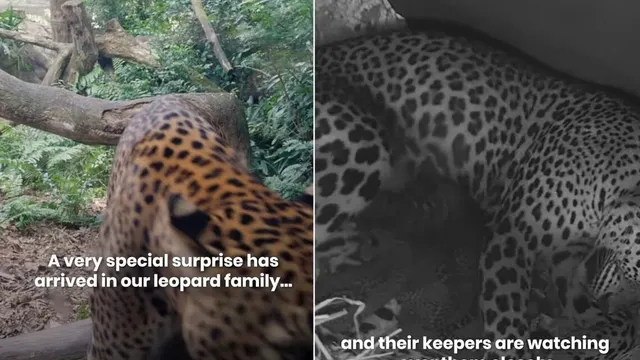
Sri Lankan leopard cubs make a rare debut at Singapore Zoo
Sri Lankan leopard cubs make a rare debut at Singapore Zoo
- Three Sri Lankan leopard cubs were born at Singapore Zoo on January 1.
- The cubs are currently bonding with their mother, Yala, who has shown excellent maternal care.
- This birth marks a significant event in the zoo's history, as the last cub was born nearly 30 years ago.
Story
In Singapore, three rare Sri Lankan leopard cubs were born at the Singapore Zoo on January 1, marking a significant event as the last time a cub was born at the zoo was in 1997. This birth increases the population of Sri Lankan leopards at Mandai Wildlife Reserve to a total of seven. The cubs, along with their mother Yala, are currently kept behind closed doors for bonding, but a live cam offers a glimpse of their playful antics. Their mother, Yala, has been praised for her nurturing care of the triplets, reflecting positively on the zoo's conservation efforts. Sri Lankan leopards, noted for their beautiful fur and adept camouflage, face threats from poachers. The live cam is part of the zoo’s initiative to raise awareness about these endangered animals and draw attention to their plight. The significance of this birth extends beyond just the increase in numbers; it highlights the focused breeding programs carried out by the Singapore Zoo, aimed at conserving species at risk of extinction. In addition to the cubs, capybara pups were also born around New Year's Day, further contributing to the zoo's growing population of diverse wildlife and enhancing the visitor experience. These exciting births signal a renewed commitment to wildlife conservation in urban spaces, showcasing the zoo's role as a leader in preserving biodiversity and educating the public on the importance of protecting rare species.
Context
The Sri Lankan leopard, a subspecies of leopard endemic to Sri Lanka, plays a critical role as an apex predator in its environment. Conservation efforts for the Sri Lankan leopard have become increasingly urgent due to habitat loss, human-wildlife conflict, and poaching. These threats have significantly reduced their population, making it essential to implement effective strategies to ensure their survival. The primary habitats of the Sri Lankan leopard, including dry zones, rainforests, and national parks, face encroachment from agriculture, urbanization, and infrastructure development, which fragment the leopards' territories and reduce their food sources, thereby threatening their survival. In recent years, various organizations and government bodies have come together to initiate comprehensive conservation programs aimed at protecting the Sri Lankan leopard. This includes the establishment of protected areas, such as Yala National Park and Wilpattu National Park, which serve as critical habitats where these leopards can roam safely. Additionally, community engagement has been pivotal in mitigating human-wildlife conflict. By educating local communities about the ecological importance of leopards and involving them in conservation efforts, there has been a gradual shift towards coexistence. Measures such as compensation schemes for livestock losses due to leopard attacks and promoting eco-tourism have further encouraged community support for leopard conservation initiatives. Research and monitoring programs are also integral to conservation efforts. Through the use of GPS collaring and camera trapping, researchers can gather data on leopard populations, movements, and behaviors. This data helps inform conservation management plans and assess the effectiveness of existing strategies. Moreover, collaborations with international conservation organizations enhance funding and expertise, enabling more robust and comprehensive initiatives aimed at safeguarding the Sri Lankan leopard. Anti-poaching efforts and law enforcement have intensified, alongside the development of community-based monitoring programs that empower locals to report poaching activities. In conclusion, the conservation of the Sri Lankan leopard is not only vital for the species itself but also for the ecological balance of Sri Lanka's diverse ecosystems. Continued efforts that combine habitat protection, community involvement, scientific research, and effective law enforcement are essential for ensuring the survival of the Sri Lankan leopard. The success of these initiatives will depend on ongoing collaboration between governments, conservation organizations, and local communities to address the pervasive threats faced by this iconic species in the years to come.


