
science
controversial
ground breaking breakthrough

Ireland to take charge in €50m quantum technology initiative

Feb 11, 2026, 3:02 PM10
(Update: Feb 11, 2026, 3:02 PM)
country in Northwestern Europe
political and economic union of 27 European states

Ireland to take charge in €50m quantum technology initiative

  • Tyndall National Institute will lead the Irish chapter of the €50m initiative P4Q.
  • A consortium of key institutions across Europe aims to create a manufacturing ecosystem for quantum photonic chips.
  • This project is a significant step forward for Europe's quantum ambitions and semiconductor capabilities.
Share your opinion
1

Story

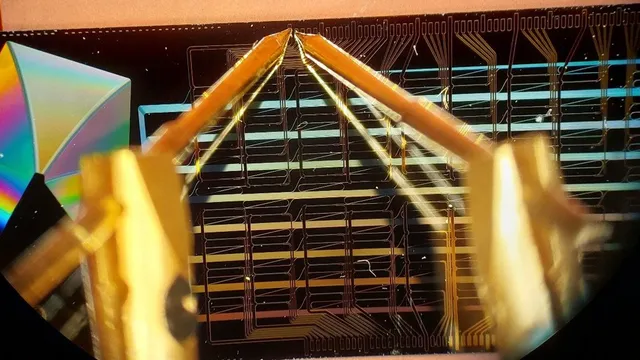
Ireland is set to establish itself as a leader in quantum technology with the Tyndall National Institute taking the helm of a significant €50m European initiative, Photonics for Quantum (P4Q). This ambitious project aims to develop a manufacturing ecosystem capable of producing high-quality quantum photonic chips at scale, a technology essential for advancements in quantum sensing, communication, and computing. The project has garnered support from the Department of Further and Higher Education, Research, Innovation and Skills in Ireland and includes participation from a consortium of leading research institutes, semiconductor foundries, and deep-tech firms across 12 countries in Europe. The P4Q initiative emphasizes scaling the production of photonic chips to meet the increasing global demand as technology progresses. Tyndall National Institute's unique expertise in advanced packaging of quantum photonic chips, specifically those designed to operate at cryogenic temperatures, positions Ireland favorably in this competitive field. Tyndall's CEO, Prof William Scanlon, articulated that the project signifies a pivotal milestone for Europe's semiconductor ambitions, and advancing the packaging of these chips is crucial to establishing a sustainable manufacturing base within Europe. The decision to capitalize on quantum technology reflects a strategic alignment with Ireland's national semiconductor strategy, ensuring the country retains its competitive edge in semiconductor research and development. Other notable partners in this project comprise institutions from Austria, France, the Netherlands, Denmark, and Finland, showcasing a collaborative European effort towards unified advancement in quantum technologies. With Tyndall's expanded facilities, backed by a €100m investment plan, Ireland is poised to reinforce its global position in semiconductor R&D, further solidifying its role in the rapidly evolving quantum landscape.

Context

Quantum technology is emerging as a pivotal field in Europe, promising transformative benefits across various sectors. With the potential to revolutionize computing, communication, and sensing, quantum technologies aim to harness the peculiar properties of quantum mechanics. Europe is uniquely positioned to lead in this domain, thanks to substantial investments in research and innovation, alongside a collaborative framework involving academia, industry, and government. This synergy fosters an environment conducive to breakthroughs that can enhance the continent's global competitiveness and economic resilience. One of the most significant benefits of quantum technology is its impact on computing. Quantum computers are expected to outperform classical computers in solving complex problems such as optimization, cryptography, and materials science. This advancement could lead to enhanced data processing capabilities, offering solutions to previously insurmountable challenges in industries ranging from pharmaceuticals to finance. The European Quantum Flagship initiative, with its ambitious goals, aims to accelerate the development of quantum computing technologies and foster a self-sustaining ecosystem of innovation. Moreover, quantum communication technologies promise unparalleled security in data transmission. Quantum Key Distribution (QKD) utilizes the principles of quantum mechanics to create secure communication channels that are theoretically invulnerable to eavesdropping. As data privacy issues become increasingly critical in the digital age, Europe’s investment in quantum communication can ensure that industries and governments maintain the integrity and confidentiality of sensitive information, fostering greater public trust in digital infrastructures. Lastly, quantum sensing technology represents another frontier with substantial implications for various fields, including healthcare, environmental monitoring, and navigation. Quantum sensors can achieve unprecedented levels of precision and sensitivity, enabling early detection of diseases or minute changes in environmental conditions. In this context, the application of quantum technologies can help tackle global challenges such as climate change and public health crises, while also providing economic opportunities through innovations in high-tech industries. As Europe continues to invest in and develop these quantum technologies, the continent stands to gain not only technologically but also socio-economically, solidifying its place as a leader on the global stage.

2026 All rights reserved
