

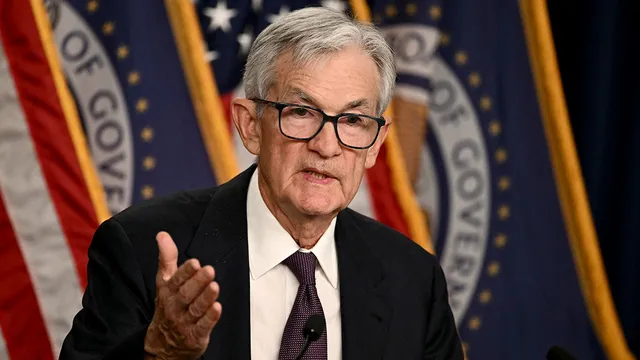
Federal Reserve holds interest rates steady amid inflation spikes from Iran war
Federal Reserve holds interest rates steady amid inflation spikes from Iran war
- The Federal Reserve maintains interest rates amidst rising inflation concerns related to the Iran conflict.
- Oil prices surged following the start of the Iran war, contributing to the inflationary pressures in the economy.
- The Fed's cautious stance indicates uncertainty over future rate cuts due to the ongoing geopolitical tensions.
Story
In the United States, the Federal Reserve decided to maintain interest rates in the range of 3.5% to 3.75% during its most recent meeting on March 18, 2026. This decision reflects growing economic uncertainty, primarily fueled by the rising oil prices due to the ongoing conflict with Iran. Since the conflict began on February 28, 2026, gasoline prices have surged, prompting concerns about a resurgence of inflation, which is now projected to end the year at 2.7%, surpassing the Fed's 2% target. The central bank's committee expressed that elevated inflation coexists with a softening labor market, characterized by a reported job loss of 92,000 in February 2026. The unemployment rate also inched up to 4.4%. These economic conditions present a complex challenge for the Fed, where policymakers must balance the dual threats of inflation and job losses. Moreover, forecasts indicate that the Fed may not enact rate cuts as previously anticipated. Instead, it has projected a modest approach to rate cuts, anticipating just one quarter-point reduction for the remainder of 2026 and another quarter-point in 2027. This cautious stance is compounded by the continued uncertainty surrounding the economic impact of the Iran conflict, which is impacting global oil supply routes and prices. Concerns about stagflation, a combination of stagnant economic growth and inflation, are at the forefront of policymakers' minds. The Fed's chair, Jerome Powell, announced that the current inflation and job growth situations require careful monitoring before any decisions on rate adjustments can be finalized. Hence, the stark interplay between geopolitical events and economic policies illustrates the ongoing economic volatility faced by the United States amidst global tensions.


