

Severe floods devastate makeshift camps in Gaza, exacerbating humanitarian crisis
Severe floods devastate makeshift camps in Gaza, exacerbating humanitarian crisis
- Heavy rain recently inundated encampments in Gaza, damaging shelters and displacing families further.
- The flooding follows two years of conflict that severely destroyed essential infrastructure, leading to dire humanitarian conditions.
- Immediate action and enhanced aid efforts are crucial to mitigate worsening health risks in the area.
Story
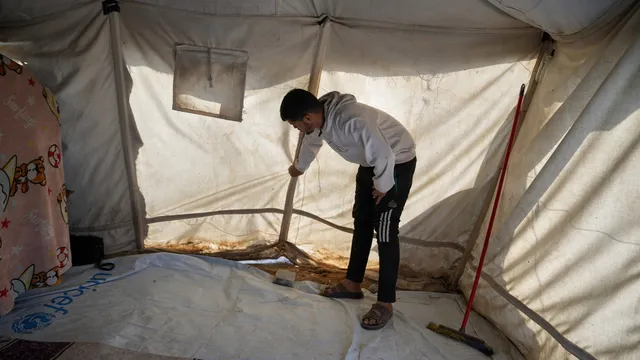
In Gaza, heavy rainfall recently led to severe flooding across various encampments, affecting countless families and compounding existing humanitarian issues. The rain, part of the first major winter storms of the season, began hammering the region on Saturday, transforming roads into rivers and inundating shelters meant for the displaced. Many families found their belongings soaked and were forced to sweep water from their tents, which lacked adequate drainage facilities due to two years of conflict that had decimated the area’s infrastructure. This natural disaster came as temperatures dropped, increasing the urgency of the already dire situation. The intense rains were particularly impactful in the Muwasi tent camp, which had become home to hundreds of thousands of displaced Palestinians following the outbreak of war on October 7, 2023. Residents attempted to mitigate the flooding by digging trenches, yet the heavy downpours and strong winds wreaked havoc on their efforts, rendering their makeshift shelters ineffective in providing protection. Many families, like that of Bassil Naggar, had recently invested in new tents, only to find them inadequate against the heavy rains. The crisis was further illustrated by the experiences of families like Sana Abu Harad's, whose cramped tent was left submerged, making it impossible for her young child to remain dry and comfortable. Humanitarian organizations have warned that this flooding crisis highlights the failure of water and sewage systems in the beleaguered enclave, which were severely compromised following extensive Israeli military operations. According to multiple reports, Gaza's population, now largely displaced, urgently requires winterization assistance, yet efforts to deliver aid have faced significant restrictions. The United Nations has cited over 100 requests for relief materials, including essential supplies like blankets and sanitation tools, being denied by Israeli authorities, exacerbating the humanitarian catastrophe. The effects of the floods are not just immediate; they pose long-term health risks. Mixing rainwater with sewage creates a breeding ground for various diseases, threatening the already vulnerable population's wellbeing. The ongoing situation has sparked calls for international intervention amid a backdrop of political tensions within Israel and the region. As the future remains uncertain, affected residents live in desperation, hoping for improved conditions while battling the relentless elements and lack of basic necessities.


