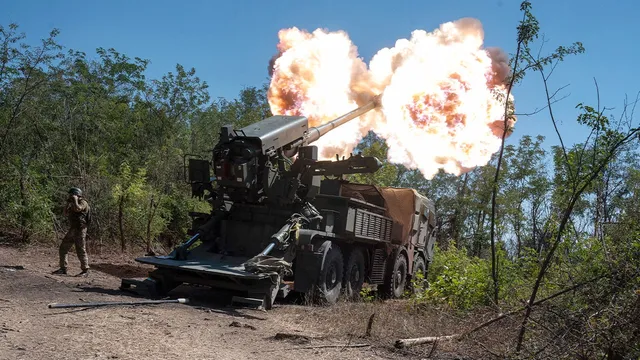
In Ukraine, Russia's military has faced catastrophic losses since its full-scale invasion, with reports indicating that one million soldiers have been killed or severely wounded. This significant depletion of forces has resulted in the Kremlin relying more heavily on mass mobilization to fill military ranks, rather than utilizing a professional army. As the war continues, Russia's military-industrial complex has responded by dramatically increasing its production of ammunition, producing around 7 million artillery rounds in 2025. Estonia's foreign intelligence, which monitors Russia closely, has highlighted how this reorganization of Russia's military strategy emphasizes attrition over military quality.
Recruitment efforts to reinforce the military have increasingly targeted socially vulnerable groups such as the unemployed, those in debt, and prisoners, including individuals released from detention facilities in exchange for serving on the front lines. The report also notes the involvement of foreign nationals from countries like Zambia and Nigeria in Russian combat units, often recruited with little training. As a result of these strategies, despite its weakened state, Russia is aiming to position itself for prolonged warfare while still presenting a significant challenge to Ukraine and its allies.
Estonia's assessment warns of the long-term implications of Russia's current military strategy, suggesting that the Kremlin's focus on mass and attrition could pose threats not only in Ukraine but also to the security of Europe and NATO. This situation reflects a broader pattern of economic strain in Russia that prioritizes defense spending at the expense of civilian needs and living standards. The ongoing conflict has led to the hollowing out of non-military sectors of the economy and created social pressures as authorities enforce recruitment quotas in a desperate attempt to maintain fighting capabilities.
In light of these developments, analysts emphasize that while traditional combat remains limited, alternative strategies may emerge, with some suggesting Russia could shift to hybrid tactics involving sabotage and disruptive actions across Europe. This pivot towards inconspicuous sabotage focuses on fracturing Western support for Ukraine, highlighting the evolving nature of the conflict. The intricate interplay between Russia's military needs and societal impacts presents a complex landscape, indicating that the war in Ukraine is far from a resolution, emphasizing a long-term challenge for regional stability.