

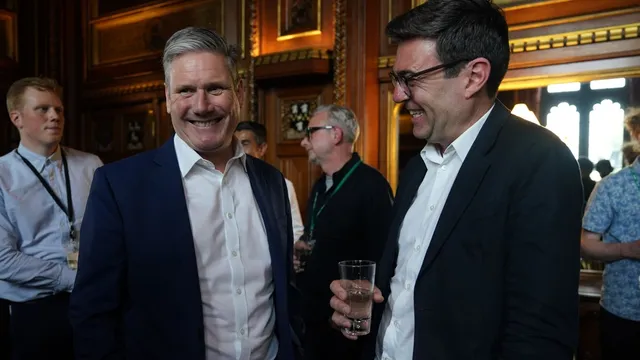
Andy Burnham remains open to challenging Keir Starmer for leadership
Andy Burnham remains open to challenging Keir Starmer for leadership
- Andy Burnham has repeatedly dodged questions about a potential challenge to Sir Keir Starmer, maintaining his focus on his role as Mayor of Greater Manchester.
- The atmosphere within the Labour Party is tense, with several MPs expressing discontent with Starmer's leadership and speculation mounting over possible leadership challenges.
- The dialogue surrounding Burnham's leadership aspirations highlights the growing discontent within the party and the potential for significant changes in the near future.
Story
In a recent series of interviews, Andy Burnham, the Mayor of Greater Manchester, faced persistent questions regarding his potential leadership ambitions within the Labour Party, which have been surging amidst concerns over Sir Keir Starmer's leadership. Burnham's remarks came in response to suggested political maneuvers from Labour MP Clive Lewis, who indicated he would relinquish his seat to facilitate Burnham's return to Parliament and enable a leadership challenge. Burnham expressed his current focus on his mayoral responsibilities, particularly amidst ongoing discussions about his role in the future of the party, while also criticizing the speculative nature of the media's inquiries. The speculation surrounding Burnham has gained traction since Labour's autumn conference, where conversations hinted at unrest within the party and dissatisfaction with Starmer's leadership. Amid political turmoil, voters have expressed concerns about Labour's direction, with some believing it necessary for Starmer to step aside. Throughout his interviews, Burnham has consistently refrained from confirming any intent to challenge Starmer, emphasizing that he is dedicated to his role in governing Greater Manchester and presenting solutions for economic growth. Despite his current stance, the political landscape within Labour seems precarious. Various factions appear to be formulating plans for potential leadership bids, and Andrew Gwynne and Graham Stringer, other Labour MPs, have previously stated they would not step down for Burnham. Recent polling indicates a significant portion of Labour supporters believe Starmer should resign before the next election, leading to visible tensions within the party. Burnham's declarations of focusing on local issues have not entirely quelled the rumors about his ambitions for a return to Westminster. His disciplined avoidance of the leadership topic has raised more speculation rather than less. As the political climate becomes increasingly turbulent, with ongoing dissatisfaction and calls for change, the question of Burnham's intentions remains unresolved, setting the stage for continued debate as the party prepares for its next steps.
Context
The Labour Party in the United Kingdom has faced numerous leadership challenges throughout its history, with the year 2025 marking a particularly critical moment for the party's future direction. Following significant electoral challenges and public discontent, the leadership landscape has shifted, prompting debates about the party's policies, identity, and strategic vision for the next General Election. As the party seeks to rebuild and align itself with the aspirations of the electorate, it must navigate both internal divisions and external pressures, which have intensified following lackluster performances in recent parliamentary sessions. The central figures in the ongoing leadership discussion include the current leader, who was elected amid high hopes but has faced growing criticism regarding policy decisions and party unity. Intriguingly, potential challengers are emerging from various factions within the party, each presenting alternate visions for its revival. This includes arguments for a return to more traditional values and working-class roots versus calls for a progressive agenda focusing on social justice and environmental issues. As factions vie for influence, the need for cohesive leadership has never been more apparent, with members worried about losing touch with the electorate. The backdrop to these leadership challenges is the broader political climate in the United Kingdom, characterized by increasing polarization and shifting voter allegiances. The impact of Brexit continues to influence voters’ perceptions of the Labour Party, which must clarify its stance on issues surrounding regional autonomy, immigration, and economic policy to resonate with a diverse electorate. Furthermore, Labour's handling of pressing issues, including the cost of living crisis and climate change, will significantly inform public sentiment leading up to the next election. Conclusively, the leadership challenges facing the Labour Party in 2025 are not merely about individual personalities but represent a fundamental struggle over the party’s future trajectory. As the party gears up for potential contests within its ranks, it must also strategize its outreach to the electorate to reinforce its relevance in contemporary British politics. The choices made in the upcoming months will be pivotal in determining whether Labour can emerge united and revitalized or continue to grapple with fragmentation and decline as it approaches the next electoral cycle.


