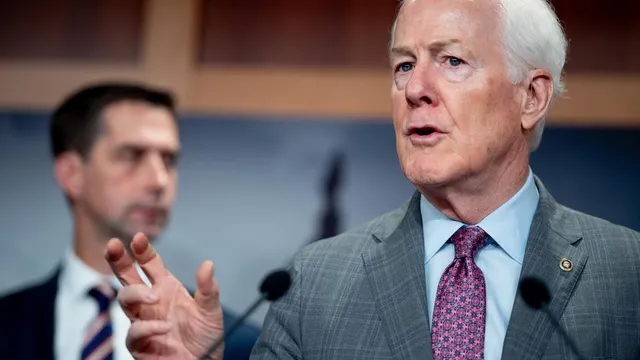
In the United States, Texas Senator John Cornyn announced his intention to oppose the nominations of Kari Lake and Doug Mastriano for ambassadorships unless the Trump administration releases funds for the President’s Emergency Plan for AIDS Relief (PEPFAR). This announcement came ahead of a scheduled committee meeting on Wednesday, July 22, 2026, where the Foreign Relations Committee was set to consider Lake's nomination to Jamaica and Mastriano's nomination to Slovakia. Cornyn's stance reflects his ongoing concern for AIDS funding in Africa, a program initiated during the Bush administration.
Despite Cornyn's threats, the Senate panel proceeded to advance both nominations, with all Republican members supporting them for a floor vote. Cornyn's demands for funding concessions from the White House were not met, leading to a situation where his vote could potentially stall the nominations in committee. The committee consists of 12 Republicans and 10 Democrats, with the latter planning to vote against the nominations. If Cornyn follows through on his threat, the vote could end in a tie, resulting in a failure to advance the nominations.
Cornyn's actions are also seen in the context of his recent political struggles, having lost a primary to Texas Attorney General Ken Paxton, who was endorsed by former President Donald Trump. This loss was attributed to Cornyn's inability to pass significant legislation, such as the SAVE America Act, which aimed to implement stricter voter ID laws. His current position on the ambassador nominations may be an attempt to regain political favor and assert his influence within the Republican Party.
The situation highlights the ongoing tensions within the Republican Party and the challenges faced by senators like Cornyn, who are trying to balance party loyalty with pressing humanitarian issues. The outcome of the nominations will not only affect the ambassadors' appointments but also reflect the broader dynamics of party politics and funding priorities in the U.S. government.