

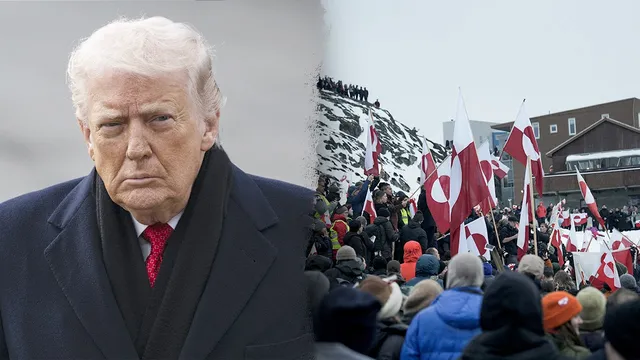
Trump threatens tariffs as he pushes for Greenland acquisition
Trump threatens tariffs as he pushes for Greenland acquisition
- President Donald Trump has threatened to impose tariffs on goods from European countries opposing his Greenland acquisition plans.
- Recent polls indicate significant disapproval among Americans regarding Trump's policies on Greenland and tariffs.
- Trump's continued focus on Greenland may affect Republican prospects in future elections.
Story
On January 20, 2026, President Donald Trump continued to press for the U.S. acquisition of Greenland, a move that has garnered significant opposition both domestically and internationally. Over the weekend, he threatened to impose a 10 percent tariff on goods from several European nations, which have voiced their opposition to his Greenland ambitions. This strategy, however, is proving unpopular; recent polls show that a majority of Americans oppose the purchase of Greenland, and even more disapprove of using military force for its acquisition. Polls indicate that Trump's approval ratings for his policies on tariffs and the economy are significantly low, further complicating his agenda. Republican figures like Senators Thom Tillis and Lisa Murkowski have criticized the tariff threats, expressing concerns over the negative impact on American businesses and alliances. Murkowski specifically called for Congressional action to prevent the weaponization of tariffs that could harm the U.S.'s standing among allies. Additionally, Trump's focus on Greenland is seen as part of a broader pattern of unpopular policies that could jeopardize Republican chances in upcoming elections. As he prepares to speak at the World Economic Forum, Trump has asserted the importance of Greenland for national and world security, emphasizing the necessity of acquisition without reconsideration. His ongoing rhetoric sparked a response from Denmark, which is reportedly increasing its defenses in the territory. With increasing pushback and public disapproval, Trump's handling of international relations and economic policies remains precarious as he solidifies his stance surrounding Greenland.
Context
Donald Trump's interest in acquiring Greenland has roots in strategic, economic, and political motivations. The former president's proposal to buy Greenland in 2019 reverberated through international diplomatic channels, highlighting the significance of this autonomous territory, which is part of the Kingdom of Denmark. Greenland is rich in natural resources, including minerals and potential oil reserves that are increasingly accessible due to climate change. The melting Arctic ice is opening new shipping routes and comprehensive access to untapped resources, which could bolster the United States' economic and geopolitical standing in the region. Trump's administration viewed the acquisition as a means to enhance national security by securing a foothold in an increasingly contested Arctic area, especially with the rising influence of Russia and China in global affairs. Beyond resource acquisition, the purchase of Greenland carries symbolic weight in terms of asserting American dominance and influence. The territory's location, in proximity to North America, provides strategic military advantages that could be leveraged for defense purposes. Control over air and naval routes in the Arctic region is essential for modern defense strategies. Trump's interest can be seen as part of a broader pattern of seeking strategic assets to ensure America maintains its edge over rival powers. Furthermore, it reflects a vision of an America First foreign policy aimed at economically and politically empowering the United States through the control of vital territories. The political implications of acquiring Greenland are also significant. By pursuing such an initiative, Trump aimed to position himself as a strong leader capable of negotiating bold foreign policies that prioritize American interests. This aligns with his broader approach of challenging traditional diplomatic norms, showcasing the willingness to engage in unorthodox strategies to achieve goals. However, the Danish government's firm rebuttal to the proposal underscored the complexities and sensitivities involved in international real estate discussions, especially regarding territories with established national identities and governance. In summary, Donald Trump's interest in acquiring Greenland can be interpreted as a multifaceted strategy encompassing economic opportunity, strategic military interest, and bold political maneuvering. The initiative reflects the challenges in approaching international relations from a transactional perspective, where territorial acquisition often invokes historical, cultural, and political challenges. As the global landscape continues to evolve, particularly in the Arctic region, future administrations may revisit similar prospects as they seek to balance national interest with the intricacies of international diplomacy.


