politics
controversial
impactful

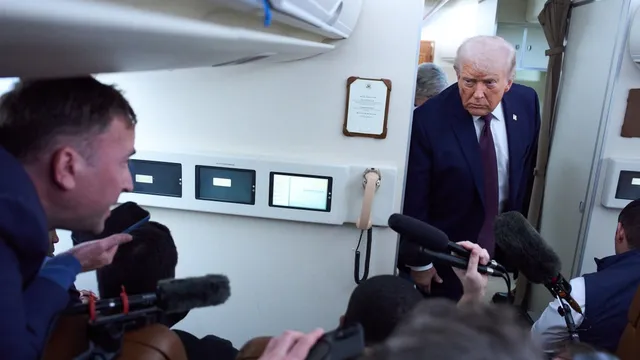
Trump secures framework for Greenland deal amid tariff threats

Jan 21, 2026, 3:50 PM243
(Update: Jan 23, 2026, 2:30 PM)
president of the United States from 2017 to 2021
autonomous country within the Kingdom of Denmark on world's largest island by the same name
political and economic union of 27 European states
Swiss nonprofit foundation
municipality in the canton of Graubünden, Switzerland

Trump secures framework for Greenland deal amid tariff threats

  • President Trump announced he had reached a framework for a future deal regarding Greenland after discussions with NATO Secretary-General Mark Rutte.
  • This announcement followed Trump's earlier threats to impose tariffs on European nations opposing U.S. acquisition of Greenland.
  • The shift towards negotiation highlights a possible new cooperative approach among NATO allies, promoting Arctic security.
Share your opinion
24

Story

In January 2020, President Donald Trump announced a framework for a future deal concerning Greenland while attending the World Economic Forum in Davos, Switzerland. This announcement came on the heels of a tense week of negotiations with various European allies, during which Trump had threatened to impose tariffs on select countries opposing the idea of U.S. control over the Danish territory of Greenland. Trump's remarks highlighted a desire for U.S. ownership, arguing that this would be essential for effective defense of the territory, particularly against growing Russian and Chinese influence in the Arctic region. During the discussions in Davos, Trump emphasized his stance on Greenland, which has been a point of contention in U.S.-Denmark relations, suggesting that ownership is necessary for national security. He communicated that the U.S. could not simply defend the island through a lease agreement, asserting that effective defense requires formal ownership. Despite previously displaying a more aggressive approach, including threats to use tariffs as leverage, Trump’s announcement indicated a strategic retreat, where he seemed to pivot towards diplomacy, seeking to negotiate terms rather than imposing them. The framework discussed with NATO's Mark Rutte included cooperation efforts to enhance Arctic security, revealing an underlying concern regarding the military and economic capabilities of China and Russia in the region. Importantly, Trump's pivot also suggested a willingness to engage in collaborative defense strategies alongside NATO allies, bolstering American relations throughout Europe. This shift away from confrontational rhetoric towards negotiation was welcomed by European leaders, including Denmark's foreign minister, who expressed optimism for future dialogue on these complex issues. In the broader context, Trump's announcements have reverberated through international diplomatic channels and affected perceptions of American leadership in global affairs. His contentious remarks in past months regarding NATO's contributions and U.S. contributions have tested long-standing alliances. However, cooperation over Greenland could signal a new chapter, focusing on shared interests within the Arctic as climate change alters geopolitical dynamics and increases competition for resources. Although the details of the deal remain vague, Trump’s emphasis on America's negotiating strength and tactical framework offers a glimpse into future U.S. foreign policy direction in the Arctic region and its relations with NATO allies.

Context

The history of Greenland's ownership is complex and marked by various periods of exploration, colonization, and political transitions. Greenland, the world's largest island, was originally inhabited by the Inuit peoples approximately 4,500 years ago. Their unique culture and way of life thrived in this Arctic environment until European exploration began in the late 15th century. The first known European to set foot in Greenland was the Norse explorer Erik the Red around 982 AD, who established a settlement in the southwestern part of the island. This marked the beginning of sustained European interest in Greenland, although the Norse settlements eventually vanished by the 15th century, likely due to climate change and other factors impacting their survival. In 1500, after a period of exploration by various European powers, Denmark established its claim to Greenland, initiating a series of colonial endeavors. In 1721, Danish-Norwegian missionary Hans Egede arrived to convert the Inuit to Christianity and seek trade opportunities, marking the formal beginning of Danish colonial rule. Greenland was governed as a colony, and Denmark's control over the island deepened as they established settlements and engaged in trade. Over the following centuries, Greenland's strategic importance grew, particularly during the years of global competition among colonial powers. Denmark's hold on Greenland was officially recognized in the Treaty of Copenhagen in 1759, solidifying their sovereignty. The 19th and early 20th centuries saw Denmark continue to assert its influence over Greenland, although it faced challenges from other nations, such as Norway and the United States. The purchase of Alaska by the United States in 1867 intensified American interest in Greenland, culminating in the establishment of a U.S. air base during World War II. After the war, in 1946, President Harry S. Truman proposed to purchase Greenland from Denmark, although this offer was ultimately rejected. Post-war geopolitics highlighted the strategic importance of Greenland, leading to a greater military presence from both the U.S. and Denmark, especially during the Cold War. In 1979, Greenland was granted home rule, significantly increasing its autonomy from Denmark. This political shift allowed for greater self-governance, enabling Greenlanders to control their own affairs, except foreign policy and defense, which remain under Danish control. This relationship evolved further with the introduction of the Self-Government Act in 2009, which recognized Greenlandic self-determination, giving them the rights to exploit natural resources. In recent years, discussions surrounding potential independence have gained traction as the island's resource wealth, including oil and minerals, has come into focus. Thus, the history of Greenland's ownership reflects a long journey of indigenous culture, European exploration, colonization, and ongoing negotiations over autonomy and resource management.

2026 All rights reserved