

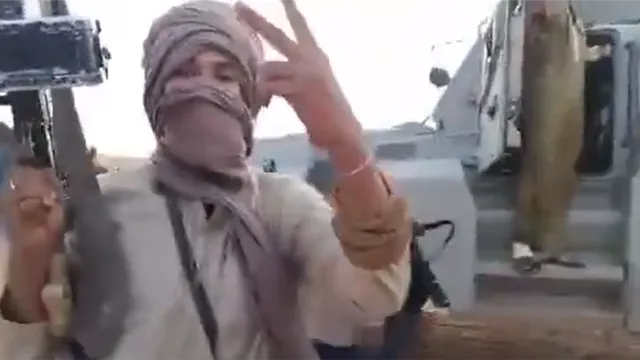
Russian Africa Corps suffers major setback in Mali operations
Russian Africa Corps suffers major setback in Mali operations
- Hundreds of Russian soldiers withdrew from Kidal, leaving behind military equipment and a downed helicopter.
- The Malian government accused the pullout of being part of an attempted coup, signaling a failure of Russian mercenaries.
- The Africa Corps' setbacks could undermine Russia's projected influence in Africa and its credibility in military partnerships.
Story
Mali has become a crucial focus for the Russian Defense Ministry's Africa Corps following the dissolution of the Wagner Group. Recently, hundreds of masked Russian soldiers departed from the northern city of Kidal, leaving behind massive amounts of military equipment and a downed helicopter. The Malian government labeled these events as an attempted coup, raising questions about the effectiveness of Russian mercenaries in stabilizing the region. This incident occurred on April 25, 2026, approximately 30 months after the Russian forces celebrated capturing Kidal from the Tuareg rebels. Despite early promises of improved security and successful joint operations with the Malian government, the recent withdrawal has been interpreted as a humiliating failure for the Africa Corps. Analysts note that this pullout could signal a complete withdrawal of Russian forces from Mali, although Russian military officials maintain that they will not fully leave the country. Notably, Ulf Laessing, an analyst with the Konrad Adenauer Foundation, emphasized the paradox of Russian claims versus their on-the-ground performance, stating that the abandonment reflects a significant setback. The Africa Corps was positioned as a successor to Wagner Group, expected to strengthen ties with African nations while providing military backing. However, the Russian strategy appears to falter as they struggle to deliver on these expectations. Justyna Gudzowska, the executive director of The Sentry, referred to this situation as the most consequential battlefield setback for Russia in Africa, destabilizing the claims of Russian forces effectively addressing security needs in Mali and potentially other West African countries, including Burkina Faso and Niger. The context around this incident includes a significant Russian military buildup in Mali prior to the offensive. Reports indicated that substantial shipments of military equipment were made to Bamako, suggesting that Russia was committed to maintaining its presence in Mali despite the challenges faced by Wagner. The recent withdrawal and the loss of key locations like Kidal negate the narrative that replacing UN and French forces with Russian mercenaries is a viable strategy for securing power in the region. Russian Defense Ministry officials claimed that their operations prevented a coup and protected the legitimate government, yet local analysis highlights that the tangible achievements were not aligned with these assertions, raising further questions regarding the future of Russian military involvement in Mali.
Context
The Wagner Group, a private military company (PMC), has been a significant player in Russia's military strategy over the past several years. Established in the early 2010s, the group has provided the Russian government with a means to pursue its geopolitical interests abroad while maintaining plausible deniability. With its involvement in various conflicts, including those in Ukraine, Syria, and various African nations, the Wagner Group has been integral in supporting Russian state objectives, often complementing official military efforts with deniable operations. However, as of 2026, the dissolution of the Wagner Group has raised critical questions about the implications for Russia's overall military strategy and its capacity to project power globally without direct accountability. The absence of the Wagner Group disrupts a significant force multiplier for Russia, including its ability to leverage unconventional warfare tactics and asymmetric strategies that have been pivotal in modern conflicts. The Wagner Group's activities have often involved not only direct combat but also strategic advisory and training roles, acting as a force that can operate in grey zones—areas where the line between war and peace is blurred. With the group's dissolution, there is now a palpable vacuum that the Russian state must address. This absence may lead the military to either intensify its reliance on conventional forces or accelerate the development of new PMCs to fill the gap, thereby reshaping Russia's military engagement models. Moreover, the loss of a private military actor that has been both a tool of state policy and a source of tactical innovation might force the Kremlin to reconsider its military doctrine, particularly in low-intensity conflict scenarios, where deniability and flexibility have been crucial. Consequently, the dissolution may also lead to a re-evaluation of Russian foreign policy, especially in regions where Wagner had established influence. Areas in Africa and the Middle East, where the group forged connections with local factions and governments, could experience a shift in power dynamics, potentially leading to instability. The impact may be particularly felt in countries where Wagner had helped prop up regimes or suppress insurgent movements. The Russian government may now need to directly engage in these relationships, which comes with heightened risks of escalation and increased exposure to international scrutiny and sanctions. Ultimately, the dissolution of the Wagner Group signifies a pivotal moment for Russia's military apparatus. The internal restructuring and the reallocation of its military resources could lead to significant changes in how Russia conducts its warfare abroad. Without the operational capabilities and strategic advantages provided by the Wagner Group, Russia may find itself at a crossroads where it must decide whether to embrace more conventional military engagement or to develop new forms of asymmetric warfare to maintain its influence. The consequences of this transition will likely impact both regional and global security landscapes in the years to come.


