

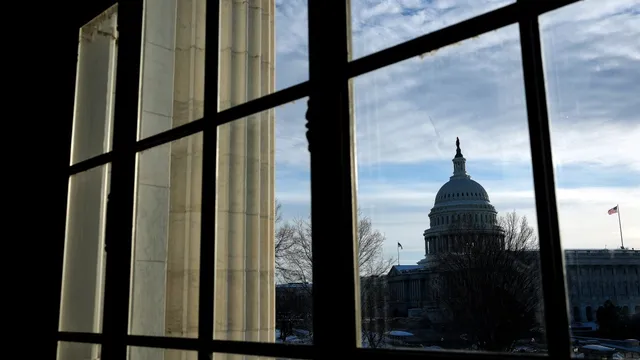
Senate Democrats and Trump strike deal to fund government while separating DHS
Senate Democrats and Trump strike deal to fund government while separating DHS
- On January 29, Senate Democrats and President Trump negotiated an agreement to separate DHS funding from a larger spending package.
- The agreement includes a two-week extension for DHS funding while lawmakers negotiate reforms related to ICE operations.
- The negotiations aim to avoid a government shutdown, but challenges remain due to the House being on recess and lack of consensus on reform measures.
Story
On January 29, 2026, the U.S. Senate and President Donald Trump reached a crucial agreement regarding government funding. Amid rising tensions and potential for a partial government shutdown, Senate Democrats agreed to separate funding for the Department of Homeland Security (DHS) from a larger package of spending bills. This decision was influenced by a series of violent incidents involving ICE agents, leading to increased demands for reforms. The agreement included a two-week continuing resolution for DHS while lawmakers negotiate essential changes. Despite the Senate's progress, complications arose as the House of Representatives remained on recess, which could delay final approvals and increase the risk of a government shutdown. The negotiations highlighted a significant political divide, particularly concerning issues surrounding immigration enforcement and the funding of ICE. Democrats, motivated by recent violence associated with DHS actions, were adamant about stripping DHS from the funding package unless significant reforms were implemented. This included provisions aimed at enhancing accountability for federal agents, such as body camera requirements. The urgency of reaching a consensus was underscored by the potential impacts of a shutdown on non-essential government services, which would affect many federal workers and services that were still recovering from the last prolonged government shutdown. Republicans, on the other hand, sought to balance the interests of their caucus while also trying to avoid a political fallout from a shutdown. The GOP held the majority in the Senate but faced dissent, especially from a faction that opposed removing DHS from the package. The concerns about the repercussions of a weekend shutdown loomed large, making the negotiations more pressing. President Trump appealed to lawmakers across the aisle for bipartisan support to prevent another damaging government shutdown, reinforcing the necessity of collaboration to finalize the funding without delay. As of now, the Senate is poised to vote on the proposed funding measures, while the House's recess presents a considerable hurdle in preventing a partial government shutdown. The deadline looms as Congress grapples with the implications of ICE funding and the ongoing debates surrounding immigration policy enforcement. Ultimately, the deal to fund most government operations without the contentious DHS provisions reflects a temporary compromise in a broader struggle over immigration and federal agency accountability.
Context
The funding received by the Department of Homeland Security (DHS) plays a significant role in shaping immigration policy in the United States. DHS funding influences various aspects of immigration enforcement and administration, impacting how laws are implemented at both federal and state levels. The allocation of resources affects staffing levels within agencies like U.S. Customs and Border Protection (CBP) and U.S. Immigration and Customs Enforcement (ICE), which are critical in managing immigration processes and border security. For instance, increased funding can lead to enhanced surveillance technologies, more personnel at borders, and greater capabilities for processing asylum requests, thereby directly influencing the effectiveness and efficiency of immigration enforcement efforts. Conversely, a reduction in funding may result in personnel shortages and slower processing times, complicating overall immigration policy outcomes. Furthermore, the way DHS distributes its funding can reflect the administration's priorities in immigration matters. For example, under certain administrations, funding may be steered towards building physical barriers at the southern border to deter illegal crossings, while other administrations may focus their financial resources on humanitarian assistance programs and improving pathways to legal immigration. This strategic allocation provides insight into the broader national stance on immigration, revealing underlying ideologies and the legislative coalition supporting or opposing particular immigration policies. Therefore, understanding the nuances of DHS funding opens a window to comprehend the evolving nature of immigration policy. DHS funding also has implications beyond enforcement and procedural matters; it affects broader socio-economic dimensions as well. As DHS financing increases or decreases, the rippling effect changes not just the number of individuals entering or remaining in the country, but also societal perceptions of immigrants. Communities with increased funding for local ICE enforcement may experience higher tensions, resulting in feelings of insecurity among immigrant populations. Alternatively, enhanced funding toward integration programs may promote acceptance and assimilation of immigrants into American society, effectively altering public sentiment around immigration. In conclusion, the impact of DHS funding on immigration policy cannot be overstated. It serves as a critical tool for both enforcement and humanitarian efforts within the immigration system, shaping the experience of prospective immigrants and influencing national conversations surrounding immigration. The complexities of how funds are allocated underscore the necessity for ongoing analysis and advocacy to ensure that immigration policy serves not only the needs of national security but also the principles of human rights and social responsibility.


