

Thailand strikes Cambodian military targets following deadly border clash
Thailand strikes Cambodian military targets following deadly border clash
- Thailand executed airstrikes against Cambodian military targets following a deadly border clash.
- Both nations accused each other of initiating renewed fighting amidst ongoing tensions.
- The situation has resulted in civilian evacuations and significant casualties, underscoring the long-standing conflict.
Story
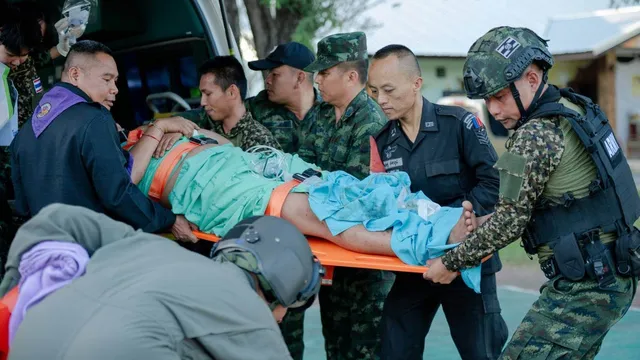
On December 8, 2025, tensions escalated along the border between Thailand and Cambodia, leading to a violent outbreak of fighting characterized by airstrikes and cross-border attacks. The conflict erupted when a Cambodian assault resulted in the death of one Thai soldier and injuries to four others. In response, the Royal Thai Air Force confirmed that it executed airstrikes targeting Cambodian military positions, including weapon depots and command centers deemed to pose threats. The Thai military accused Cambodia of mobilizing heavy weaponry, positioning combat units, and creating a potentially escalating atmosphere. Meanwhile, Cambodia denied engaging in retaliatory actions during the initial phase of hostilities, asserting that its military maintained a position of caution while monitoring the situation. The Cambodian defense ministry stated Thai forces initiated the attacks after enduring alleged provocations for several days. Both nations reported serious injuries among civilians, with three individuals in the Cambodian border province of Oddar Meanchey sustaining critical injuries. In light of rapid developments, authorities from both countries evacuated civilians from border areas to prevent further casualties. Despite the conflict's short duration, five days of intense fighting resulted in at least 48 confirmed fatalities and a temporary displacement of around 300,000 people. The intertwined histories of Thailand and Cambodia are marked by deep-seated enmity, spurred by territorial disputes that date back centuries. These conflicts are emblematic of a broader struggle over a region that plays a significant role in each nation's identity, particularly regarding historical landmarks like the Preah Vihear temple. The immediate aftermath saw leaders from both sides calling for restraint and the need to respect prior agreements and international law. With Prime Minister Anutin Charnvirakul expressing an unwillingness to escalate violence, Cambodia's former Prime Minister Hun Sen took a firmer stance, stating that military leaders have been instructed on a predetermined response to any further provocations. As calls for de-escalation continue, the fragile state of the border situation serves as a stark reminder of the complex interactions and rivalries within Southeast Asia. As both nations seek to maintain peace and stabilize their borders, the long-standing territorial disputes linger, reflecting an enduring cycle of conflict and negotiation in the region.
Context
global analysis economic global strategic impact impact global policy shift trends market policy geopolitical global trends data geopolitical shift impact global policy strategic global policy insight market geopolitical global trends economic policy strategic market market strategic economic data data impact analysis market economic shift insight insight market analysis trends shift strategic global market market economic insight economic analysis geopolitical global geopolitical strategic strategic global data economic policy global economic data shift global insight economic trends data data insight policy analysis...


