

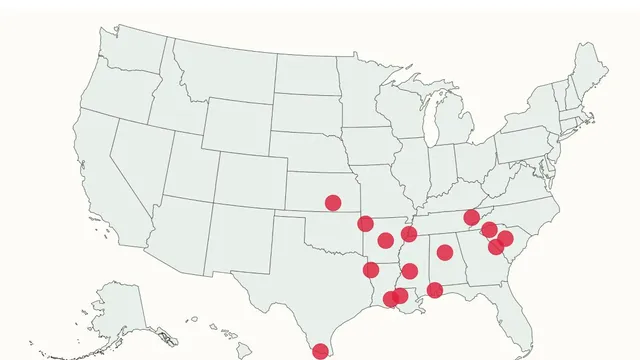
Obesity rates soar in America as major cities struggle with health issues
Obesity rates soar in America as major cities struggle with health issues
- WalletHub ranked Little Rock, Arkansas, as the most overweight city in the U.S., with significant rates of obesity among children.
- McAllen, Texas, and Memphis, Tennessee, followed closely, showcasing alarming adult obesity rates and related health problems.
- The findings stress the need for investments in healthy food access and fitness opportunities to combat obesity-related issues.
Story
In a recent study by WalletHub, a personal finance website, the obesity rates in major U.S. cities were assessed, revealing alarming statistics about the nation's health crisis. Little Rock, Arkansas, topped the rankings as the most overweight city, with nearly 23 percent of children aged 10 to 17 classified as obese, reflecting significant health concerns for younger populations. The report emphasized that high adult obesity rates contributed to severe health risks, including elevated incidences of high blood pressure and heart disease. Concern was particularly pronounced in areas with limited healthy food options and fewer health educators per capita. Following Little Rock, McAllen, Texas, was ranked second, showcasing a noteworthy adult obesity rate of 45 percent. The city also faced considerable challenges, including a high percentage of physically inactive adults and an inadequate presence of parks and recreational facilities. Additionally, McAllen reported the highest rate of obesity among teenagers in the study, signaling that the obesity epidemic affects residents across different age brackets. These findings highlight the overall public health problems facing the city. Memphis, Tennessee, claimed the third position in the rankings, where around 36 percent of adults were reported as obese. The city's profile indicated high obesity rates among children and teenagers as well, along with substantial barriers to accessing healthy food. Memphis also faced significant health challenges, evidenced by high rates of strokes and high blood pressure, which further underline the city's urgent need for intervention in promoting better health and accessibility. The analysis conducted by WalletHub assessed 100 of the nation's largest metropolitan areas across various metrics, concentrating on factors such as obesity rates, associated health consequences, and the availability of food and fitness opportunities. As obesity continues to rise within the United States—impacting health care costs and workforce productivity—the report concludes that focused investments in increasing access to healthy food and recreational activities are crucial in combating these trends for both current and future populations.


