

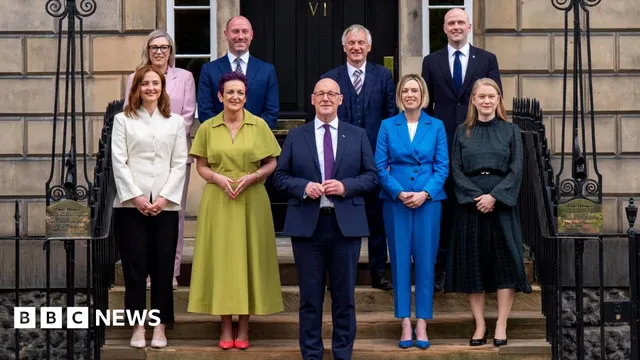
John Swinney appoints a slimmed-down cabinet for Scotland
John Swinney appoints a slimmed-down cabinet for Scotland
- John Swinney has appointed a new cabinet after being re-elected as First Minister of Scotland.
- Significant roles in the cabinet include Jenny Gilruth as Deputy First Minister and Finance Secretary, and Stephen Flynn as Economy and Transport Secretary.
- The restructuring aims to create a more efficient government while committing to fiscal reform and addressing public sector challenges.
Story
On May 20, 2026, John Swinney re-affirmed his leadership as the First Minister of Scotland following a successful election campaign. During this announcement, he introduced his new cabinet, which reflects a more streamlined approach. The cabinet features several key appointments, including Jenny Gilruth as Deputy First Minister and Finance Secretary, along with other notable figures retaining their positions such as Màiri McAllan in Education, and Angela Constance in Health and Care. Swinney underscored a commitment to public sector reform while managing fiscal responsibilities. As part of his cabinet restructuring, he hopes to bring in fresh perspectives and drive efficiency in delivering government services. In the reshuffle, three cabinet roles were eliminated, which Swinney communicated would save taxpayers approximately £175,000 annually. Each of the ministers appointed holds significant experience in their respective fields, and Swinney is optimistic that their collective expertise will enable them to meet the challenges ahead. Justice Secretary Neil Gray, who recently transitioned from health, is seen as pivotal in addressing ongoing issues within the justice system, while Stephen Flynn's newly gained responsibilities in Economy and Transport aim to enhance Scotland's economic outlook and infrastructure. Despite some criticism regarding the abilities of certain members, especially regarding Jenny Gilruth's previous performance as Transport Minister, Swinney remains steadfast in his appointments, asserting that public sector reform is crucial to address Scotland’s fiscal sustainability. Political adversaries, particularly from Scottish Labour, commented on the need for ministers to take responsibility amidst budgetary constraints, emphasizing the likelihood of taxes or cuts in public services unless accountability is improved. Overall, Swinney's cabinet appointments seem designed to project confidence and flexibility, aligning with his vision for a 'leaner, more agile government.' His popularity among the SNP and the wider Scottish public appears bolstered by his re-election and the cabinet shuffle, which he hopes will set a new course for addressing the pressing needs of Scottish citizens while upholding the party’s core priorities.


