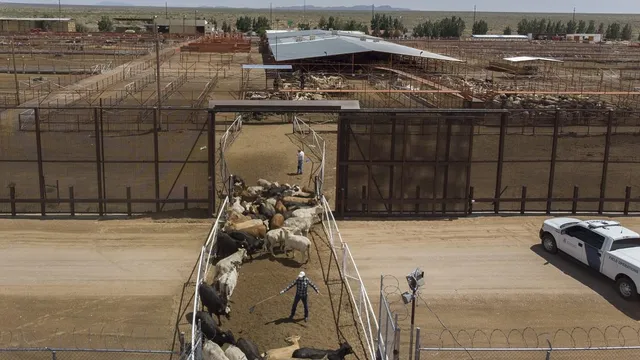
In a significant development for the agricultural sectors of both the United States and Mexico, the U.S. Department of Agriculture announced the reopening of its border to Mexican cattle imports, effective August 24, 2026. This decision comes after a suspension of imports due to concerns over the New World screwworm, a parasite that poses a threat to warm-blooded animals, including livestock and humans. The initial reopening will take place at the Douglas, Arizona border crossing, which connects to Agua Prieta in Mexico's Sonora state. Further plans are in place to reopen additional crossings in New Mexico, although specific dates have not yet been provided.
The screwworm outbreak, which was first detected in Mexico in November 2024, has since spread to 29 of the country's 32 states, resulting in 1,792 active cases as reported by official figures. The parasite has also been identified in Texas and southeastern New Mexico, with over 30 cases reported in these areas. The U.S. authorities have emphasized that the reopening of cattle imports will be contingent upon compliance with a joint action plan designed to prevent the entry of screwworm larvae into the U.S. This plan includes thorough inspections of the cattle upon their arrival in the United States.
Mexican President Claudia Sheinbaum expressed her support for the reopening in a social media message, highlighting the importance of dialogue and cooperation between the two nations. She noted that Mexico would expedite its efforts to ensure the safe movement of cattle through Sonora and Chihuahua, where recent cases of screwworm have been reported. The livestock sector in Mexico has faced significant financial losses due to the suspension of cattle imports, which has been described as multimillion-dollar losses.
The decision to reopen the border is seen as a positive step towards restoring trade relations and addressing the economic impact of the screwworm outbreak. U.S. Secretary of Agriculture Brooke Rollins stated that it is now safe to resume cattle imports, reflecting a collaborative effort to manage the situation effectively. The reopening is expected to benefit both countries' agricultural sectors and restore normalcy in cattle trade, which is vital for the economies of both nations.