

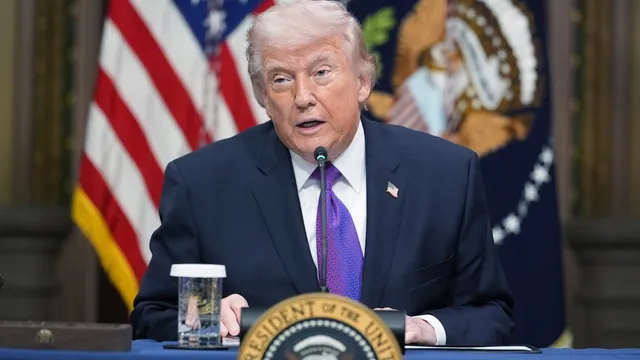
Donald Trump insists on choosing Iran's new leader after Khamenei's death
Donald Trump insists on choosing Iran's new leader after Khamenei's death
- Donald Trump has stated he wants to assist in choosing Iran's new leadership following Khamenei's assassination.
- Lindsey Graham defended U.S. interests in Iran but insisted on no direct intervention in leadership selection.
- The political future of Iran is uncertain, highlighting the need for self-governance among the Iranian people.
Story
In early March 2026, following the death of Supreme Leader Ali Khamenei in an attack by U.S.-Israeli forces, there was a significant shift in Iran's political landscape. Donald Trump, the President of the United States, expressed plans to play a role in selecting Iran's next leader, stating a desire to help the Iranian people find a leader who could bring 'harmony and peace'. This came amidst ongoing military operations aimed at crippling Iran's nuclear capabilities and establishing a favorable regime change from the United States' perspective. Lindsey Graham, a prominent U.S. Senator, echoed this sentiment but emphasized that the U.S. should not dictate Iran's new leadership, instead focusing on Iran not being a state sponsor of terrorism. Amidst this, the political future of Iran remains uncertain as various contenders emerge, including Mojtaba Khamenei, the deceased Supreme Leader's son. Trump's comments sparked controversy, highlighting a divide between U.S. intentions and international perspectives on self-determination for the Iranian people. Additionally, Deputy Prime Minister David Lammy criticized Trump’s involvement, asserting that the choice of Iran's leadership should be left to the Iranian populace rather than outside forces, stressing the significance of democracy and self-governance. The situation remains fluid, with potential for further military escalation and diplomatic fallout as the region grapples with the implications of Khamenei's death and Trump's bold declarations.
Context
The leadership structure of Iran has undergone significant transformation throughout its history, particularly following major political events such as the 1979 Islamic Revolution. Prior to this revolution, Iran had a monarchy, with the Shah, Mohammad Reza Pahlavi, serving as the central figure of authority. The Pahlavi dynasty, which had been in power since the early 20th century, focused on modernization and Westernization, often backed by foreign powers. However, this led to widespread discontent among various segments of society, including religious leaders and leftist groups, culminating in the revolution that abolished the monarchy and established the Islamic Republic under Ayatollah Ruhollah Khomeini. Post-revolution, Iran's political structure was defined by a blend of theocratic and democratic elements, which was encapsulated in the 1979 Constitution. The Supreme Leader emerged as the most powerful figure in the political domain, with authority over all branches of government and the armed forces. The Supreme Leader is chosen by the Assembly of Experts, a body elected by the people but heavily influenced by the clerical establishment. This position has allowed religious leaders to maintain significant control over political decisions while also shaping the ideological foundations of the state according to Islamic principles. Alongside the Supreme Leader, the political system of Iran includes various other institutions, such as the president, who is elected by popular vote for a four-year term and is responsible for the executive branch of government. The president's power, however, is limited by the policies set forth by the Supreme Leader. Additionally, the Islamic Consultative Assembly, or the Majlis, serves as the legislative body, composed of representatives elected by the public. Nevertheless, candidates for this body are vetted by the Guardian Council, which ensures that only those who adhere to the principles of the Islamic Republic are allowed to run. In recent years, Iran's leadership structure has faced numerous challenges, including economic sanctions, internal protests, and the need to address public grievances regarding corruption and economic hardship. These pressures have prompted debates about governance and representation within the system. The political landscape continues to evolve as younger generations demand more transparency and accountability, challenging traditional authorities. The complex relationship between theocratic principles and democratic practices underscores the ongoing struggle within Iran's leadership structure, highlighting the tension between maintaining religious authority and addressing modern civic needs.


