

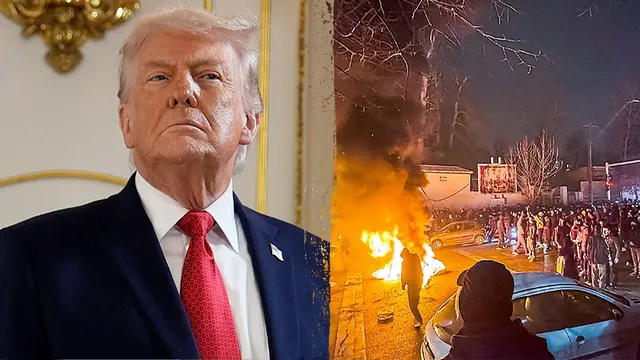
Iran blames US and allies for igniting protests amid economic crisis
Iran blames US and allies for igniting protests amid economic crisis
- Iran faced nationwide protests sparked by economic crises, including high inflation and rising living costs.
- Iranian President Masoud Pezeshkian accused foreign leaders of inciting unrest and calling for societal division.
- There is a significant risk of military confrontation as tensions escalate between Iran and the US amid ongoing protests.
Story
Following a two-week wave of protests that erupted in late December due to an economic crisis in Iran, Iranian leaders have accused foreign powers of inciting unrest. Iranian President Masoud Pezeshkian aired grievances on January 31, stating that US, Israeli, and European leaders exploited domestic economic problems to foster dissent among the populace. He characterized the protests as a manipulation designed to create societal divisions and stir conflict, leading to significant casualties among protesters and security forces. Reports indicate at least 6,563 people have died, according to US-based rights groups. As the protests dwindled in the face of a violent crackdown, Iranian Foreign Minister Abbas Araqchi acknowledged that the regime faced external threats aimed at undermining its stability. The US has been vocal in its support for anti-government demonstrators, suggesting possible military action if Iran continued its violent suppression. The context of these protests is framed by widespread dissatisfaction over high inflation and steep living costs, resonating throughout various segments of Iranian society. Tensions between Iran and the US have escalated further, with US President Donald Trump highlighting the urgent need to address Iran’s nuclear program. He indicated that time was limited for Tehran to avert military strikes similar to past operations on nuclear facilities, suggesting that a decision could potentially lead to even harsher consequences. Diplomatic efforts involving regional allies like Turkey, the United Arab Emirates, and Saudi Arabia have been initiated to avoid a military confrontation, signaling the precarious balance of power in the region. In this fraught atmosphere, Iranian officials reiterated their commitment to defending national integrity against foreign interference. Araqchi articulated Iran's readiness for both negotiations and conflict, presenting a dual approach that seeks stability and peace while also signaling military readiness if provoked. The Iranian leadership maintains that their social fabric remains resilient against external pressures and manipulation. As foreign leaders continue to offer support to protesters, the clash between these regimes and Iran's resolve underlines the complexities each nation faces amid fluctuating alliances and domestic challenges.
Context
The protests in Iran, which have been fueled by a variety of social, economic, and political grievances, have had significant impacts on the country's economy. These demonstrations, often characterized by their widespread nature and urgent demands for reform, have highlighted longstanding issues such as inflation, unemployment, and systemic corruption that have plagued the Iranian economy for years. The unrest has created substantial instability within the country's financial markets, leading to a decline in investor confidence and exacerbating the already dire economic situation. Many businesses have faced disruptions due to protests, which have often escalated into violence, leading to closures, decreased productivity, and loss of income for workers and entrepreneurs alike. In addition to immediate disruptions, the protests have also impacted Iran’s international trading relationships. Foreign investors have been hesitant to engage with Iran amidst the uncertainty caused by the ongoing civil unrest. This has led to a reduction in foreign direct investment, which is crucial for the country’s economic growth and modernization efforts. As a significant portion of Iran's economy relies heavily on oil exports, the unease in the geopolitical landscape has also fueled volatility in global oil prices. Iran has struggled to maintain its oil production levels due to sanctions and the protests have only worsened this dynamic, reducing revenue and further isolating the Iranian economy. The resultant economic instability has contributed to rising inflation rates and a depreciation of the national currency, the rial. As the value of the rial continues to fall, the costs of imported goods have surged, further straining consumers’ purchasing power. This inflationary environment has led to increased hardships for everyday citizens, making it difficult for many to afford basic necessities. The socioeconomic divide within the country has widened, exacerbating the discontent that precipitated the protests in the first place. The economic ramifications of the protests are likely to have long-term implications for Iran's stability. Addressing the deep-rooted issues of economic mismanagement, inequality, and lack of political freedoms will be crucial for the Iranian government to mitigate future unrest. The protests have served as a wake-up call regarding the necessity for economic reforms and enhanced social policies. The longer the government delays addressing the underlying causes of the demonstrations, the more persistent the economic challenges will become, potentially leading to even greater dissatisfaction and further protests in the future.


