

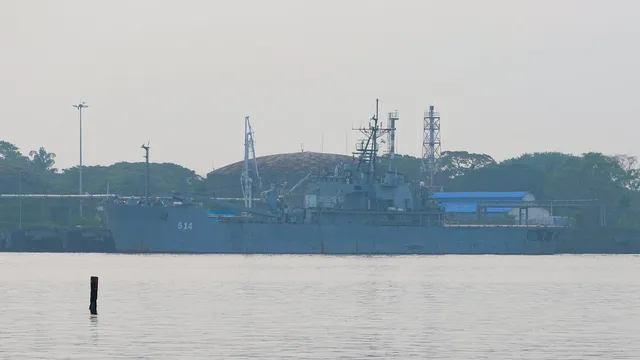
India enables docking of Iranian vessels before US torpedoes Iris Dena
India enables docking of Iranian vessels before US torpedoes Iris Dena
- In response to an urgent request from Iran, India permitted the docking of an Iranian warship in Kochi on March 1, after the ships experienced technical issues.
- The decision occurred just days before the US navy attacked and sank another Iranian warship, leading to significant casualties.
- India's actions were framed as humanitarian, despite increasing criticism regarding its regional military stance and responsibilities.
Story
India allowed an Iranian warship, IRIS Lavan, to dock at its Kochi port on March 1, 2026, following an urgent request from Tehran. This decision came amid escalating military tensions as the US and Israel had begun airstrikes against Iran on February 28, 2026. On March 4, 2026, the Iranian warship IRIS Dena was torpedoed by a US submarine off the coast of Sri Lanka, resulting in substantial loss of life, with at least 87 crew members confirmed dead. The Iranian navy had been participating in a military exercise hosted by India from February 15 to 25, 2026, before departing from Indian waters. The foreign minister of India, S. Jaishankar, stated that the request from Iran on February 28 for permission to dock three vessels—IRIS Dena, IRIS Bushehr, and IRIS Lavan—was granted due to the technical issues faced by IRIS Lavan. He emphasized that India approached the situation from a humanitarian perspective despite ongoing geopolitical tensions. The approval took place only a few days before the tragic incident, raising questions about India's involvement in regional conflicts and the implications of foreign military presences in the Indian Ocean. The attack on IRIS Dena marked a significant escalation in hostilities outside the Middle East, showcasing the reach of US military actions. The Iranian Foreign Minister, Abbas Araghchi, condemned the US attack as an
Context
The Indian Ocean has been a significant theater of military presence and strategic competition among global powers throughout history. Its geographic location, connecting major economies like India, China, and the Middle East, has catalyzed foreign involvement, particularly from European colonial powers and more recently from the United States, China, and India. From the 15th century onward, the establishment of trading routes motivated European countries to project military power in the region. The Portuguese, Dutch, and British empires sought to protect their interests, establishing naval bases and coaling stations, which reflected a policy of coercive diplomacy aimed at controlling maritime trade routes that were crucial to their economic dominance. In the 20th century, the end of colonial rule ushered in a new era of military presence in the Indian Ocean, predominantly driven by Cold War dynamics. The U.S. and the Soviet Union vied for influence by establishing military facilities and alliances with regional states. Notably, the strategic location of Diego Garcia, an American military base, underscored the importance of the Indian Ocean in global military strategy during the Cold War, facilitating operations in the Middle East and South Asia. Furthermore, regional conflicts, such as the Yemeni Civil War and the Somali Civil War, have also attracted foreign military involvement, leading to interventions by various countries aiming to secure their maritime interests and maintain regional stability. In the 21st century, the Indian Ocean's relevance has grown significantly with the rise of India and China as global economic powers. China's Belt and Road Initiative (BRI) has led to increased investment in port facilities and infrastructure across the Indian Ocean, raising concerns among other nations regarding the expansion of Chinese influence. The establishment of the Chinese naval base in Djibouti and increased naval exercises showcasing China's military capabilities illustrate the evolving power dynamics in the region. Similarly, India has sought to enhance its security presence in the ocean through initiatives like SAGAR (Security and Growth for All in the Region) and by strengthening partnerships with countries such as the United States, Japan, and Australia. Today, the Indian Ocean remains a critical area for international security and economic interaction. The maritime routes are vital for global trade, making the region a focal point for the strategic interests of various states. The ongoing rivalry between the U.S. and China, alongside regional issues, will continuously shape the military landscape of the Indian Ocean. As nations re-evaluate their foreign policies and military strategies, the historical context of foreign military presence in the Indian Ocean reveals the intricate balance of power that characterizes this essential maritime region.


